5 axis CNC machining is often associated with high-end manufacturing, but it is not always necessary. Understanding exactly when full 5-axis capability is required, and when 3-axis or 3+2 machining is sufficient, is critical for controlling cost, accuracy, and lead time. This guide explains the technical basis for choosing 5 axis CNC machining, the part features that demand it, and how it performs across different industries and materials.
What 5 Axis CNC Machining Actually Is
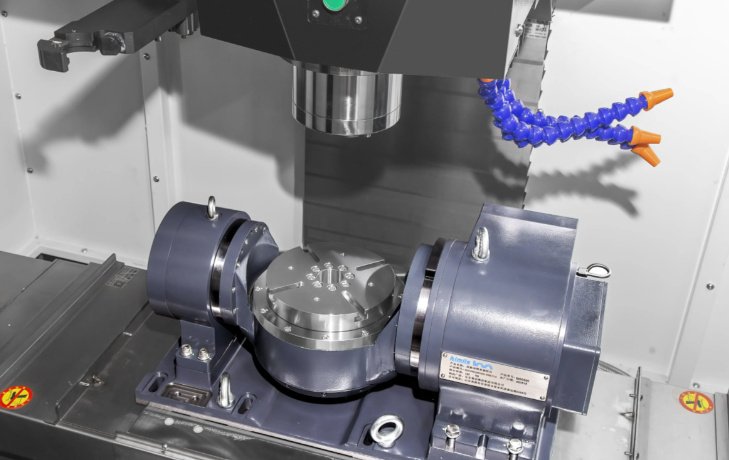
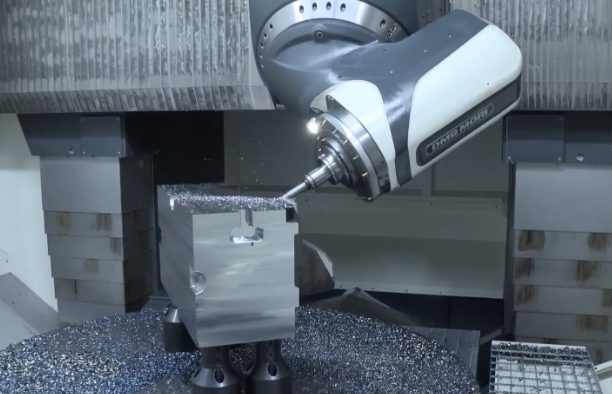
5 axis CNC machining is a milling process in which the cutting tool or the workpiece can move along or rotate around five axes during machining. A conventional 3-axis machine moves in X, Y, and Z. A 5-axis system adds two rotational axes, usually referred to as A, B, or C, depending on the machine configuration.
Common configurations include:
- Tilting rotary table (3 linear axes + 2 rotary axes in the table)
- Trunnion-style table (tilting/rotating table with the part mounted on it)
- Swivel head (rotary axes are in the spindle head rather than the table)
Two main operating modes are:
- Simultaneous 5-axis machining: All 5 axes can move at the same time, allowing the cutter to maintain an optimal angle continuously along complex toolpaths.
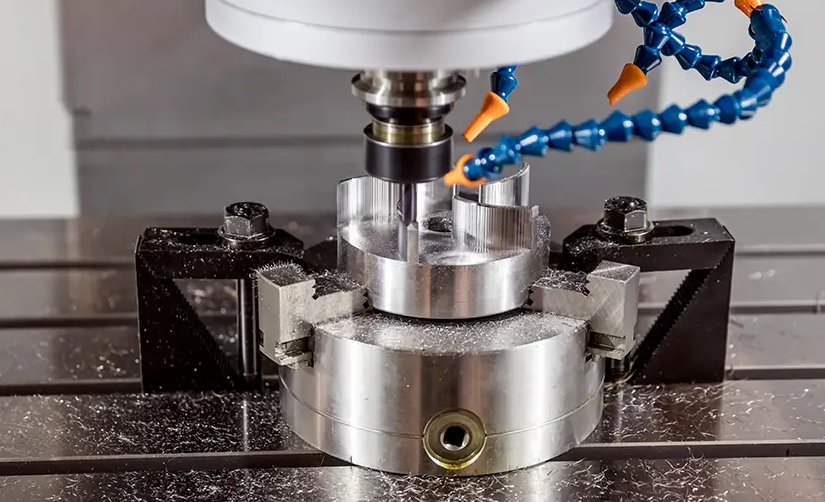
- 3+2 (positional) machining: The two rotary axes index to a fixed angle, then the machine cuts using 3 axes. The machine can reposition for multiple orientations but does not interpolate all 5 axes at once.
Simultaneous 5-axis is the focus when asking “When do you really need 5 axis CNC machining?”, because 3+2 can often be done on many 5-axis platforms without using full simultaneous capability.
Key Technical Advantages of 5 Axis Machining
To decide when 5-axis is truly required, it is essential to understand the specific technical advantages it provides over 3-axis and 3+2 machining.
Access to Complex Geometries
5-axis machining allows the tool to reach features that are impossible or impractical to machine with 3-axis equipment. This includes:
- Undercuts on multiple sides of a part
- Deep cavities with angled surfaces
- Freeform surfaces that change orientation continuously
- Components with features on 5 or more faces requiring precise positional relationships
With simultaneous 5-axis, the cutter orientation can follow surface normals, maintaining contact in regions that would otherwise require complex fixtures, multiple setups, or EDM processes.
Reduced Setups and Improved Datum Control
One of the most practical advantages of 5-axis machining is the reduction in the number of setups. Fewer setups mean:
- Less cumulative positioning error between features on different faces
- Improved dimensional relationships between critical features
- Lower labor time and fewer opportunities for handling damage
On complex prismatic parts, a 5-axis machine with a rotary table can often complete all sides in a single clamping, using machine kinematics to orient each face in turn. This is especially valuable where tight geometric tolerances (such as true position, perpendicularity, and concentricity) must be maintained between features on multiple faces.
Better Tool Orientation and Shorter Tool Lengths
By tilting the tool toward the surface, 5-axis machining enables the use of shorter cutting tools in deep cavities or features with limited access. This yields:
- Higher stiffness due to reduced tool overhang
- Less tool deflection under cutting load
- Better surface finishes and more reliable dimensional consistency
For example, instead of using a long 10xD tool from a vertical approach, the machine can tilt to access the feature with a 3–5xD tool at an angle, significantly reducing deflection and chatter.
Improved Surface Finish and Contouring Quality
On freeform surfaces, such as turbine blades or ergonomic housings, 5-axis machining allows the cutter to stay normal or near-normal to the surface. This produces:
- More consistent cusp height
- Reduced requirement for secondary polishing
- Better control over local surface geometry
Using 5-axis swarf cutting or flank milling, the tool’s side can be aligned with the surface, which can significantly improve surface quality on tall, thin walls and complex contours.
Higher Effective Material Removal Rate
The ability to maintain optimal tool engagement and contact angle allows higher feed rates and spindle loads without exceeding acceptable tool deflection or surface roughness limits, especially in tough materials like titanium or nickel alloys. While 5-axis machines are not inherently faster than 3-axis machines, the combination of:
- Shorter cycle times from reduced setups
- More aggressive cutting strategies from better tool orientation
- Reduced non-cutting time for repositioning
can produce a substantial net gain in throughput for appropriate parts.
When 3 Axis or 3+2 Is Sufficient
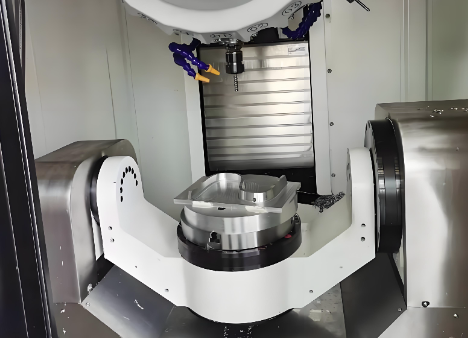
5-axis capability is not mandatory for every machined part. In many cases, 3-axis or 3+2 machining delivers the required quality and tolerances at lower cost.
3-axis machining is often sufficient when:
- The part features are accessible from one or two directions
- Tolerances between features on different sides are modest
- There are no deep undercuts or complex freeform surfaces
- Machining can be done primarily from a single plane with minimal fixture changes
3+2 machining is a strong intermediate solution when:
- Features exist on multiple faces but are individually simple
- There are angled holes or surfaces that can be machined with fixed-angle indexing
- Simultaneous tool orientation changes along the path are not required
3+2 uses the rotary axes only to orient the part before each 3-axis operation. It often provides most of the setup reduction benefits of 5-axis, without requiring complex 5-axis toolpaths or specialized programming expertise.
Critical Indicators That You Really Need Full 5 Axis
While many parts can be machined through a combination of 3-axis and 3+2 operations, certain part characteristics strongly indicate that full simultaneous 5-axis machining is the appropriate choice.
Parts With Continuously Changing Surface Normals
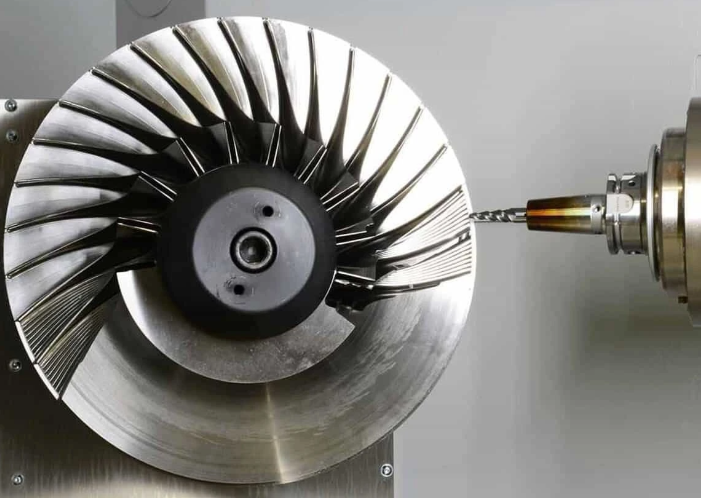
Parts such as impellers, blisks (integrally bladed rotors), turbine blades, and certain medical implants have surfaces where the normal direction changes continuously along the toolpath. To maintain proper cutter engagement and surface quality, the machine must be able to adjust tool orientation smoothly in multiple axes as it moves. In such cases:
- Static orientations (3+2) cannot maintain optimal contact along the entire path
- Attempting to approximate with many orientations generates excessive repositioning and blend marks
- Surface continuity and profile tolerances benefit significantly from simultaneous 5-axis
Complex Undercuts and Multi-Sided Internal Features
If the part includes internal cavities, channels, or pocket geometries with compound angles and undercuts, especially where access is from multiple directions, simultaneous 5-axis is often required. Examples include:
- Multi-branch internal channels in aerospace or motorsport components
- Injection molds with difficult undercuts and complex parting lines
- Tooling inserts with intersecting 3D features that cannot be oriented conveniently in a limited number of static positions
While some undercuts can be handled with special tools or EDM, this can be less efficient or more expensive than using 5-axis machining if the part volume or complexity is high.
Tight Geometric Tolerances Across Multiple Faces
High-end aerospace, optical, and precision mechanical components often require tight positional and orientation tolerances between features on multiple faces or at complex angles. For example:
- True position tolerances of holes on multiple planes relative to a common datum
- Low runout requirements for bores and features located on differently oriented faces
- Close matching of contours on opposite or adjacent sides
Performing these operations in multiple setups on 3-axis equipment introduces additional sources of error: fixture variation, re-clamping, thermal changes, and readjustment to datums. 5-axis machining allows these relationships to be established in a single clamping using machine kinematics and probing, improving the ability to hold combined geometric tolerances.
Deep Cavities in Hard or Difficult Materials
Materials such as titanium, Inconel, hardened tool steels, and certain stainless steels are less forgiving of long, slender cutting tools. Deep cavities or tall walls in these materials can be significantly more manageable with simultaneous 5-axis approaches that:
- Allow tool tilting to reduce overhang and increase stiffness
- Enable better chip evacuation by orienting the tool and cavity appropriately
- Permit more uniform tool loading, extending tool life
When the combination of depth, material, and tolerance leads to unacceptably high risk of deflection, chatter, or tool breakage on 3-axis, 5-axis machining becomes the more reliable and economical solution.
High Part Value and Single-Setup Strategy
For parts with high material cost, long lead-time forgings, or expensive castings, reducing the risk of scrap late in the process is crucial. A single-setup 5-axis strategy can:
- Minimize the number of operations where re-clamping or re-alignment could introduce errors
- Allow in-process probing and adaptive machining based on measured conditions
- Concentrate process control in one machine and one program
When the value of the workpiece is high relative to machining cost, the process stability and error reduction of 5-axis machining can justify its use even for geometries that might be possible, but riskier, on 3-axis.
How Part Geometry Drives the Need for 5 Axis
Part geometry is the primary determinant in choosing 5-axis machining. Evaluating the following aspects helps determine whether full 5-axis is necessary.
Number and Orientation of Critical Faces
Parts with critical features on more than three mutually orthogonal faces, especially at non-orthogonal angles, are strong candidates for 5-axis machining. Consider:
- How many distinct orientations are required for full feature access?
- Can all critical features be reached with 3+2 indexing at reasonable angles?
- Do some features require continuous reorientation during cutting?
If the answer to the last question is yes, or if the number of required orientations becomes large, simultaneous 5-axis machining becomes increasingly advantageous.
Freeform Surface Complexity
The complexity of freeform surfaces can be estimated by curvature and change in surface normal. When curvature varies significantly in more than one direction and requires precise surface profile control, 5-axis machining can:
- Align the tool’s axis with local surface normals
- Use the tool’s side for flank milling, reducing cusp height
- Maintain specified surface integrity without secondary finishing
High-precision molds, ergonomic consumer products, and aerodynamic surfaces are typical examples where freeform surface complexity justifies 5-axis machining.
Required Access to Internal and Hidden Features
If internal features, such as intersecting drilled channels or machined cavities, require tool entry from multiple non-parallel directions, 5-axis machining simplifies the process. Angled drilling, especially at precise compound angles, is more reliably achieved with 5-axis control:
- Hole axes can be aligned precisely with spindle orientation
- Breakthrough locations can be controlled relative to external surfaces
- Chip evacuation can be optimized by orienting the workpiece
In intricate hydraulic manifolds, fuel system components, or cooling channels in molds, this level of control is often critical to performance and reliability.
Material Considerations for 5 Axis CNC Machining
Material type influences the benefits gained from 5-axis machining, mainly through its effects on cutting forces, tool wear, and allowable tool geometry.
Hard and Heat-Resistant Alloys
Materials such as:
- Titanium alloys (e.g., Ti-6Al-4V)
- Nickel-based superalloys (e.g., Inconel 718)
- Cobalt-chromium alloys
- Hardened tool steels (above ~45 HRC)
generate higher cutting forces and more heat at the cutting edge. For these materials, 5-axis machining allows:
- Shorter, stiffer tools by tilting the part or the spindle
- Optimized tool engagement to distribute wear
- Better control of cutting conditions in deep features
These characteristics reduce tool breakage, improve tool life, and support consistent dimensional control.
Aluminum and Other Soft Metals
While aluminum is more tolerant of long tools and aggressive cutting conditions, 5-axis machining can still offer benefits when:
- Parts have thin walls that can deflect under load
- Complex aerospace or automotive structures require access from multiple angles
- Surface finish requirements are stringent on contoured surfaces
In high-volume aluminum structural parts, 5-axis machining can significantly reduce fixture complexity and setup time, improving overall throughput even if the material itself is relatively easy to cut.
Plastics and Composites
For engineering plastics and fiber-reinforced composites, 5-axis machining helps align tool direction with fiber orientation or critical surfaces, minimizing delamination and edge damage. With composites, 5-axis machining can:
- Maintain proper rake and clearance angles along curved edges
- Control exit angles to reduce fraying at free edges
- Accommodate complex layup geometries in structural components
This is particularly relevant in aerospace composite structures and sporting goods with complex 3D shapes.
Industry Applications Where 5 Axis Is Commonly Essential
Certain industries rely heavily on 5-axis machining due to the nature of their parts and required tolerances. The following overview highlights where full 5-axis is commonly considered essential.
Aerospace and Defense
Aerospace structures and engine components frequently combine complex geometry, tight tolerances, and difficult-to-machine materials. 5-axis machining is especially relevant for:
- Blisks and impellers with integrally machined blades
- Turbine blades and vanes with complex aerodynamic profiles
- Structural brackets with weight-optimized, organic shapes
- Fuel system components and hydraulic manifolds
The ability to machine multiple surfaces in a single setup, maintain precise positional relationships, and handle hard alloys makes 5-axis machining a fundamental process in aerospace manufacturing.
Medical Devices and Implants
Medical implants and instrumentation often have complex organic shapes and strict requirements regarding surface finish and tolerances. 5-axis machining is critical for:
- Orthopedic implants, such as knee and hip components with contoured surfaces
- Cranial plates and spinal implants with freeform geometries
- Surgical instruments requiring features on multiple angular faces
These parts typically use biocompatible metals like titanium and cobalt-chrome, where tool control and surface integrity directly influence product performance and biocompatibility.
Automotive Performance and Motorsports
While many automotive components are suitable for 3-axis machining or other processes, high-performance and motorsports applications often require 5-axis machining for parts such as:
- Turbocharger impellers and turbine housings
- Complex intake and exhaust components with internal flow paths
- Lightweight suspension components with optimized topology
5-axis capability supports the creation of high-efficiency fluid paths and weight-optimized geometries that cannot be produced effectively using simpler processes.
Mold, Die, and Tooling
Precision molds and dies have intricate 3D surfaces, complex parting lines, and sometimes deep cavities with undercuts. 5-axis machining helps by:
- Enabling access to surfaces that would otherwise require specialized electrodes or EDM operations
- Reducing step-over and improving surface finish on complex contours
- Maintaining dimensional accuracy in deep features
In many high-precision molds, 5-axis machining is used both for roughing to reduce EDM time and for finishing to achieve required surface quality.
Energy and Power Generation
Components in power generation, such as gas and steam turbines, pumps, and compressors, regularly incorporate 3D blade geometry, internal flow passages, and complex rotary parts. 5-axis machining is well suited to:
- Rotating blades and impellers with twisted profiles
- Casings and housings with intricate internal channels
- High-pressure pump components with angular passages and seats
The combination of geometry and material (often superalloys) makes 5-axis machining advantageous for both performance and process reliability.
Dimensional Tolerances and Surface Finish Requirements
Part performance requirements, expressed through dimensional tolerances and surface finish specifications, play a major role in determining whether 5-axis CNC machining is necessary.
Geometric Dimensioning and Tolerancing (GD&T) Implications
GD&T specifications such as position, profile, concentricity, and orientation tolerances often span features on multiple faces or at compound angles. 5-axis machining helps by:
- Maintaining datum integrity using a single setup
- Allowing accurate interpolation of feature locations in 3D space
- Reducing stack-up errors from multiple fixtures and re-clamping
For example, if a part has holes with true position tolerances of 0.05 mm or tighter relative to a datum system defined by surfaces on several faces, executing all critical operations in one 5-axis setup improves the feasibility of meeting such requirements consistently.
Surface Finish and Surface Integrity
Surface finish (Ra, Rz) and surface integrity (micro-cracks, residual stress, hardness variations) can be influenced by tool approach angle and the number of passes required. 5-axis machining can:
- Allow consistent chip load and cutting angle along curved surfaces
- Reduce the number of blend zones and transitions between toolpaths
- Support flank milling techniques for smooth finishes with fewer passes
For functional surfaces such as sealing faces, aerodynamic surfaces, or bearing seats, the enhanced control over tool orientation directly contributes to consistent surface quality.
Feature-to-Feature Relationships
In complex assemblies, relationships between multiple features—such as hole patterns, slots, and mounting faces—may need to be held within small positional or angular tolerances. 5-axis machining can align these relationships in one unified coordinate system, making it easier to:
- Program features based on true 3D datums
- Measure and compensate in-process using probing
- Control all critical features with a single G-code program
These capabilities are especially valuable when parts are part of a tightly toleranced assembly or when interchangeability between parts is required without manual fitting.
Comparing 3 Axis, 3+2, and Simultaneous 5 Axis
The choice between 3-axis, 3+2 (positional 5-axis), and simultaneous 5-axis machining is driven by geometry, tolerances, surface requirements, production volume, and cost. The following comparison summarizes typical characteristics.
| Aspect | 3 Axis | 3+2 (Positional 5 Axis) | Simultaneous 5 Axis |
|---|---|---|---|
| Axes in motion during cutting | X, Y, Z only | X, Y, Z (A/B/C fixed per operation) | Any combination of 5 axes |
| Geometry complexity | Simple to moderate | Moderate to complex | Complex freeform and undercut |
| Number of setups | Often multiple | Reduced vs 3-axis | Often single setup |
| Access to undercuts | Very limited | Limited, discrete angles | Extensive, continuous orientation |
| Typical tooling length | Can be long | Shorter than 3-axis | Shortest, optimized via tilting |
| Tolerance capability | Good for simpler parts | Improved between faces | Best for multi-face relationships |
| Surface finish on 3D surfaces | Limited control | Better via orientation | Best, with continuous orientation |
| Programming complexity | Low to moderate | Moderate | Higher |
| Typical cost per part | Lowest for simple work | Intermediate | Higher machine rate but fewer setups |
In many cases, a hybrid approach is used: roughing with 3-axis or 3+2 strategies, followed by simultaneous 5-axis finishing on complex surfaces that truly benefit from continuous tool orientation control.
Cost and Time Implications of 5 Axis Machining
5-axis machines typically have higher acquisition and operating costs than 3-axis machines, but overall part cost depends on multiple factors. Deciding when you really need 5-axis involves comparing the total cost and time profile for a given part.
Machine and Programming Costs
5-axis equipment involves higher capital cost, and programming simultaneous 5-axis toolpaths typically requires advanced CAM software and more programming time. However, this increase can be offset by:
- Fewer fixtures and reduced fixture design cost
- Less setup and operator time per part
- Lower risk of scrap due to fewer re-clamp operations
For low-complexity parts, these advantages may not compensate for the higher machine rate, so 3-axis remains preferable. For complex parts, 5-axis often reduces total cost despite higher hourly rates.
Cycle Time and Throughput
Cycle time includes cutting time plus non-cutting operations such as tool changes, indexing, and re-clamping. 5-axis machining reduces cycle time by:
- Eliminating or reducing manual re-clamping and setup alignment
- Allowing optimized toolpaths with fewer retracts and air cuts
- Enabling higher cutting parameters through better tool engagement
In production environments, these factors translate into higher throughput, especially for parts that would otherwise need multiple operations on different machines.
Risk and Scrap Reduction
Each additional setup or fixture change introduces opportunities for alignment errors, mis-clamping, or damage to the part. For high-value or long-lead-time materials, the cost of scrapping a part late in the process can be significant. 5-axis machining reduces these risks by:
- Performing more operations in a single clamping
- Combining in-process inspection with machining for early detection of issues
- Reducing manual handling between machines
These benefits are particularly important for aerospace, medical, and energy components where both material and machining time are expensive.
Design for Manufacturability (DFM) with 5 Axis Machining
Effective use of 5-axis CNC machining starts at the design stage. Designing parts with 5-axis capabilities in mind can improve manufacturability and reduce costs.
Aligning Features with Likely Machine Orientations
Even though 5-axis machines can access a wide range of orientations, aligning major features with practical orientations simplifies programming and improves stability. Useful considerations include:
- Aligning primary mounting and datum faces with likely base orientations
- Grouping angular features into a small number of orientation families where possible
- Ensuring that fixtures or clamping methods do not obstruct access to critical areas
These practices help maximize the number of features obtainable in a single setup while keeping toolpaths efficient.
Designing for Reasonable Tool Access
Even with 5-axis capability, some geometries can create excessive tool overhang or restricted chip evacuation. Designers should consider:
- Minimum corner radii that allow practical tool diameters
- Clearances for tool holders and spindle heads along tilted orientations
- Draft angles or slight modifications that simplify access to deep features
Collaborating with manufacturing engineers early in the design process helps ensure that features are accessible using realistic tool lengths and angles.
Balancing Part Complexity and Process Capability
5-axis machining enables intricate geometries, but every additional feature or tight tolerance carries machining time and cost implications. Useful design strategies include:
- Using tight tolerances only where functionally required
- Applying freeform surfaces selectively instead of across entire parts
- Standardizing feature sizes (e.g., hole diameters) where possible to reduce tool changes
These strategies let you fully exploit 5-axis capabilities where needed while avoiding unnecessary complexity elsewhere.
Evaluating Whether Your Part Requires 5 Axis Machining
To determine whether you really need 5-axis CNC machining for a particular part, a structured evaluation is useful. The following questions can guide that process.
| Question | Implication for 5 Axis |
|---|---|
| Are critical features located on more than three non-parallel faces? | Favors 3+2 or 5-axis |
| Do any surfaces have continuously varying curvature or surface normals? | Favors simultaneous 5-axis |
| Are there undercuts or hidden features difficult to reach directly? | Often requires 5-axis or alternative processes |
| Are tight tolerances specified between features on multiple faces? | Single-setup 5-axis improves capability |
| Is the material hard, tough, or prone to tool deflection issues? | 5-axis helps with shorter tools and optimized engagement |
| Is the part value high or scrap risk critical? | 5-axis may be justified to reduce re-clamping |
| Can 3+2 indexing reach all required orientations without excessive setups? | If yes, full simultaneous 5-axis may not be essential |
If several of these questions indicate advantages for 5-axis machining, especially simultaneous 5-axis, it is likely that full 5-axis capability is justified for that part.
Practical Pain Points That 5 Axis Machining Addresses
In many real-world manufacturing environments, specific pain points prompt the move to 5-axis machining. Some of the most common include:
- Multiple manual setups causing cumulative error and long lead times
- Inability to maintain tolerances in deep features due to tool deflection
- High scrap rates on complex, high-value components late in the process
- Extensive use of secondary processes (e.g., EDM) that extend delivery times
- Limitations in producing freeform surfaces with acceptable surface finish
Adopting 5-axis machining for parts that trigger these issues can significantly improve reliability and delivery performance while often reducing overall cost.
Summary: When You Really Need 5 Axis CNC Machining
You really need 5-axis CNC machining when the combination of part geometry, material, tolerances, and production objectives exceeds the practical capabilities of 3-axis or 3+2 machining. In particular, full simultaneous 5-axis machining is justified when:
- Parts have complex freeform surfaces with continuously changing orientation
- Undercuts and multi-directional internal features must be machined efficiently
- Critical tolerances link features across multiple faces or compound angles
- Materials and feature depth make tool deflection a limiting factor
- High-value or safety-critical parts require reliable, single-setup strategies
When these conditions are not present, 3-axis or 3+2 machining may provide a more cost-effective solution. A careful evaluation of geometry, tolerances, and process risk is essential for selecting the appropriate level of capability and ensuring that 5-axis CNC machining is used where it delivers clear technical and economic benefits.