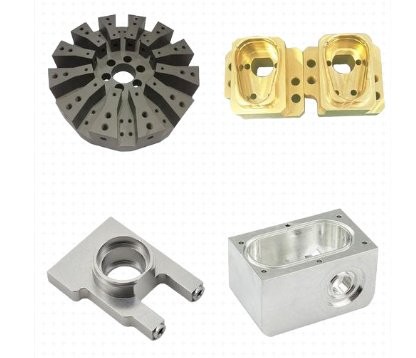
CNC milling is widely used to produce precise components from metals, plastics, and composites. Choosing the right material is as important as the design and tooling strategy because material properties directly affect machinability, dimensional accuracy, surface finish, cost, and performance in service.
This guide explains the most common materials used in CNC milling, their typical grades, key properties, machinability characteristics, and main application areas. It is structured to support engineers, buyers, and machinists in making informed material decisions for milled parts.
Overview of CNC Milling Materials
CNC milling materials can be grouped into several major categories, each with distinct mechanical behavior, machinability, and cost profile:
- Aluminum and its alloys
- Carbon and alloy steels
- Stainless steels
- Titanium and titanium alloys
- Copper, brass, and bronze
- Engineering plastics
- High-performance polymers and composites
Within each category, specific alloys and grades are selected based on criteria such as strength, hardness, thermal stability, corrosion resistance, weight, regulatory requirements, and finishing needs. Machinability ratings, chip formation behavior, and tool wear patterns also differ significantly from one material to another.
| Category | Representative Grades | Key Attributes | Typical Uses |
|---|---|---|---|
| Aluminum alloys | 6061, 6082, 7075, 2024 | Lightweight, good strength-to-weight, good machinability | Enclosures, frames, brackets, aerospace, automotive |
| Carbon & alloy steels | 1018, 1045, 4140, 4340 | High strength, tough, widely available | Machine components, shafts, fixtures, structural parts |
| Stainless steels | 304, 316, 17-4PH, 410 | Corrosion-resistant, heat-resistant (some grades) | Food equipment, medical, marine, chemical processing |
| Titanium alloys | Grade 2, Ti-6Al-4V (Grade 5) | High strength, low density, corrosion-resistant | Aerospace, implants, high-performance components |
| Copper alloys | C110, C36000 (brass), C93200 (bronze) | Excellent conductivity (copper), good machinability (brass) | Electrical parts, fittings, bearings, fluid connectors |
| Engineering plastics | POM, PA, PC, ABS | Low weight, electrical insulation, chemical resistance | Insulators, housings, wear components, prototypes |
| High-performance polymers & composites | PEEK, PTFE, fiber-reinforced polymers | High-temperature resistance, high strength, low weight | Aerospace, medical, oil & gas, demanding environments |
Aluminum Alloys for CNC Milling
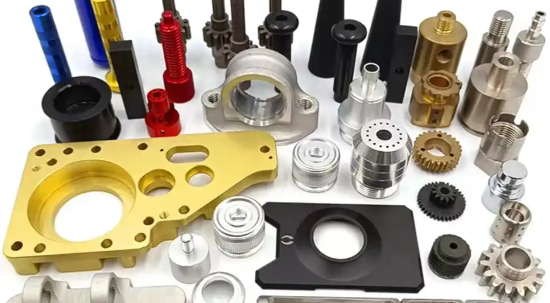
Aluminum alloys are among the most commonly machined materials due to a favorable combination of machinability, strength, and weight. They are suitable for both prototype and production components.
Key Aluminum Grades in CNC Milling
Frequently used aluminum alloys include:
- 6061-T6 / 6082-T6: General-purpose structural alloys with good machinability and weldability.
- 7075-T6: High-strength aerospace alloy with good fatigue resistance.
- 2024-T3: High-strength alloy with excellent fatigue performance, often used in aerospace structures.
Mechanical and Physical Properties
Typical property ranges for popular milled aluminum alloys:
| Alloy | Typical Temper | UTS (MPa) | Yield Strength (MPa) | Density (g/cm³) | Thermal Conductivity (W/m·K) |
|---|---|---|---|---|---|
| 6061 | T6 | 260–310 | 240–275 | ≈2.70 | ≈167 |
| 6082 | T6 | 290–340 | 250–310 | ≈2.70 | ≈170 |
| 7075 | T6 | 510–570 | 430–505 | ≈2.81 | ≈130 |
| 2024 | T3 | 470–485 | 325–360 | ≈2.78 | ≈121 |
Values may vary among standards and suppliers, so material certificates should be checked for precise design calculations.
Machinability Characteristics
Aluminum is generally considered easy to machine, but optimal results depend on alloy, temper, and tool configuration:
- High cutting speeds are possible due to good thermal conductivity and low hardness.
- Sharp tools with high positive rake angles help reduce cutting forces and improve surface finish.
- Chip evacuation is usually good; however, alloys with high ductility may require attention to avoid long stringy chips.
Coolant usage is common to control temperature, reduce built-up edge (BUE), and prolong tool life.
Typical Applications
CNC-milled aluminum parts are widely used for:
– Structural components such as brackets, housings, mounting plates, and frames.
– Precision mechanical parts in automation, robotics, and machinery.
– Lightweight enclosures and heat sinks for electronics and telecommunications.
– Aerospace and automotive components where weight reduction is important.
Surface treatments frequently applied include anodizing, conversion coatings, painting, and powder coating for improved corrosion resistance and appearance.
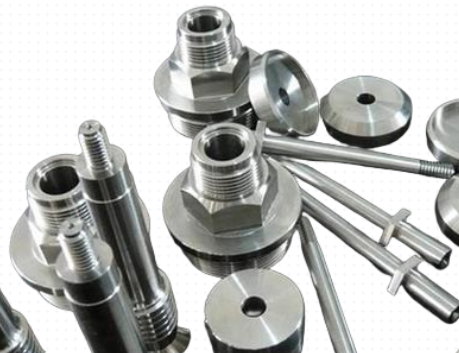
Carbon and Alloy Steels in CNC Milling
Carbon and alloy steels are used when higher strength, wear resistance, and hardness are required. They are common in mechanical systems, tooling, and structural applications.
Typical Carbon and Alloy Steel Grades
Important steel grades for milling include:
– Low-carbon steels (e.g., 1018, 1020): Good machinability, suitable for general-purpose parts, fixtures, and shafts.
– Medium-carbon steels (e.g., 1045): Higher strength than low-carbon steels, often used for gears, axles, and couplings.
– Alloy steels (e.g., 4140, 4340): Enhanced strength, toughness, and fatigue resistance, especially after heat treatment.
Key Properties
Mechanical properties for typical milled steel grades (in normalized or quenched and tempered condition) include:
– Ultimate tensile strength: Approx. 440–1100 MPa, depending on grade and heat treatment.
– Yield strength: Approx. 370–900 MPa.
– Hardness: Typically 120–350 HB for machinable conditions; higher hardness is possible but more difficult to machine.
Steels exhibit higher density than aluminum (≈7.85 g/cm³) and lower thermal conductivity, which influences tool temperatures and cutting conditions.
Machinability and Process Considerations
Machinability depends strongly on carbon content, alloying elements, and heat treatment. General considerations:
– Free-machining steels may contain sulfur or lead to break chips more easily and reduce cutting forces.
– Pre-hardened steels require rigid setups, lower cutting speeds, and appropriate carbide or coated tools.
– Heat-treated steels may necessitate finishing passes with reduced depth of cut to meet tight tolerances and surface finish requirements.
Proper coolant use and chip evacuation are important to control tool wear and workpiece temperature, especially for longer machining cycles.
Applications of Milled Steel Components
CNC-milled steel parts are widely used for:
– Machine tool components (bases, slides, fixtures).
– Shafts, flanges, couplings, and power transmission elements.
– Automotive and heavy equipment parts where durability is critical.
– Structural components where rigidity and strength are required.
Surface treatments may include carburizing, nitriding, induction hardening, plating, and painting to improve wear, fatigue resistance, and corrosion behavior.
Stainless Steels for CNC Milling
Stainless steels are selected when corrosion resistance is essential. They are common in food processing, medical devices, marine hardware, and chemical processing equipment.
Common Stainless Steel Grades
Key stainless steel families in CNC milling include:
– Austenitic (e.g., 304, 316): Non-magnetic in annealed state, excellent corrosion resistance, good ductility.
– Martensitic (e.g., 410, 420): Can be hardened, used when moderate corrosion resistance and high hardness are needed.
– Precipitation-hardening (e.g., 17-4PH): Combines high strength with good corrosion resistance, used in demanding structural and mechanical applications.
Properties Relevant to Milling
Austenitic stainless steels such as 304 and 316 typically exhibit:
– Ultimate tensile strength: Approx. 500–700 MPa (annealed).
– Yield strength: Approx. 200–300 MPa (annealed).
– Density: ≈7.9–8.0 g/cm³.
– Good toughness over a wide temperature range.
Precipitation-hardening grades like 17-4PH can reach yield strengths of 900–1100 MPa after heat treatment while maintaining corrosion resistance similar to 304 in many environments.
Machinability Considerations
Stainless steels are generally more challenging to mill than carbon steels or aluminum because:
– Austenitic grades tend to work-harden; if feeds and speeds are not optimized, cutting edges may rub rather than shear, increasing tool wear.
– Lower thermal conductivity concentrates heat at the cutting zone; using coolant and appropriate tool coatings helps manage temperature.
– Chip control can be more difficult; using the correct chip breaker geometry and maintaining adequate feed rates helps produce manageable chips.
Carbide tools with wear-resistant coatings (e.g., TiAlN) are commonly used, and stable fixturing is important to prevent vibration that can accelerate work hardening and tool wear.
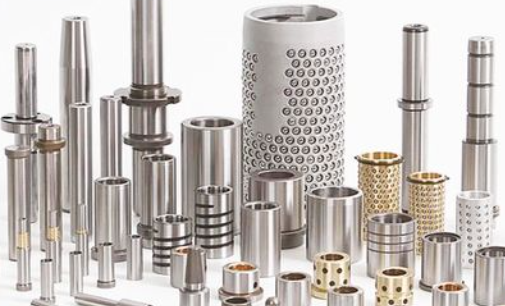
Typical Uses of Milled Stainless Steel Parts
CNC-milled stainless steel components are used in:
– Food and beverage processing equipment (316 is common due to superior corrosion resistance).
– Pharmaceutical and medical devices, where cleanability and corrosion resistance are critical.
– Marine hardware (fittings, fasteners, valves) in freshwater and seawater environments.
– Components for chemical processing and energy sectors exposed to corrosive media.
Surface finishes range from machined to polished or electropolished, depending on hygiene, aesthetic, and functional requirements.
Titanium and Titanium Alloys in CNC Milling
Titanium alloys are selected for applications requiring high strength, low weight, and excellent corrosion resistance. They are common in aerospace, medical, and high-performance engineering products.
Key Titanium Grades
Two widely used titanium materials for milling are:
– Commercially pure titanium (e.g., Grade 2): Good corrosion resistance, moderate strength, used for chemical processing, medical, and marine components.
– Ti-6Al-4V (Grade 5): High-strength α-β alloy with good fatigue resistance and high specific strength, extensively used in aerospace structures and implants.
Mechanical Properties
Typical properties for Ti-6Al-4V (annealed or solution-treated and aged):
– Ultimate tensile strength: ≈ 900–1000 MPa.
– Yield strength: ≈ 800–900 MPa.
– Density: ≈ 4.42 g/cm³ (about 60% of steel).
– Good corrosion resistance in many environments, including seawater and body fluids.
Commercially pure titanium grades have lower strength but higher ductility, with yield strengths typically in the range of 275–450 MPa depending on grade and condition.
Machinability Characteristics
Titanium is known for being difficult to machine due to:
– Low thermal conductivity: Heat concentrates at the cutting edge, causing rapid tool wear if speeds are too high.
– High chemical reactivity at elevated temperatures: Increases tool–workpiece adhesion and contributes to built-up edge.
– High strength at elevated temperature: Cutting forces remain significant even as the cutting zone heats up.
Effective strategies include moderate cutting speeds, relatively high feed per tooth, sharp rigid tooling, and abundant coolant or high-pressure coolant to remove heat and chips from the cutting area.
Applications of CNC-Milled Titanium Parts
Titanium milling is used for:
– Aerospace structural components (brackets, frames, fittings) where weight and fatigue resistance are critical.
– Turbine engine components exposed to high temperature and aggressive environments.
– Medical implants and surgical instruments due to biocompatibility and corrosion resistance.
– High-performance automotive and motorsport parts.
Surface treatments may include shot peening for fatigue improvement and various coatings or passivation processes depending on the environment.
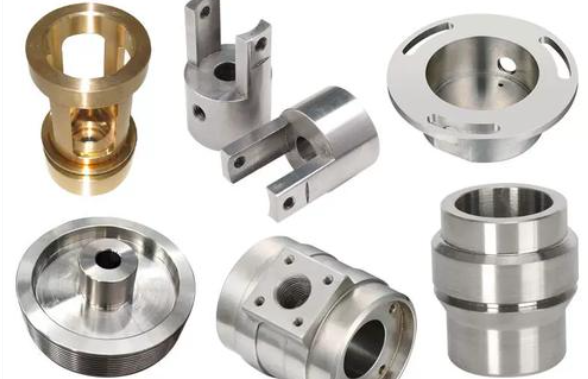
Copper, Brass, and Bronze in CNC Milling
Copper-based alloys are used when electrical conductivity, thermal conductivity, or specific tribological properties are required. Milling these materials requires attention to chip control and surface finish.
Copper and Copper Alloys
Typical materials include:
– Electrolytic tough pitch copper (e.g., C110): High electrical and thermal conductivity, often used for electrical components and heat management parts.
– Free-machining brass (e.g., C36000): Excellent machinability due to lead or other chip-breaking additions, used for fittings, valves, and decorative components.
– Bronze alloys (e.g., C93200): Good wear and bearing properties, used for bushings, bearing shells, and sliding components.
Properties and Machinability
Key features of copper alloys relevant to milling:
– Copper: Very high thermal and electrical conductivity, relatively soft, may smear if tool geometry and parameters are not optimized.
– Brass: One of the easiest metals to machine; forms short chips and allows high cutting speeds and excellent surface finish.
– Bronze: Machinability depends on composition; some leaded bronzes cut similarly to brass, while aluminum bronzes are tougher and more abrasive.
Sharp tools and controlled cutting parameters help prevent burr formation and surface tearing. For copper, specific tool coatings and geometries may be used to reduce built-up edge.
Typical Applications
CNC-milled copper alloy parts are found in:
– Electrical terminals, busbars, and high-current connectors.
– Heat exchangers, cooling plates, and heat sink structures.
– Hydraulic and pneumatic fittings, valves, and precision fluid control components.
– Bearings and wear pads where self-lubricating properties are required (bronzes).
Engineering Plastics in CNC Milling
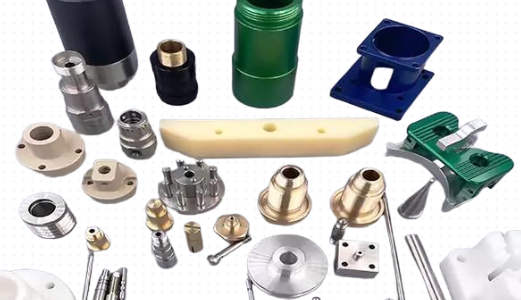
Engineering plastics offer low weight, electrical insulation, chemical resistance, and damping properties. They are widely used in CNC milling for functional prototypes, housings, and low-friction components.
Common Plastic Materials
Frequently milled plastics include:
– POM (acetal, Delrin): Low friction, good dimensional stability, excellent machinability.
– PA (nylon): Good wear resistance and toughness; absorbs moisture, which affects dimensions.
– PC (polycarbonate): High impact resistance, transparent option for lenses and protective covers.
– ABS: Easy to machine, used for prototypes and consumer product housings.
Mechanical and Thermal Behavior
Typical features relevant to milling:
– Tensile strength: Generally 40–80 MPa for common engineering plastics (specific values vary by grade and reinforcement).
– Density: Typically 1.0–1.5 g/cm³, much lower than metals.
– Lower modulus and heat resistance compared to metals; deflection and heat buildup must be controlled during machining.
Some grades are filled with glass or other fibers to improve stiffness and dimensional stability; these fillers increase abrasiveness and tool wear.
Machinability and Process Notes
Plastics behave differently from metals during milling:
– Heat generation must be minimized to avoid melting, softening, or dimensional distortions; this is controlled with lower cutting speeds and sharp tools.
– Chip removal needs attention; some plastics form long stringy chips that can wrap around tools or workpieces.
– Clamping forces should be controlled to avoid distortion of softer materials.
Coolant use is application-dependent; in many cases, air blast or mist is sufficient, while some plastics are better machined dry to avoid swelling or stress cracking.
Applications of Milled Plastic Parts
Engineering plastics are used for:
– Gears, bearings, and sliding components requiring low friction and noise.
– Enclosures, panels, and interior components in electronics and instrumentation.
– Prototypes and low-volume parts where tooling for molding is not justified.
– Insulating components in electrical and electronic systems.
High-Performance Polymers and Composite Materials
High-performance polymers and composites are used when standard engineering plastics or metals do not meet requirements for temperature, chemical resistance, or weight. Their machining requires specific strategies and tool choices.
High-Performance Polymers
Important polymers include:
– PEEK (polyether ether ketone): High continuous-use temperature (often 240–260 °C), excellent chemical resistance, high strength and rigidity.
– PTFE (polytetrafluoroethylene): Very low friction, excellent chemical resistance, but relatively low mechanical strength and high creep.
– PPS, PEI, and other specialty resins used in demanding thermal and chemical environments.
These materials are often supplied in unfilled, glass-filled, or carbon-filled grades. Reinforcement significantly changes machinability and tool wear characteristics.
Fiber-Reinforced and Composite Materials
Fiber-reinforced polymer (FRP) composites with carbon, glass, or aramid fibers are used in structures requiring very high strength-to-weight ratio and stiffness. Machining such materials is different from metals:
– The tool cuts both fibers and matrix; fibers can be abrasive and cause rapid tool wear.
– Layered structures may delaminate if machining parameters and tool geometry are not appropriate.
– Dust extraction and appropriate protective measures are important due to fine particulates generated.
Machinability Considerations
When milling high-performance polymers and composites:
– Use sharp, wear-resistant tools (e.g., carbide or diamond-coated) to manage abrasive fillers or fibers.
– Optimize feed and speed to reduce heat and avoid melting or matrix softening.
– Control part clamping and support to prevent vibration and dimensional distortion.
Coolant usage depends on the material; certain composites are machined dry with dust extraction, while some high-performance polymers can benefit from coolant to control temperature.
Typical Applications
CNC milling of high-performance polymers and composites is common in:
– Aerospace structural components, brackets, and panels where lightweight and performance are critical.
– Medical devices requiring sterilizable, chemically resistant materials.
– Oil & gas and chemical processing equipment requiring high temperature and chemical resistance.
– Precision mechanical parts where weight, stiffness, and dimensional stability at elevated temperatures are important.
Material Selection Considerations for CNC Milling
Choosing a material for CNC milling involves balancing performance, cost, machinability, and manufacturing constraints. Key considerations include:
Mechanical and Physical Requirements
Engineers typically define target properties such as:
– Strength (yield, ultimate) and stiffness (Young’s modulus).
– Hardness and wear resistance for surfaces subject to sliding or impact.
– Weight, especially for moving assemblies or weight-sensitive applications.
– Operating temperature range and thermal expansion compatibility with mating components.
Environmental and Regulatory Conditions
Material selection also depends on the operating environment:
– Corrosion resistance in marine, chemical, or humid conditions (favoring stainless steel, titanium, or certain polymers).
– Compatibility with sterilization methods for medical applications (e.g., autoclave, radiation).
– Flammability and smoke generation requirements for aerospace or transportation interiors.
Machinability, Tolerances, and Surface Finish
Machinability affects not only cost but also achievable accuracy and finish:
– Free-machining alloys and aluminum typically allow tighter tolerances and smoother surfaces with less effort.
– Hard or work-hardening materials require more rigid setups, optimized cutting parameters, and specialized tooling.
– Plastics and composites may exhibit spring-back or thermal distortion; allowances in design and fixturing can help achieve dimensional requirements.
Cost and Supply Factors
Economic considerations include:
– Raw material cost per kilogram and availability in required sizes (plate, bar, billet).
– Machining time and tool wear associated with each material.
– Need for secondary operations like heat treatment, surface finishing, or inspection methods specific to the material.
Balancing these factors early in the design process helps avoid unnecessary complications, rework, or cost escalation once machining begins.
FAQ: CNC Milling Materials
What is the easiest material to machine in CNC milling?
Among commonly used materials, aluminum alloys (such as 6061 and 6082) and free-machining brass are generally the easiest to machine in CNC milling. They allow relatively high cutting speeds, produce manageable chips, and yield good surface finishes with standard tooling. Free-machining steels also perform well, but they do not usually match the machinability of aluminum or brass.
Which materials are best for CNC milled parts exposed to corrosion?
For parts exposed to corrosive environments, stainless steels (304, 316, and 17-4PH), titanium alloys, and certain engineering plastics or high-performance polymers (such as PEEK and PTFE) are often preferred. 316 stainless steel is frequently used in marine and process applications, while titanium and PEEK are selected when higher performance or weight reduction is required. Proper surface treatments can further enhance corrosion resistance for some metals.
When should I choose plastic instead of metal for CNC milling?
Plastics are advantageous when low weight, electrical insulation, corrosion resistance, or cost-effective prototyping is important. Applications such as housings, covers, low-load mechanical parts, and electrical insulators commonly use POM, PA, PC, or ABS. If the part must withstand high loads, high temperatures, or severe wear, metals or high-performance polymers may be more appropriate.
Are titanium parts always better than aluminum in CNC milling?
Titanium is not always better than aluminum; it is simply different. Titanium offers higher strength, better corrosion resistance, and superior performance at elevated temperatures, but it is heavier than aluminum and significantly more expensive and difficult to machine. Aluminum is often sufficient and more cost-effective for many structural, mechanical, and enclosure applications where extreme strength or temperature resistance is not required.