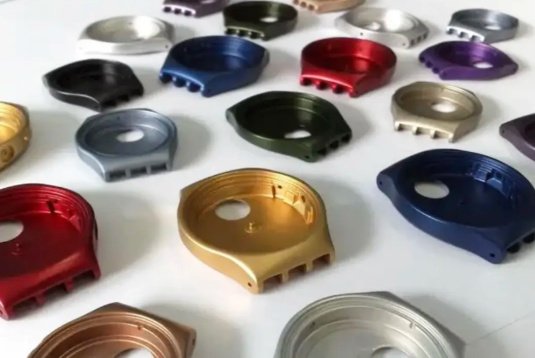
Surface finish plays a decisive role in the performance, reliability, appearance, and cost of metal parts. Selecting the appropriate finish requires understanding technical parameters, functional requirements, and how different processes interact with base materials and tolerances.
What Is Surface Finish for Metal Parts?
Surface finish (or surface texture) describes the topography of a metal surface after manufacturing and any subsequent finishing operations. It is usually defined by measurable roughness parameters and qualitative characteristics such as gloss, color, and visual uniformity.
From an engineering perspective, surface finish is mainly concerned with:
- Surface roughness: micro-level peaks and valleys left by machining, casting, or forming
- Surface waviness: larger-scale deviations over longer distances
- Lay: predominant direction of surface pattern (e.g., from milling or grinding)
These characteristics influence how a part interacts with mating components, fluids, light, chemicals, and mechanical loads.
Key Surface Roughness Parameters and Measurement
Surface roughness is quantified using standardized parameters measured by contact stylus profilometers, optical profilometers, or other surface metrology instruments. The most widely used metrics in manufacturing drawings are Ra and Rz.
Ra, Rz, and Other Common Roughness Metrics
Common parameters include:
- Ra (arithmetical mean roughness): average deviation of the surface profile from the mean line over an evaluation length. It is the most frequently specified parameter.
- Rz (average maximum height of the profile): average of the vertical distance between the highest peak and lowest valley within several sampling lengths.
- Rt (total height of the profile): vertical distance between the highest peak and lowest valley within the evaluation length.
Typical units: micrometers (µm) or microinches (µin). Conversion: 1 µm ≈ 39.37 µin.
| Process | Typical Ra Range (µm) | Typical Ra Range (µin) |
|---|---|---|
| Sand casting (as-cast) | 6.3 – 25 | 250 – 1000 |
| Die casting (as-cast) | 1.6 – 6.3 | 63 – 250 |
| Flame / plasma cutting | 6.3 – 25 | 250 – 1000 |
| Laser cutting (good focus) | 3.2 – 12.5 | 125 – 500 |
| General turning / milling | 1.6 – 6.3 | 63 – 250 |
| Fine turning / milling | 0.8 – 1.6 | 32 – 63 |
| Grinding | 0.2 – 0.8 | 8 – 32 |
| Lapping / superfinishing | 0.05 – 0.2 | 2 – 8 |
| Polishing (mirror) | ≤ 0.05 | ≤ 2 |
Measurement Methods and Practical Considerations
Common measurement approaches:
Contact stylus profilometers drag a diamond stylus across the surface and are widely used in production. They are sensitive to stylus tip radius, loading, and filtering parameters.
Optical profilometers use light interference or focus variation, suitable for delicate or soft surfaces, and for analyzing roughness across larger areas.
Key considerations when specifying roughness:
- Define the parameter (e.g., Ra) and target range or maximum
- Match measurement method to geometry and material
- Specify sampling length and evaluation length for consistent interpretation where necessary
Main Factors in Selecting a Surface Finish
Surface finish selection is driven by the function of the part and its environment. Balancing performance with cost and manufacturability is critical.
Functional Requirements
Typical functional drivers include:
Corrosion resistance: Parts exposed to humidity, salt, chemicals, or outdoor conditions often require coatings such as anodizing, plating, passivation, or paints.
Wear and abrasion resistance: Sliding, rotating, or impact-loaded surfaces may need hard coatings (e.g., hard chrome, nitriding, PVD) or controlled roughness to support lubrication.
Friction and lubrication: Sealing surfaces and bearings often require low Ra values and specific lay direction to maintain lubricant films and minimize leakage.
Cleanability and hygiene: Food, pharmaceutical, and medical equipment surfaces need smooth finishes for easy cleaning and reduced contamination risk.
Electrical and thermal properties: Conductive or insulating coatings, emissivity-controlled surfaces, and solderable finishes must be chosen for electronic and thermal applications.
Appearance and Branding Requirements
Consumer-facing products and visible machine components often require controlled gloss, color, and texture. Uniformity, absence of visible defects, and repeatability between batches are important.
Dimensional Tolerances and Geometric Features
Surface finishing processes can add or remove material and thus affect dimensions and tolerances. Thin coatings may alter critical fits, while aggressive finishing may round edges or remove fine features.
Typical impact examples:
- Plating thickness contributes to nominal dimension (e.g., 10 µm plating adds 20 µm to diameter)
- Bead blasting can slightly round sharp edges and reduce engraving depth
- Polishing and grinding can reduce thickness or diameter and influence flatness
Material Type and Compatibility
Different metals respond differently to finishing processes:
Aluminum and its alloys are well suited to anodizing, conversion coating, and powder coating.
Carbon steel frequently uses plating, painting, black oxide, or phosphating to limit corrosion.
Stainless steel often uses passivation, electropolishing, or mechanical polishing to enhance corrosion resistance and hygiene.
Copper and brass are commonly plated (nickel, chrome, tin) or lacquered to control tarnishing.
Each process has substrate and alloy limitations (e.g., leaded steels may not plate uniformly without special steps).
Cost, Throughput, and Supply Chain
Finishing adds operations, handling, inspection, and sometimes external subcontracting. High-volume products usually favor robust, repeatable processes such as powder coating or automated plating, while low-volume or prototyping may rely on simpler or more flexible finishes.
Overview of Common Metal Surface Finishes
There are many metal finishing methods, each with distinct characteristics and typical applications. The following sections summarize major categories used in industrial practice.
Machined Finish (As-Machined Surfaces)
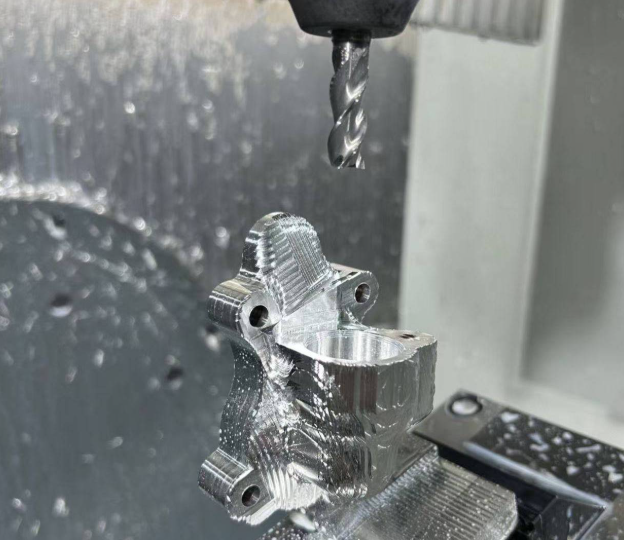
Machined surfaces from turning, milling, drilling, or boring are often used as the final finish when additional coatings are unnecessary.
Typical characteristics:
Roughness: around 1.6–6.3 µm Ra for general machining, down to 0.8 µm Ra or better for fine finishing with optimized parameters.
Visual texture: visible tool marks, directional lay corresponding to feed direction.
Functional notes: suitable for many mechanical components, but raw steel surfaces without coating are vulnerable to corrosion.
Grinding and Superfinishing
Grinding uses abrasive wheels to produce dimensionally accurate, smooth surfaces on hardened or difficult materials. Superfinishing and lapping further reduce roughness.
Typical ranges:
Surface grinding: approximately 0.2–0.8 µm Ra.
Lapping and superfinishing: approximately 0.05–0.2 µm Ra, sometimes lower with specialized processes.
Applications: bearing races, sealing surfaces, precision shafts, gauge surfaces, and any application needing tight tolerances and low roughness.
Bead Blasting and Abrasive Blasting
Bead blasting, sand blasting, and shot blasting use propelled media (glass beads, ceramic beads, steel shot, or sand) to create a uniform matte texture and remove scale or light defects.
Key characteristics:
Appearance: satin or matte finish, hides minor machining marks and small surface flaws.
Roughness: depends on media type and pressure; can be moderate (rougher than fine machining) but visually uniform.
Common uses: cosmetic surfaces, pre-treatment before coating, deburring, cleaning welds, and homogenizing surface reflectivity.
Polishing and Buffing
Polishing uses abrasive compounds and wheels to smooth and brighten surfaces, while buffing further improves gloss.
Characteristics:
Roughness: down to ≤ 0.05 µm Ra for mirror-like finishes when performed correctly.
Appearance: high gloss or mirror finish; scratches and directional marks minimized or eliminated.
Applications: decorative components, sanitary fittings, medical instruments, reflectors, consumer electronics, and high-end hardware.
Electropolishing
Electropolishing is an electrochemical process that removes a very thin, controlled layer of metal from the surface, smoothing micro-peaks and improving corrosion resistance.
Key aspects:
Roughness: can reduce Ra by approximately 30–50% from the pre-polished condition, depending on material and process control.
Benefits: improved corrosion resistance (especially for stainless steel), reduced contamination sites, improved cleanability, and deburring of micro-edges.
Typical use: stainless steel components in food, pharmaceutical, semiconductor, and medical applications.
Anodizing of Aluminum
Anodizing converts the surface of aluminum into a controlled oxide layer that is hard, porous, and receptive to dyes.
Main types (terminology varies by region and standard):
Decorative (thin) anodizing: coating thickness around 5–15 µm; used for color and moderate corrosion resistance.
Hard anodizing: coating thickness around 25–50 µm or higher; significantly increases wear resistance and durability.
Key characteristics:
Hardness: anodic layer hardness can be approximately 300–500 HV for hard anodize, depending on alloy and process.
Porosity: allows dyeing for colored finishes, then sealed to close pores and enhance corrosion resistance.
Applications: enclosures, heat sinks, consumer products, structural components, pneumatic components, and wear surfaces.
Conversion Coatings for Aluminum and Zinc
Conversion coatings form a thin, chemically bonded layer on the metal surface without adding significant thickness.
Representative examples include chromate, chromate-free, or trivalent chromium conversion coatings for aluminum and zinc.
Characteristics:
Thickness: typically 0.2–2 µm, so effect on dimensions is minimal.
Functions: improved corrosion resistance, enhanced paint adhesion, and better electrical conductivity than most thick coatings.
Use cases: electrical enclosures, connectors, and parts where conductivity and corrosion protection are both required.
Electroplating and Electrolytic Coatings
Electroplating deposits a metal layer onto a substrate using an electric current in an electrolyte bath. Common plating metals include zinc, nickel, chrome, tin, and copper.
Key parameters:
Thickness: typically from a few micrometers up to tens of micrometers, depending on function. For example, zinc plating for corrosion protection is often around 5–25 µm.
Hardness: can be tailored; hard chrome coatings, for example, may reach hardness values in the range of 800–1000 HV.
Examples and applications:
Zinc plating: corrosion protection for steel fasteners and hardware, often with passivation layers for additional protection.
Nickel plating: decorative and corrosion-resistant coating, sometimes used for leveling surface defects.
Chrome plating: wear-resistant and decorative layer, often over a nickel base.
Considerations: internal blind holes and deep recesses may plate unevenly; dimensional impact must be considered for tight fits.
Chemical Plating (Electroless Plating)
Electroless plating deposits metal (commonly nickel or copper) via chemical reduction without external current, producing a uniform coating even on complex geometries.
Characteristics:
Thickness: often 5–25 µm for electroless nickel, with specialized options for thicker coatings.
Uniformity: coverage is relatively even over complex shapes, including internal passages and recesses.
Properties: improved wear resistance, corrosion resistance, and sometimes controlled phosphorus content for specific hardness and magnetic properties.
Passivation of Stainless Steel
Passivation is a chemical treatment (commonly using citric or nitric-based solutions) that removes free iron and promotes formation of a stable, protective oxide film on stainless steel.
Characteristics:
Thickness: virtually no significant thickness added; effect is chemical rather than build-up.
Benefits: improved corrosion resistance, especially after machining or fabrication processes that may disrupt the native oxide layer.
Applications: general stainless steel components, fittings, fasteners, and parts exposed to mild to moderate corrosive environments.
Black Oxide and Phosphate Coatings
Black oxide (bluing) and phosphate coatings form thin conversion layers on ferrous materials. They offer moderate corrosion resistance, usually combined with oil or other sealants.
Characteristics:
Thickness: typically 0.2–2 µm; negligible dimensional impact.
Uses: tools, firearms, machine components, and parts where non-reflective appearance and mild corrosion protection are sufficient.
Powder Coating and Liquid Painting
Powder coating applies electrostatically charged powder that is then cured to form a continuous polymer film. Liquid paints use liquid carriers and may be air-dried or baked.
Key aspects:
Thickness: powder coatings commonly 50–150 µm total; liquid paints vary widely, often around 25–75 µm for typical systems.
Properties: good corrosion resistance, wide color and gloss range, and good impact and chip resistance when properly applied.
Applications: enclosures, frames, consumer goods, automotive parts, and outdoor structures.
Thermal Spray Coatings
Thermal spray processes (such as flame spray, plasma spray, and HVOF) apply molten or semi-molten particles onto a surface to build thick, functional coatings.
Characteristics:
Thickness: can range from approximately 50 µm to over 1 mm, depending on requirement.
Functions: wear resistance, corrosion resistance, thermal barrier, or dimensional restoration of worn parts.
How Surface Finish Affects Performance
Surface finish influences mechanical, tribological, and environmental performance. Understanding these relationships helps define appropriate specifications.
Corrosion Resistance
Surface condition and coating choice significantly affect corrosion behavior:
Smoother surfaces have fewer crevices where corrosive media can accumulate, reducing local attack initiation sites.
Coatings such as anodizing, plating, passivation, and painting form protective barriers or passive layers. Thickness, continuity, and adhesion are critical to effectiveness.
Rough blasting before coating can improve mechanical adhesion but may also create features that must be fully covered to avoid localized corrosion.
Wear and Friction
Roughness level directly affects friction and wear patterns:
Too rough surfaces may cause abrasive wear and increased friction.
Extremely smooth surfaces may reduce lubricant retention and cause boundary lubrication issues in some applications.
Common practice is to select an intermediate roughness suitable for the lubrication regime and load, for example Ra around 0.1–0.4 µm for many precision sliding applications with lubrication.
Fatigue Life and Stress Concentration
Surface defects, scratches, and high roughness can act as stress raisers and reduce fatigue life, particularly in high-cycle loading environments.
Processes like shot peening can introduce beneficial compressive residual stresses but also increase surface roughness. A balance between compressive stress and surface smoothness is often considered in critical components.
Sealing and Leakage Control
Sealing surfaces for O-rings, gaskets, and mechanical seals require controlled roughness:
Excessively rough surfaces can cut or damage elastomeric seals or provide leak paths.
Overly smooth surfaces may not provide enough micro-anchoring for gaskets or adequate lubricant retention for dynamic seals.
Typical seal surface roughness values may be on the order of 0.1–0.8 µm Ra, depending on seal type and operating conditions.
Cleanability and Sanitary Requirements
In food, pharmaceutical, and medical industries, cleanability and hygiene are critical. Surface specifications often limit roughness and require specific finishing processes:
Stainless steel tubing and vessels usually have defined maximum Ra values (commonly at or below approximately 0.8 µm Ra) and may use mechanical polishing and electropolishing.
Smooth, crevice-free surfaces reduce microbial retention and simplify cleaning validation.
Matching Surface Finishes to Common Applications
Combining performance requirements with material and cost targets leads to a practical selection of finishing methods. The following table outlines typical combinations for frequently encountered application types.
| Application | Typical Base Material | Common Surface Finish Choices | Key Considerations |
|---|---|---|---|
| Structural brackets (indoor) | Carbon steel, aluminum | Zinc plating, powder coating, as-machined | Corrosion protection, cost, aesthetic requirements |
| Outdoor enclosures | Aluminum, stainless steel, coated steel | Anodizing, powder coating, passivated stainless | UV stability, corrosion resistance, color matching |
| Precision shafts and bushings | Alloy steel, stainless steel, bronze | Grinding, superfinishing, hard chrome, electroless nickel | Dimensional accuracy, wear resistance, lubrication behavior |
| Hydraulic / pneumatic components | Steel, aluminum | Grinding, honing, anodizing, plating | Sealing performance, corrosion inside bores, cleanliness |
| Food and pharma equipment | Stainless steel | Mechanical polishing, electropolishing, passivation | Cleanability, corrosion resistance, regulatory compliance |
| Consumer electronics housings | Aluminum, stainless, zinc alloys | Anodizing (colored), bead blasting + anodizing, PVD, painting | Appearance, scratch resistance, fingerprint visibility |
| Fasteners and small hardware | Carbon steel, stainless steel | Zinc plating, phosphate + oil, passivation (stainless) | Corrosion rating, thread fit, torque-tension behavior |
| Medical instruments | Stainless steel, titanium | Passivation, electropolishing, fine polishing | Cleanability, corrosion resistance, biocompatibility |
| Molds and dies | Tool steel | Grinding, polishing, nitriding, PVD coatings | Release properties, wear resistance, dimensional stability |
Practical Pain Points in Surface Finish Selection
Several recurring issues appear in practice when specifying or implementing surface finishes for metal parts.
Overly Tight Roughness Specifications
Specifying extremely low Ra values across all surfaces can increase machining time, tooling cost, and inspection complexity without adding functional value. It is often more effective to restrict tight roughness requirements to critical surfaces only.
Ignoring Coating Thickness in Tolerance Stack-Up
Finishes that add material, such as plating or powder coating, can cause interference fits or assembly difficulties if not included in the tolerance scheme.
Good practice includes:
Subtracting expected coating thickness from machined dimensions where needed.
Coordinating with finishers to agree on thickness ranges and uniformity expectations.
Inconsistent Finishes Between Suppliers
Vague specifications like “smooth finish” or “cosmetic finish” often lead to inconsistency between suppliers and production lots. Defining measurable parameters, reference samples, and inspection criteria helps achieve consistent results.
Surface Finish on Complex Geometries
Internal bores, threads, sharp recesses, and fine features may be difficult to reach or finish uniformly. Plating distribution, polishing accessibility, and masking for coatings require attention during design and process planning.
Guidelines for Specifying Surface Finish on Drawings
Clear communication of surface finish requirements on engineering drawings is essential for repeatable manufacturing and quality control.
Indicating Roughness Values
Use standardized symbols and notation according to applicable drawing standards. Indicate roughness value (e.g., Ra 1.6 µm) adjacent to the surface or with a generalized note applied to specific surfaces or the entire part.
Where necessary, specify maximum roughness rather than target values, and identify measurement direction and sampling length for critical surfaces.
Defining Areas with Different Finish Requirements
Not all surfaces need the same level of finishing. It is often efficient to define zones:
Critical functional surfaces (e.g., sealing faces, bearing seats) with precise finish requirements.
Secondary surfaces with more relaxed specifications, such as “as-machined” or “as-cast, cleaned.”
Specifying Coatings and Treatments
For coatings, include:
Coating type (e.g., “Electroless nickel on steel”).
Thickness range (e.g., “10–15 µm”).
Any relevant standards or test requirements (e.g., salt spray duration, adhesion tests) if needed for the application.
Note whether threads, sealing surfaces, or certain features are to be masked or excluded from coating.
Inspection and Acceptance Criteria
Define which surfaces require roughness measurement, visual inspection standards, and sampling plans. For cosmetic surfaces, reference visual standards, sample panels, or agreed photo documentation where appropriate.
Step-by-Step Approach to Choosing a Surface Finish
A systematic approach helps align surface finish with performance and manufacturing needs.
1) Identify Functional and Environmental Requirements
Define operating temperature range, exposure to moisture or chemicals, mechanical loads, type of motion (static, sliding, rolling), and cleanliness requirements. This narrows the field of suitable finishes.
2) Select Base Manufacturing Process and Baseline Roughness
Choose casting, forging, machining, or other primary processing methods based on geometry, volume, and cost. Note the baseline surface quality; this will influence how much additional finishing is required.
3) Choose Candidate Finishing Processes
Based on material and requirements, select feasible processes (e.g., bead blasting + anodizing for aluminum housings; grinding + hard chrome for wear surfaces). Consider coating thickness limits, coverage, and access to high-quality finishing suppliers.
4) Define Quantitative Specifications
Set roughness targets for critical surfaces, coating thickness ranges, color and gloss where relevant, and any special requirements such as conductivity or non-reflectivity. Make sure tolerances account for finishing effects.
5) Validate Through Prototyping and Testing
Produce samples and evaluate corrosion behavior, wear performance, sealing quality, assembly fit, and cosmetic appearance under realistic conditions. Adjust specifications as necessary to balance performance and cost.
FAQs About Metal Surface Finishes
What are common types of metal surface finishes?
Common finishes include polishing, brushing, anodizing, electroplating, powder coating, passivation, and painting.
How do I choose the right metal surface finish?
Selection depends on material type, application environment, mechanical requirements, cost, and aesthetic expectations.
Do metal surface finishes affect corrosion resistance?
Yes, surface finishes play a critical role in improving corrosion resistance and extending the service life of metal components.
Can metal surface finishes improve wear resistance?
Certain finishes, such as hard anodizing and plating, significantly improve wear and abrasion resistance.