CNC machining depends heavily on material choice. The same design can behave very differently in aluminum, steel, brass, or plastic, with strong implications for mechanical performance, part life, machining time, and cost. This guide explains the most commonly used CNC materials, focusing on engineering properties, machinability, costs, and typical use cases.
Key Criteria When Choosing CNC Materials
Before comparing specific grades, it is useful to clarify the main criteria that influence material selection for CNC parts.
Mechanical and Physical Properties
Core mechanical and physical parameters include:
- Yield strength and tensile strength: resistance to permanent deformation and rupture.
- Hardness: resistance to indentation, wear, and scratching.
- Elastic modulus: stiffness and deformation under load.
- Density: weight per unit volume, critical for moving parts and weight-sensitive systems.
- Fatigue resistance: behavior under cyclic loading.
- Impact resistance and toughness: ability to absorb energy without catastrophic failure.
For many CNC parts, there is a trade‑off between strength, stiffness, weight, and toughness. High-strength steels can provide very high load capacity but also increase weight and machining effort. Aluminum offers a good balance of strength and low density. Engineering plastics can provide low weight and excellent friction behavior but typically lower stiffness.
Chemical and Environmental Resistance
Chemical and environmental conditions strongly influence material selection:
- Corrosion resistance: exposure to moisture, salt, chemicals, or high humidity may favor stainless steels, aluminum alloys with suitable surface treatment, or certain plastics.
- Temperature capability: high-temperature environments may require tool steels, high-alloy steels, or high‑temperature plastics; low-temperature conditions may rule out brittle plastics.
- UV and weathering resistance: outdoor applications may require UV-stabilized plastics or metals with appropriate coatings.
Ignoring environmental conditions often leads to dimensional changes, premature corrosion, or embrittlement in service.
Machinability and Dimensional Accuracy
Machinability affects cycle time, tool wear, achievable tolerances, and surface finish. Typical aspects are:
- Cutting speed and feed rates: govern production throughput and machining cost.
- Chip formation: long, stringy chips can complicate chip evacuation; short, broken chips are easier to manage.
- Tool wear: harder or abrasive materials require more frequent tool changes.
- Thermal behavior: some plastics soften locally under cutting heat; some alloys harden work surfaces.
Materials with good machinability (for example free‑machining steels or brass) typically enable tighter tolerances at lower cost. Difficult materials may require specialized tooling, coolants, and conservative cutting parameters.
Cost Structure
Total cost of a CNC part is influenced by:
Material cost: raw stock price per kg or per volume, including waste due to stock geometry and required allowances.
Machining cost: machine time, setup time, tool wear, coolant, and secondary operations such as deburring, finishing, or heat treatment.
For many projects, machining time dominates cost more than raw material price. A slightly more expensive material that machines quickly can be more economical than a cheaper but difficult material.
Summary Comparison of Common CNC Materials
The following table gives an overview of typical properties and behaviors of popular CNC materials. Values are indicative ranges for common grades under standard conditions and are not design values.
| Material Family | Example Grade | Density (g/cm³) | Tensile Strength (MPa) | Yield Strength (MPa) | Relative Machinability | Relative Material Cost | Typical Applications |
|---|---|---|---|---|---|---|---|
| Aluminum alloy | 6061-T6 | 2.70 | 290–320 | 240–275 | High | Low–Medium | General components, jigs, fixtures, housings |
| Aluminum alloy | 7075-T6 | 2.81 | 510–570 | 430–505 | Medium | Medium–High | Aerospace parts, high-load mechanical components |
| Mild/carbon steel | 1018 / C22 | 7.85 | 440–500 | 250–320 | Medium | Low | Shafts, brackets, structural components |
| Alloy steel | 4140 (QT) | 7.85 | 850–1100 | 650–950 | Medium–Low | Medium | Gears, spindles, high-strength components |
| Stainless steel | 304 | 7.90 | 520–750 | 205–300 | Low–Medium | Medium | Food equipment, housings, fasteners |
| Stainless steel | 316 | 8.00 | 515–760 | 205–300 | Low–Medium | Medium–High | Chemical, marine parts, valves |
| Brass | C360 (free machining) | 8.44 | 350–500 | 200–350 | Very High | Medium | Fittings, inserts, electrical connectors |
| Copper | Cu-ETP | 8.94 | 200–250 | 70–100 | Medium–Low | Medium–High | Busbars, heat sinks, contacts |
| Acetal (POM) | POM-C | 1.41 | 60–75 | 55–70 | High | Medium | Gears, bushings, guide components |
| Nylon (PA) | PA6 / PA66 | 1.13–1.16 | 60–85 (dry) | 45–75 (dry) | Medium | Medium | Wear parts, pads, rollers |
| ABS | ABS general purpose | 1.02–1.06 | 40–50 | 35–45 | High | Low–Medium | Housings, prototypes, enclosures |
| PEEK | Unfilled PEEK | 1.30 | 90–100 | 85–95 | Medium–Low | High | High-temp, chemical-resistant components |
Aluminum Alloys for CNC Parts
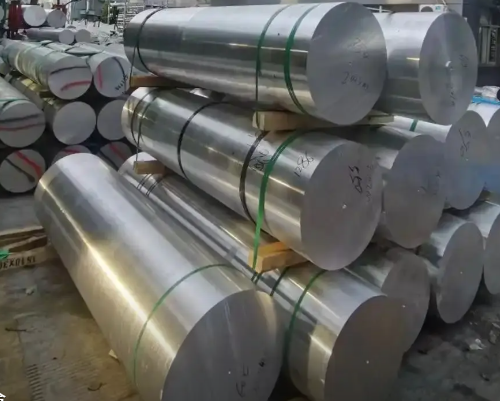
Aluminum alloys are among the most widely used CNC materials because they combine low density, good strength, excellent machinability, and favorable corrosion resistance. They are suitable for structural parts, housings, fixtures, and many functional components.
Aluminum 6061
Aluminum 6061-T6 is a versatile, precipitation-hardened alloy containing magnesium and silicon.
Typical mechanical properties (T6 temper, reference values):
Density: ~2.70 g/cm³
Ultimate tensile strength: 290–320 MPa
Yield strength: 240–275 MPa
Elongation at break: 8–12%
Elastic modulus: ~69 GPa
Brinell hardness: ~95 HB
Machinability characteristics:
Machinability is generally high. It can be milled, turned, drilled, and tapped with high cutting speeds. Surface finish is usually good with standard carbide tools. Coolant helps evacuate chips and manage heat but is often not critical for light cuts.
Advantages for CNC parts:
Good strength-to-weight ratio, suitable for many mechanical applications where extreme strength is not required.
Good corrosion resistance under typical atmospheric conditions.
Easy to anodize for improved surface hardness and appearance.
Stable, predictable machining behavior.
Typical applications:
Machine frames and brackets, electronic device housings, jigs and fixtures, automotive and aerospace non-critical components, general-purpose structural and mechanical parts.
Aluminum 7075
Aluminum 7075-T6 is a high-strength alloy primarily alloyed with zinc. It is frequently used where strength is critical and weight must be minimized.
Typical mechanical properties (T6 temper, reference values):
Density: ~2.81 g/cm³
Ultimate tensile strength: 510–570 MPa
Yield strength: 430–505 MPa
Elongation at break: 5–11%
Elastic modulus: ~71 GPa
Brinell hardness: ~150 HB
Machinability characteristics:
Machinability is medium. It is more abrasive than 6061 and requires sharp tools and appropriate cutting parameters. Proper chip evacuation is important for consistency. Surface finish can be excellent with suitable tooling. It is less suitable for complex, thin-wall features if not properly supported due to higher strength and potential residual stresses.
Advantages for CNC parts:
Very high strength-to-weight ratio compared to many aluminum alloys.
Good fatigue strength.
Can be anodized; hard anodizing can enhance surface wear resistance.
Typical applications:
High-load aerospace and motorsport components, structural parts in performance equipment, high-strength mechanical components where steel weight is not acceptable.
Other Aluminum CNC Grades
Additional alloys commonly used in CNC machining include:
Aluminum 2024: high strength and fatigue resistance, used in aerospace structural components; more challenging corrosion resistance, often requires protective coatings.
Aluminum 5083: excellent corrosion resistance in marine environments, good weldability; usually supplied in non-heat-treatable tempers.
Aluminum 6082: similar to 6061, popular in Europe, good strength, weldability, and machinability.
Carbon and Alloy Steels for CNC Parts
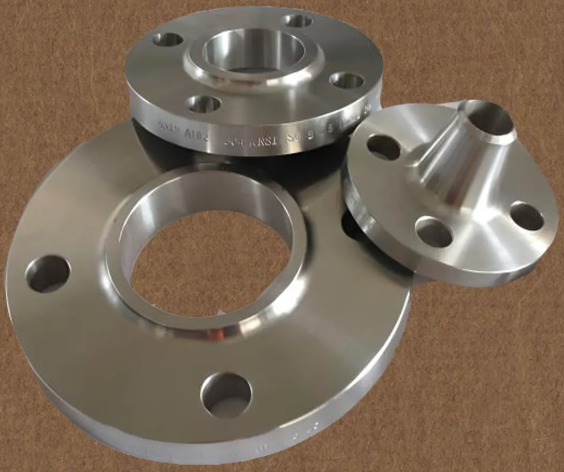
Carbon steels and alloy steels are selected when high strength, hardness, stiffness, and wear resistance are primary requirements. They offer superior mechanical performance compared with aluminum but are heavier and typically more demanding to machine.
Low Carbon/Mild Steel (e.g., 1018, S235, C22)
Low carbon steels have a carbon content typically between 0.05–0.25%. They are widely available, relatively inexpensive, and have good machinability in normalized or cold-drawn conditions.
Typical mechanical properties for a representative low carbon steel (e.g., 1018):
Density: ~7.85 g/cm³
Ultimate tensile strength: 440–500 MPa
Yield strength: 250–320 MPa
Elongation at break: 15–25%
Elastic modulus: ~210 GPa
Brinell hardness: ~120–170 HB
Machinability characteristics:
Machinability is medium to good. It can be turned and milled with standard tooling. Surface finish is generally acceptable. Compared with free-machining grades, chip control may need attention. It can be welded easily, which is useful for assemblies combining welded and machined features.
Considerations and limitations:
Unprotected low carbon steel corrodes readily in humid or corrosive environments; coatings, paint, or plating may be required.
Lower hardness than alloy steels, so wear surfaces may require hardening.
Typical applications:
Structural components, machine frames, shafts, brackets, fixtures, gears in low to moderate load applications.
Free-Machining Steel (e.g., 12L14)
Free-machining steels contain elements such as sulfur, phosphorus, or lead to improve machinability. Grade 12L14, for example, offers very high machinability for turned and milled parts.
Key traits:
Very good chip breaking and surface finish.
Reduced tool wear and shorter machining cycle times.
Typically used for high-volume production where machining cost dominates.
Trade-offs:
Reduced toughness compared with low-sulfur steels.
Lead-containing grades may be restricted in certain applications due to regulations or environmental policies.
Alloy Steel (e.g., 4140, 4130)
Alloy steels such as 4140 (chromium-molybdenum steel) provide high strength, good toughness, and wear resistance. They are often used in quenched and tempered (QT) condition.
Typical mechanical properties for 4140 QT (values vary with tempering):
Density: ~7.85 g/cm³
Ultimate tensile strength: ~850–1100 MPa
Yield strength: ~650–950 MPa
Elongation at break: 10–18%
Elastic modulus: ~210 GPa
Brinell hardness: ~200–320 HB
Machinability characteristics:
Machinability is medium to low compared with mild steel. Harder tempers require rigid setups, appropriate tool materials (coated carbide or better), and optimized feeds and speeds. Pre-hard (pre-hardened) variants are often chosen to avoid post-machining heat treatment.
Typical applications:
Gears, spindles, crankshafts, high-load shafts, tooling components, and safety-critical mechanical parts requiring strength and toughness.
Stainless Steels for CNC Parts
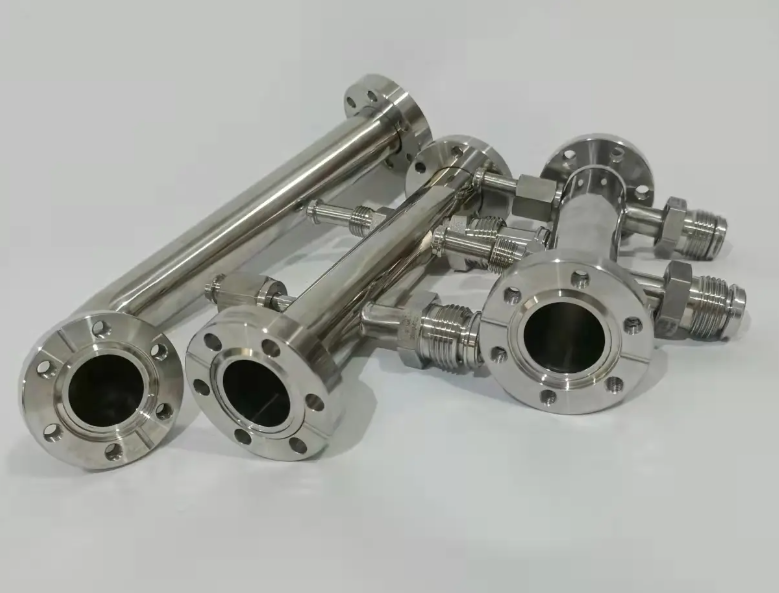
Stainless steels are used where corrosion resistance is needed along with adequate mechanical properties. They can be more difficult to machine than carbon steels and often require optimized processes and tooling.
Austenitic Stainless Steel 304
Stainless steel 304 is a widely used austenitic grade with good corrosion resistance in many environments.
Typical properties:
Density: ~7.90 g/cm³
Ultimate tensile strength: 520–750 MPa
Yield strength: 205–300 MPa
Elongation at break: 40–60%
Elastic modulus: ~193 GPa
Brinell hardness: ~150–200 HB
Machinability characteristics:
Machinability is generally lower than for carbon steels. The material tends to work-harden, requiring sharp tools, adequate coolant, and proper feed rates. Cutting at too low a feed can increase work hardening and shorten tool life. Chip control must be planned.
Advantages:
Good general corrosion resistance in many atmospheres.
Non-magnetic in annealed condition.
Good formability and weldability; CNC machining often used for precision features and finishing.
Typical applications:
Food and beverage processing equipment, chemical equipment (non-high chloride), housings, brackets, fasteners, decorative and functional hardware.
Austenitic Stainless Steel 316
Stainless steel 316 contains molybdenum for improved resistance to chlorides and many chemicals.
Typical properties:
Density: ~8.00 g/cm³
Ultimate tensile strength: 515–760 MPa
Yield strength: 205–300 MPa
Elongation at break: 40–60%
Elastic modulus: ~193 GPa
Brinell hardness: ~150–200 HB
Machinability characteristics:
Machinability is similar to 304, typically slightly more challenging due to higher alloying. The same recommendations apply: sharp tools, consistent feed, abundant coolant, and rigid setups.
Typical applications:
Marine fittings and components, chemical processing equipment, valves and pumps, medical and pharmaceutical equipment where corrosion resistance is critical.
Martensitic and Precipitation Hardening Stainless Steels
Other stainless grades used in CNC machining include:
410, 420 (martensitic): higher hardness, can be heat treated for wear-resistant parts such as blades and tools; machinability depends on hardness state.
17-4PH (1.4542): precipitation hardening grade with high strength and moderate corrosion resistance; machinability is moderate; can be machined in solution-annealed or pre-aged conditions depending on final properties required.
Brass and Copper Alloys for CNC Parts
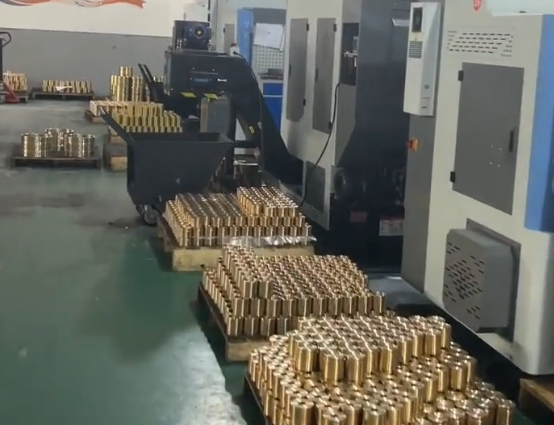
Brass and copper alloys are widely used for parts requiring good electrical or thermal conductivity, corrosion resistance, and excellent machinability. They are especially common in electrical, plumbing, and instrumentation industries.
Brass (e.g., C360 Free-Machining Brass)
C360 brass is a leaded, free-machining brass that offers very high machinability and good mechanical properties for many fittings and small components.
Typical properties:
Density: ~8.44 g/cm³
Ultimate tensile strength: 350–500 MPa
Yield strength: 200–350 MPa
Elongation at break: 5–30% (depends on temper)
Elastic modulus: ~100–110 GPa
Brinell hardness: ~100–160 HB
Machinability characteristics:
Machinability is very high. Brass can be machined at high speeds with excellent surface finish and minimal tool wear. It produces short chips, making it particularly suitable for high-speed turning, screw machining, and automatic lathes.
Typical applications:
Hydraulic and pneumatic fittings, threaded inserts, couplings, electrical and electronic connectors, decorative hardware, instrumentation components.
Copper
Copper offers high electrical and thermal conductivity and is used where these properties are critical. Common grades include electrolytic tough pitch copper (Cu-ETP) and oxygen-free copper (OFHC).
Typical properties (Cu-ETP):
Density: ~8.94 g/cm³
Ultimate tensile strength: 200–250 MPa
Yield strength: 70–100 MPa
Elongation at break: 20–45%
Electrical conductivity: ~97–100% IACS
Thermal conductivity: ~390–400 W/m·K
Machinability characteristics:
Machinability is medium to low. Copper can tend to form long, continuous chips and may adhere to cutting tools, especially at higher temperatures. Sharp tools, suitable cutting fluids, and chip-breaking strategies are important. For better machinability at some cost in conductivity, copper alloys (such as tellurium copper) are often selected.
Typical applications:
Busbars, high-current conductors, terminals and lugs, heat sinks and thermal management components, RF and microwave components, custom electrical connectors and contacts.
Engineering Plastics for CNC Parts
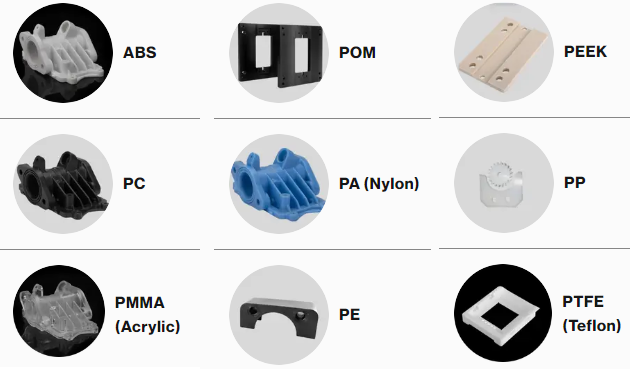
Engineering plastics are common in CNC machining for low weight, low friction, chemical resistance, and electrical insulation. They are especially suitable for wear parts, insulators, and components where noise and lubrication are concerns.
Acetal (POM, Delrin)
Acetal (polyoxymethylene, POM) is a semi-crystalline thermoplastic offering high stiffness, low friction, and good dimensional stability.
Typical properties (unfilled POM-C):
Density: ~1.41 g/cm³
Ultimate tensile strength: 60–75 MPa
Yield strength: 55–70 MPa
Elongation at break: 20–40%
Elastic modulus: ~2.5–3.0 GPa
Operating temperature (continuous): approximately −40 °C to +100 °C (grade-dependent)
Machinability characteristics:
Machinability is high. POM machines cleanly on milling and turning centers with sharp tools. It generates short chips and allows high feed rates. Heat buildup must be monitored to avoid local melting or deformation, especially in drilling or aggressive cuts.
Advantages:
Low friction and good wear resistance in dry or lubricated conditions.
Good dimensional stability and low moisture absorption relative to many other plastics.
Good chemical resistance to many solvents and fuels.
Typical applications:
Gears, sprockets, bushings, bearings, rollers, valve components, precision mechanical parts, jigs where low friction is beneficial.
Nylon (PA6, PA66)
Nylon is commonly available as PA6 and PA66. It offers good strength and wear resistance but has higher moisture absorption than POM, which affects dimensions and mechanical properties.
Typical properties (dry PA6/PA66):
Density: ~1.13–1.16 g/cm³
Ultimate tensile strength: ~60–85 MPa
Yield strength: ~45–75 MPa
Elongation at break: 30–60%
Elastic modulus: ~2.5–3.0 GPa (dry, decreases when wet)
Machinability characteristics:
Machinability is medium. Nylon can be machined with high-speed steel or carbide tools. It is relatively soft and may deflect under cutting forces; sharp tools and low cutting forces help maintain dimensional accuracy. Heat control and chip evacuation are important, as nylon softens with temperature and can smear on tools.
Special considerations:
Moisture absorption causes dimensional changes and a reduction in stiffness. For tight tolerances and stable dimensions, environmental conditions should be accounted for during design and inspection.
Typical applications:
Wear pads, rollers, slide components, noise-damping parts, gear wheels in moderate-load applications, insulating components where moderate mechanical strength is acceptable.
ABS
ABS (acrylonitrile-butadiene-styrene) is a versatile thermoplastic used for prototypes, housings, and light-duty mechanical parts.
Typical properties:
Density: ~1.02–1.06 g/cm³
Ultimate tensile strength: 40–50 MPa
Yield strength: 35–45 MPa
Elongation at break: 10–50% (grade-dependent)
Elastic modulus: ~2.0–2.5 GPa
Machinability characteristics:
ABS machines well, with good surface finish and relatively low tool wear. It is less dimensionally stable than POM and may be prone to stress whitening or localized melting if feeds and speeds are not balanced. Sharp tools and moderate cutting parameters are recommended.
Typical applications:
Enclosures and housings, fixtures for electronics, non-structural prototype parts, covers and panels, components requiring easy finishing or painting.
PEEK
PEEK (polyether ether ketone) is a high-performance thermoplastic with excellent mechanical, thermal, and chemical resistance. It is used where plastics must withstand demanding environments.
Typical properties (unfilled PEEK):
Density: ~1.30 g/cm³
Ultimate tensile strength: 90–100 MPa
Yield strength: 85–95 MPa
Elongation at break: 20–40%
Elastic modulus: ~3.6–4.0 GPa
Continuous service temperature: up to ~250 °C (environment and grade dependent)
Machinability characteristics:
Machinability is medium to low compared with commodity plastics. PEEK is tougher, and heat generation must be controlled. Carbide tools are preferred. Coolant is often recommended for longer runs. Clamping and support must be sufficient to prevent chatter and deflection.
Typical applications:
Components in chemical processing, oil and gas, aerospace, and medical devices; high-temperature electrical insulators; wear and sealing components exposed to aggressive media.
Cost and Machining Time Considerations
Material choice influences both raw material cost and machining cost. The following table summarizes typical relative tendencies without replacing project-specific cost analysis.
| Material | Raw Material Cost Level | Machining Speed / Time | Tool Wear | Notes on Cost Impact |
|---|---|---|---|---|
| Aluminum 6061 | Low–Medium | Fast | Low | Often lowest total cost for general parts due to high machinability. |
| Aluminum 7075 | Medium–High | Medium | Medium | Higher raw cost and somewhat slower machining, justified for high-strength needs. |
| Mild steel (1018) | Low | Medium | Medium | Good choice when strength and low raw cost are more important than speed. |
| Alloy steel (4140) | Medium | Slower | Higher | High total cost if machining from hardened stock; pre-hard state often used. |
| Stainless steel 304/316 | Medium–High | Slower | Higher | Tooling and machine time significantly affect overall part cost. |
| Brass C360 | Medium | Very fast | Very low | Excellent for high-volume parts: machining savings often offset raw cost. |
| Copper | Medium–High | Medium–Slow | Medium | Chosen for functional properties (conductivity), not for cost efficiency alone. |
| POM (Acetal) | Medium | Fast | Low | Efficient for wear parts and small components where plastics are acceptable. |
| Nylon | Medium | Medium | Low | Moisture-related dimensional changes must be considered in tolerance planning. |
| ABS | Low–Medium | Fast | Low | Often economical for prototypes and housings; good balance of cost and machinability. |
| PEEK | High | Slow–Medium | Medium–High | Used where performance requirements justify higher material and machining costs. |
Dimensional Tolerances and Surface Finish by Material
Different materials react differently to cutting forces, temperature, and clamping. These effects influence achievable tolerances and surface finish quality.
Tolerances
Metals with high stiffness (steels, aluminum alloys) generally allow tighter tolerances under the same fixture conditions than softer plastics. Common CNC tolerances under controlled conditions include:
General metal parts (aluminum, steel, stainless): ±0.05 mm is typical, ±0.01–0.02 mm in critical features with optimized setups and tooling.
Brass and copper: similar to other metals, though thin features may require extra support.
Engineering plastics (POM, nylon, ABS): ±0.1 mm is common; tighter tolerances require control of temperature, moisture, and machining parameters.
Highly accurate parts benefit from process planning, stable clamping, thermal control, and appropriate roughing/finishing strategies (for example, leaving finishing allowances and using a final finishing pass at stable conditions).
Surface Finish
Surface finish is often defined in terms of arithmetic average roughness (Ra). Typical CNC machining ranges under normal conditions:
Aluminum: Ra around 1.6–3.2 μm with standard milling; Ra below 0.8 μm possible with fine finishing and polishing.
Steel and stainless steel: Ra around 1.6–3.2 μm; fine finishing and grinding may be used where lower roughness is required.
Brass: often better finish directly from machining, sometimes below 1.6 μm without additional finishing.
Plastics: finish depends heavily on cutting parameters and tool sharpness; POM typically provides smooth surfaces, while glass-filled or fiber-reinforced plastics may show tool marks and higher roughness.
Common Issues in CNC Material Selection
Several recurring issues arise when selecting materials for CNC machining:
Unexpected distortion: thin-walled parts in aluminum, steel, or plastics may warp during machining or after unclamping due to internal stresses and cutting forces. Design and process planning should consider wall thickness, ribbing, and clamping strategy.
Premature corrosion: selecting unprotected carbon steel for humid or outdoor environments often leads to early corrosion. Stainless steel, aluminum with surface treatment, or suitable plastics can prevent this, though at higher cost.
Tool wear and long cycle times: choosing a difficult-to-machine material (for example hardened alloy steel or certain stainless grades) for simple components can disproportionately increase cost and lead time.
Dimensional instability in plastics: moisture absorption (nylon) or thermal expansion (many plastics) can cause parts to vary from nominal dimensions under actual operating conditions, if design does not account for environment.
Practical Guidelines for CNC Material Selection
To select an appropriate CNC material, designers and engineers can follow structured considerations:
Define Functional Requirements
Determine required properties before considering cost:
Mechanical loads: static, dynamic, fatigue, impact.
Environmental conditions: humidity, chemicals, salt spray, UV exposure, operating temperature range.
Contact conditions: sliding surfaces, lubrication, friction, and wear behavior.
Electrical and thermal requirements: conductivity or insulation, heat dissipation needs.
Match Material Families to Requirements
Once requirements are clear, material families can be matched accordingly:
Aluminum: when low weight, medium to high strength, good machinability, and moderate corrosion resistance are necessary.
Carbon/alloy steels: where high strength, stiffness, and wear resistance are critical and weight is less constrained.
Stainless steels: where corrosion resistance and reasonable mechanical properties are required, especially in food, medical, marine, and chemical environments.
Brass and copper: for electrical or thermal functions, or when very high machinability and good corrosion resistance are needed in fittings and connectors.
Engineering plastics: for low weight, low friction, noise reduction, chemical resistance, or electrical insulation.
Consider Cost and Manufacturing Constraints
Evaluate the impact of material choice on:
Raw material availability and stock forms (plate, bar, rod, tube).
Machining time for the required geometry and tolerances.
Tool wear and maintenance costs for long production runs.
Secondary operations such as heat treatment, anodizing, plating, or coating.
Validate with Prototypes and Testing
For critical parts, prototype runs in candidate materials provide practical data beyond datasheet values. Test parts should be evaluated for:
Dimensional stability after machining and over time.
Surface finish and fit with mating components.
Performance under actual loads and environmental conditions.
FAQ: CNC Materials Selection
What materials can be used for CNC machining?
CNC machining supports a wide range of materials, including metals (such as aluminum, steel, stainless steel, brass, and titanium) and plastics (such as ABS, POM/Delrin, Nylon, PC, and acrylic). Material choice depends on strength, durability, weight, cost, and application requirements.
How do I choose the right material for my CNC part?
Selecting the right material depends on factors such as mechanical strength, corrosion resistance, temperature tolerance, weight, surface finish, and budget. Our engineers can recommend the most suitable material based on your part’s function and operating environment.
What is the most cost-effective material for CNC machining?
Aluminum is often the most cost-effective CNC material due to its good machinability, lightweight properties, and balanced strength-to-cost ratio. Plastics such as ABS and Nylon are also economical options for non-load-bearing parts.
What is the best material for general-purpose CNC parts?
For many general-purpose CNC parts such as brackets, housings, and fixtures, aluminum 6061 is often a practical choice. It offers a good combination of strength, low weight, high machinability, reasonable corrosion resistance, and relatively low raw material cost. However, if parts require higher strength, better wear resistance, or specific environmental performance, carbon steel, stainless steel, or engineering plastics may be more suitable.
Can plastics be CNC machined as precisely as metals?
Yes, many engineering plastics can be CNC machined with high precision. However, plastics may have different tolerances due to thermal expansion and flexibility, which should be considered during design.