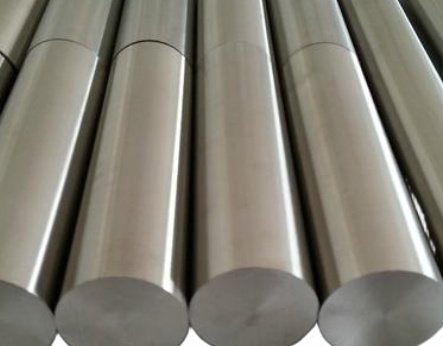
β (beta) titanium alloys are a major class of titanium alloys whose microstructure at high temperature and often at room temperature is dominated by the body-centered cubic (bcc) β phase. They are designed to provide high strength, good formability in the solution-treated condition, and high hardenability during aging treatments. These characteristics make beta titanium alloys important materials in aerospace, biomedical, chemical, and high‑performance engineering fields.
Fundamentals of Beta Titanium Alloys
Beta titanium alloys are based on the β phase of titanium, which has a body-centered cubic crystal structure. Pure titanium transforms from hexagonal close-packed (hcp) α phase to bcc β phase at about 882 °C (β‑transus temperature). Alloying additions stabilize one or both of these phases, shifting the β‑transus temperature and altering the phase balance at room temperature.
β-stabilizing elements such as vanadium, molybdenum, niobium, tantalum, chromium, iron, and manganese enable the β phase to be retained or metastably retained upon cooling to room temperature. The combination and amount of these elements determine whether the alloy behaves as an α, near‑α, α‑β, or β‑type titanium alloy.
Classification of Beta Titanium Alloys
In engineering practice, beta titanium alloys are commonly subclassified according to their stability and response to heat treatment. While detailed boundaries can vary slightly between sources, the following categories are widely recognized.
Metastable Beta Titanium Alloys
Metastable beta titanium alloys contain sufficient β‑stabilizing elements to retain the β phase upon quenching from above the β‑transus, but this β phase is metastable at room temperature. Controlled aging leads to precipitation of fine α or α‑like phases and a significant increase in strength.
Metastable β alloys are often used in aerospace structural components due to their high strength-to-weight ratio and good hardenability through thick sections. Common examples include Ti‑10V‑2Fe‑3Al and Ti‑15V‑3Cr‑3Al‑3Sn.
Near-Beta Titanium Alloys
Near‑beta titanium alloys contain a significant proportion of β-stabilizers but also retain some primary α phase after solution treatment. Their microstructure typically includes primary α, transformed β, and retained β. These alloys are useful where a balance between high strength, creep resistance, and damage tolerance is required, such as in some aero-engine components.
Fully Beta Titanium Alloys
Fully beta titanium alloys are highly β‑stabilized alloys where the β phase is stable at room temperature even after slow cooling. They allow extensive cold forming in the β condition and subsequent aging to achieve high strength levels. Some fully beta alloys are also used in spring and fastener applications, especially when excellent cold workability and high strength are desired.
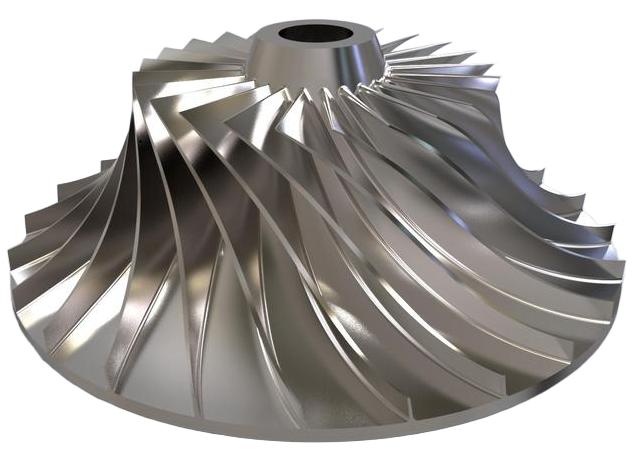
Typical Compositions and Representative Alloys
Beta titanium alloys contain titanium as the base element with carefully balanced amounts of β‑stabilizers and sometimes minor α‑stabilizers. The choice of alloying elements influences density, modulus, corrosion behavior, and biocompatibility as well as strength and hardenability.
| Alloy designation | Nominal composition (wt%) | Type | Typical applications |
|---|---|---|---|
| Ti-10V-2Fe-3Al (Ti-10-2-3) | Al 3, V 10, Fe 2, Ti balance | Metastable β | Aerospace forgings, landing gear, structural parts |
| Ti-15V-3Cr-3Al-3Sn | V 15, Cr 3, Al 3, Sn 3, Ti balance | Metastable β | Sheet and plate for airframe, springs, hydraulic systems |
| Ti-5Al-5Mo-5V-3Cr | Al 5, Mo 5, V 5, Cr 3, Ti balance | Near‑β | Aero-engine disks, structural forgings |
| Ti-3Al-8V-6Cr-4Mo-4Zr | Al 3, V 8, Cr 6, Mo 4, Zr 4, Ti balance | Metastable β | High strength aerospace components |
| Ti-13V-11Cr-3Al | V 13, Cr 11, Al 3, Ti balance | Metastable/β | Sheet, springs, structural parts |
| Ti-15Mo | Mo 15, Ti balance | β / metastable β | Biomedical components, corrosion-resistant parts |
| Ti-12Mo-6Zr-2Fe (Ti-12Mo-6Zr-2Fe) | Mo 12, Zr 6, Fe 2, Ti balance | Metastable β | Biomedical implants, orthopedic devices |
| Ti-35Nb-7Zr-5Ta (TNZT) | Nb 35, Zr 7, Ta 5, Ti balance | Metastable β | Low modulus biomedical implants |
Aluminum is a common α‑stabilizer used to refine precipitate strengthening behavior in some β alloys. Elements like niobium, tantalum, and zirconium are particularly important in biomedical β titanium alloys because of their favorable biocompatibility and ability to lower elastic modulus while maintaining corrosion resistance.
Microstructure and Phase Transformations
The performance of beta titanium alloys is strongly governed by their microstructure, which can be tailored via heat treatment and thermo-mechanical processing.
Beta Transus and Phase Stability
The β‑transus temperature is the temperature above which the microstructure is fully β. In β titanium alloys, this temperature depends on the content and type of β‑stabilizing elements. High β‑stabilizer content lowers the β‑transus, making the β phase stable over a wider temperature range. Microstructure at room temperature may include retained β, fine α precipitates, or a mixture of phases depending on the cooling path and subsequent aging.
Solution-Treated (β) Condition
After solution treatment above or near the β‑transus followed by quenching, metastable β alloys generally exhibit a β-dominated microstructure with suppressed α precipitation. This condition offers good formability, relatively low yield strength compared with the aged condition, and uniform properties through thick sections. Deformation in this condition can promote stress-induced transformations or ω phase formation, depending on composition and processing.
Aged Condition and Precipitation
Aging of beta titanium alloys, usually in the range of about 400–650 °C (depending on alloy), leads to precipitation of fine α or α‑like phases within the β matrix, together with possible formation or dissolution of metastable phases such as ω. Controlled aging promotes high strength via precipitation hardening, while overaging can coarsen precipitates and reduce strength but may improve toughness and ductility.
Metastable Phases (ω and α″)
Some β titanium alloys can form intermediate metastable phases during quenching and aging:
- ω phase: a metastable phase that can form a fine dispersion in the β matrix, influencing hardening and elastic modulus.
- α″ martensite: an orthorhombic phase sometimes formed upon rapid cooling of certain metastable β alloys; it can transform further during subsequent heat treatment.
Control of these metastable phases is important for achieving predictable and reproducible mechanical properties.
Mechanical Properties of Beta Titanium Alloys
Beta titanium alloys are designed to achieve high strength, reasonable ductility, and good fatigue performance while also providing corrosion resistance similar to other titanium alloys. Properties are strongly dependent on alloy composition, microstructure, and heat treatment state.
| Condition | 0.2% yield strength (MPa) | Ultimate tensile strength (MPa) | Elongation (%) | Elastic modulus (GPa) |
|---|---|---|---|---|
| Solution-treated (β) sheet | 600–900 | 750–1000 | 10–20 | 70–90 |
| Peak aged, high-strength forgings | 1100–1400 | 1200–1500 | 5–12 | 80–110 |
| Near‑β alloys for aero-engines | 900–1200 | 1000–1300 | 8–15 | 100–115 |
| Biomedical β alloys (low modulus) | 600–900 | 700–1000 | 8–20 | 55–85 |
The elastic modulus of many β titanium alloys is lower than that of conventional α‑β alloys (such as Ti‑6Al‑4V), especially in certain biomedical compositions. This reduced modulus provides a closer match to that of human bone, which is beneficial for load sharing and minimizing stress shielding in implants.
Corrosion and Oxidation Behavior
Beta titanium alloys generally maintain the excellent corrosion resistance characteristic of titanium due to the stable and adherent TiO2 surface film that forms spontaneously in oxidizing environments. The specific alloying elements can influence corrosion behavior in certain media, but in many aqueous and physiological environments these alloys provide high resistance to general corrosion and localized attack.
Biomedical β alloys that use elements such as Nb, Ta, Mo, and Zr avoid elements associated with potential biocompatibility concerns, and they exhibit good performance in simulated body fluids. In more aggressive chemical processing environments, the selection of alloy composition and surface condition is important to maintain desired corrosion resistance.
Processing and Manufacturing
Processing routes for beta titanium alloys are chosen to exploit the β phase’s good formability in the solution-treated state and to produce desired microstructures after aging. Manufacturing methods include ingot metallurgy, thermo-mechanical processing, and, increasingly, powder-based and additive routes.
Casting and Ingot Production
Beta titanium alloys are usually produced by vacuum arc remelting or related melting techniques to minimize contamination by oxygen, nitrogen, and hydrogen. Control of interstitial element levels is critical for ensuring ductility and toughness. Large ingots can then be processed by forging, rolling, and other hot working methods.
Forging and Hot Working
Forging of β titanium alloys is typically carried out in the α‑β or β fields, depending on the alloy and target microstructure. Working in the β field produces more uniform β microstructures and can be followed by controlled cooling and aging. Working in the α‑β region can help generate primary α in near‑β alloys, which can be advantageous for fatigue and creep performance in some aerospace applications.
Cold Working and Formability
Due to the bcc β structure, solution-treated beta titanium alloys often exhibit better cold formability than many α‑β alloys. They can be cold rolled, drawn, or formed into complex shapes before aging. This is valuable for manufacturing components such as thin sheet parts, springs, and intricate biomedical devices.
Heat Treatment Routes
Heat treatment of beta titanium alloys is a central tool for tailoring properties. Typical routes include:
- Solution treatment in the β or α‑β region followed by rapid quenching to retain metastable β.
- Aging at intermediate temperatures to precipitate fine α and increase strength.
- Duplex or multistage aging schedules to refine precipitate size and distribution.
Optimization of solution temperature, quench rate, and aging schedule is highly alloy-specific and depends on the target balance of strength, ductility, and toughness.
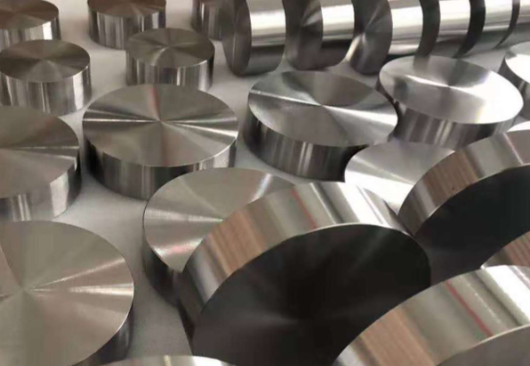
Applications of Beta Titanium Alloys
Beta titanium alloys are selected when their specific combination of strength, weight, formability, and corrosion resistance provides a clear performance advantage. They see use in several sectors, with aerospace and biomedical applications being especially important.
Aerospace Structural Components
Metastable β alloys such as Ti‑10V‑2Fe‑3Al and Ti‑15V‑3Cr‑3Al‑3Sn are used in aircraft landing gear, wing structures, fuselage frames, and other highly loaded parts. Their high strength, good fracture toughness, and ability to be formed in the solution-treated condition and then aged in the final geometry are key advantages. Near‑β alloys are widely used in aero-engine disks, compressor components, and structural parts that experience demanding load and temperature conditions.
Fasteners, Springs, and High-Strength Hardware
Beta titanium alloys offer high strength and relatively low density, making them suitable for aerospace fasteners, high-performance springs, and load-bearing hardware. They can provide weight savings compared to steel and better corrosion resistance in many environments.
Biomedical Implants
Biomedical β titanium alloys, especially those containing Nb, Ta, Zr, and Mo, are used in orthopedic implants, spinal fixation devices, and dental components. Their lower elastic modulus compared with conventional Ti‑6Al‑4V helps to reduce stress shielding of bone. Biocompatible alloy systems with reduced or no aluminum and vanadium content are often preferred, and their corrosion resistance in body fluids supports long-term implantation.
Chemical and Industrial Equipment
In chemical processing, marine, and other corrosive environments, β titanium alloys may be used where their strength and corrosion resistance enable thinner sections or longer service life than alternative materials. Applications include springs, valves, and other components exposed to chlorides, acids, or seawater where titanium’s passive film remains stable.

Key Considerations and Practical Limitations
While beta titanium alloys offer important advantages, there are practical considerations and limitations when selecting and using them in engineering designs.
Cost and Availability
Beta titanium alloys generally have higher alloying content and can require tighter control over processing and heat treatment than more common α‑β alloys. This can result in higher material and processing costs. Availability may also be more limited for specialized compositions, particularly biomedical alloys with specific element restrictions.
Heat Treatment Control
The properties of metastable β alloys are very sensitive to heat treatment. Small variations in solution temperature, cooling rate, or aging time and temperature can significantly alter microstructure and mechanical properties. Careful process control and quality assurance are essential to ensure that components meet design requirements.
Property Trade-Offs
High strength achieved via fine precipitate structures may be accompanied by reduced ductility or toughness if the microstructure is not properly balanced. Designers must consider fatigue performance, fracture toughness, and stress corrosion behavior in addition to static mechanical properties. For biomedical applications, achieving low modulus while maintaining sufficient strength and fatigue resistance requires careful optimization.
Joining and Fabrication Considerations
Welding and joining of β titanium alloys must be approached with attention to shielding, heat input, and post-weld heat treatment. Improper welding conditions can lead to brittle microstructures, contamination, or residual stresses. In many high-reliability applications, bolted or mechanically fastened joints are used in preference to welded joints, or specialized welding procedures are qualified to control microstructural changes.
Selection Guidelines for Engineering Use
When choosing a beta titanium alloy for a particular application, several factors should be evaluated:
- Required strength level and section thickness.
- Service environment, including temperature and corrosive media.
- Need for cold forming or complex shapes prior to aging.
- Fatigue and fracture toughness requirements.
- Compatibility with joining and manufacturing processes.
- Biocompatibility requirements for medical implants.
- Material availability and cost constraints.
By matching these considerations to the alloy’s composition and processing window, engineers can exploit the advantages of beta titanium alloys while maintaining reliable performance in service.
FAQ About Beta Titanium Alloys
What are beta titanium alloys?
Beta titanium alloys are titanium materials that primarily contain the beta phase (body-centered cubic structure). They are stabilized by elements such as molybdenum, vanadium, chromium, and niobium.
What makes beta titanium alloys different from alpha and alpha-beta titanium alloys?
Beta alloys offer higher strength, excellent formability, deeper hardenability, and better heat-treat response compared with alpha or alpha-beta alloys. They can be solution-treated and aged for significant strengthening.
What are some common examples of beta titanium alloys?
Well-known examples include Ti-10V-2Fe-3Al, Ti-15V-3Cr-3Sn-3Al, Ti-15Mo, and Ti-Beta-C (Ti-3Al-8V-6Cr-4Mo-4Zr).
What are the key properties of beta titanium alloys?
Key properties include high strength-to-weight ratio, excellent fatigue performance, good corrosion resistance, outstanding formability in the solution-treated condition, and strong heat-treat response.
Why choose beta titanium alloys over other titanium grades?
Engineers choose beta alloys when high strength, strong formability, and the ability to tailor properties through heat treatment are required, especially for lightweight but demanding structural components.