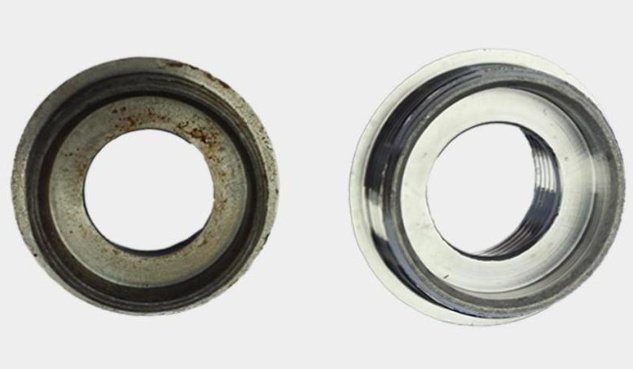
Corrosion protection for parts is a technical decision that directly affects product reliability, safety, and lifecycle cost. Selecting the right anti-corrosion solution requires understanding corrosion mechanisms, service environments, material properties, coating technologies, and manufacturing constraints. This guide provides a systematic approach to choosing suitable treatments for metallic parts in industrial applications.
Fundamentals of Corrosion in Metal Parts
Corrosion is the deterioration of a material due to chemical or electrochemical reaction with its environment. For most industrial parts, this involves metals reacting with oxygen, moisture, salts, acids, or other chemicals, leading to loss of material, reduction of cross section, and potential failure.
Basic corrosion mechanisms
Common mechanisms affecting metal parts include:
- Uniform corrosion: Relatively even material loss across exposed surfaces, typical for carbon steel in atmospheric conditions.
- Galvanic corrosion: Accelerated attack on a less noble metal when electrically connected to a more noble metal in the presence of an electrolyte.
- Pitting corrosion: Localized attack forming small but deep pits, often in stainless steels exposed to chlorides.
- Crevice corrosion: Localized corrosion in shielded areas where stagnant solution is trapped (gaskets, overlapping joints, deposits).
- Filiform corrosion: Thread-like corrosion under organic coatings, especially on aluminum and steel with poor surface preparation.
- Intergranular corrosion: Attack along grain boundaries, usually due to sensitization or improper heat treatment.
- Stress corrosion cracking (SCC): Crack initiation and growth due to combined tensile stress and specific corrosive environment.
Key environmental factors
When defining corrosion risk for a part, consider:
- Atmospheric category: Indoor dry, indoor humid, outdoor rural, urban, industrial, coastal, or offshore environments.
- Temperature range: Normal ambient, low-temperature service, cyclic temperatures, or continuous high temperature.
- Humidity and condensation: Constant high humidity, condensation cycles, or immersion.
- Chemical exposure: Chlorides (salt), acids, alkalis, solvents, fuels, coolants, or cleaning agents.
- Mechanical factors: Abrasion, impact, erosion from fluids, or vibrations affecting coating integrity.
- Electrical conditions: Stray currents, cathodic protection systems, or required electrical continuity or insulation.
These factors define the severity of corrosion and determine the minimum performance required from the anti-corrosion system.
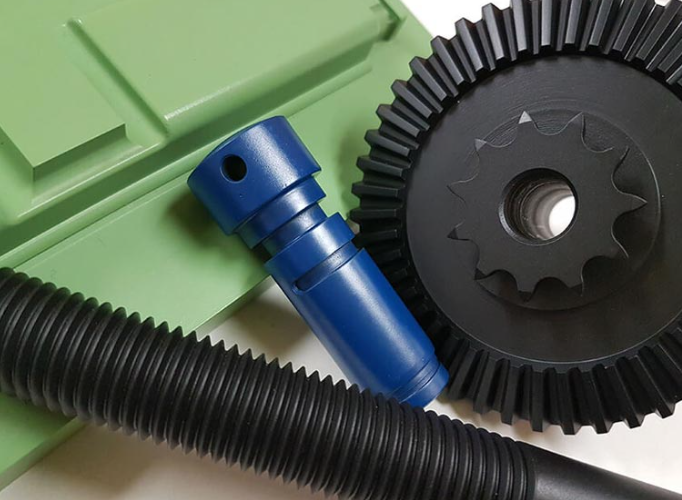
Key Considerations Before Selecting an Anti-Corrosion Treatment
Effective selection starts with a structured evaluation of part function, service environment, materials, and process constraints.
Functional requirements
Define what the part must do and how corrosion protection interacts with that function:
- Dimensional accuracy: Allowable coating thickness, tolerances for fits, threads, and bearing surfaces.
- Electrical properties: Need for conductivity, insulation, or shielding (EMC/EMI).
- Thermal performance: Heat transfer requirements, maximum operating temperature of coating or plating.
- Mechanical loading: Presence of fatigue, impact loads, or sliding contact.
- Appearance: Decorative finish requirements, color, gloss level, and surface smoothness.
Material and design constraints
Material and geometry impose limitations on feasible treatments:
- Base metal type: Carbon steel, low alloy steel, stainless steel, aluminum, magnesium, copper alloys, or cast irons have different compatible treatments.
- Part geometry: Deep recesses, blind holes, sharp edges, and cavities influence coating coverage and thickness uniformity.
- Joining methods: Requirements for welding, brazing, or mechanical joining after coating application.
- Surface roughness: Existing surface finish from machining or casting, and allowed changes due to surface preparation and coating.
- Heat sensitivity: Tolerance to curing or baking temperatures for organic coatings or post-treatment bake-out.
Lifecycle and maintenance
Clarify lifecycle expectations and maintenance strategy:
- Target service life: Time until first major maintenance or replacement (for example 5, 10, or 20 years).
- Access for maintenance: Whether touch-up painting, re-plating, or replacement is feasible.
- Repairability: Ability to repair coatings on-site versus need for factory reprocessing.
- Compatibility with cleaning: Resistance to detergents, solvents, or steam cleaning used in service.
Cost and processing constraints
Anti-corrosion solutions must be compatible with production and economic constraints:
- Volume: Production quantity affecting whether large-scale processes (electroplating, dip coating) are viable.
- Batch size and part size: Limits imposed by tank size, oven capacity, or spray booths.
- Process integration: Possibility to integrate surface treatments into existing manufacturing steps.
- Total cost of ownership: Balance initial coating cost with expected maintenance and replacement costs.
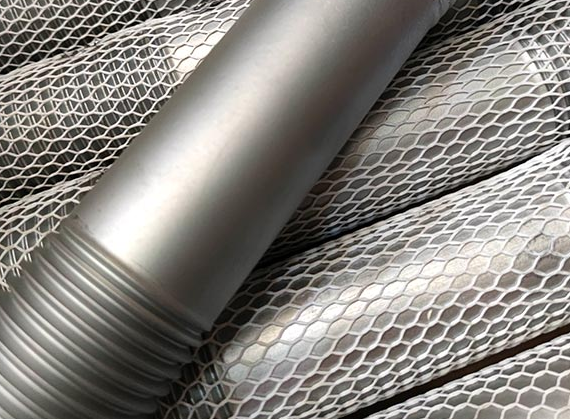
Overview of Major Anti-Corrosion Treatment Categories
Anti-corrosion solutions can be grouped into several categories. Many systems combine more than one category to achieve long-lasting protection.
Barrier coatings
Barrier coatings act as physical shields that separate the metal from the environment. Typical examples include paints, powder coatings, and polymeric coatings.
Main characteristics:
- Protection principle: Limit access of water, oxygen, and ions to the metal surface.
- Typical thickness: Around 20–200 μm for paints; 60–200 μm for powder coatings; thicker for specialized polymer linings.
- Substrates: Applicable to steel, aluminum, and many other metals when properly pretreated.
- Advantages: Wide color options, good appearance, easy touch-up, versatile for complex shapes.
- Limitations: Susceptible to damage by impact or abrasion; underfilm corrosion can occur if adhesion is compromised.
Metallic plating and galvanizing
Metallic coatings applied via electroplating, hot-dip processes, or other deposition methods provide both barrier and, in some cases, sacrificial protection.
Common metallic systems include:
- Zinc-based coatings (electroplated zinc, hot-dip galvanizing, zinc flake).
- Aluminum-based coatings (thermal spray aluminum, aluminizing, hot-dip aluminum).
- Nickel and chromium platings for decorative and moderate corrosion resistance.
- Precious metals (silver, gold) for specialized environments and contact surfaces.
Key attributes:
- Sacrificial protection (zinc, aluminum): Coating corrodes preferentially to protect steel substrate.
- Decorative and wear aspects (nickel, chrome): Provide surface hardness and aesthetic finish in addition to some corrosion resistance.
- Thickness range: Typically 5–30 μm for electroplated zinc, up to 50–100 μm for nickel-chromium systems, 50–200 μm for hot-dip galvanizing.
Conversion coatings
Conversion coatings chemically transform the surface of the metal into a protective layer. They are often used as underlayers for paint or powder coating, and in some cases as standalone treatments for mild environments.
Main types:
- Phosphate coatings (zinc phosphate, iron phosphate) on steel.
- Chromate and non-chromate (chromium-free) conversion coatings for aluminum and zinc.
- Anodizing for aluminum, which grows a thick oxide layer on the surface.
Typical properties:
- Thickness: Generally 1–20 μm for conversion layers; 5–25 μm for standard anodizing and higher for hard anodizing.
- Functions: Improved paint adhesion, basic corrosion protection, controlled friction and wear characteristics in some variants.
- Limitations: Conversion layers alone rarely provide long-term protection in aggressive conditions; often require sealing or topcoats.
Inhibitors, oils, and temporary protections
Temporary or supplementary protections are used during storage, transport, or inside systems where liquid or vapor-phase inhibitors can function.
- Oils and greases: Create a removable hydrophobic film to prevent moisture contact.
- Volatile corrosion inhibitors (VCI): Chemicals that vaporize and form protective layers on metal surfaces inside enclosed volumes.
- Water-based rust preventives: Emulsions forming thin films, often used between manufacturing steps.
These treatments are generally not intended as sole long-term protection for exposed service but are important for logistics and internal surfaces.
Technical Comparison of Common Anti-Corrosion Systems
The following table summarizes typical performance and application characteristics for frequently used anti-corrosion systems. Values are indicative and may vary by formulation, process parameters, and standards.
| System | Typical thickness (μm) | Primary protection type | Salt spray resistance range (hours, neutral NSS) | Main applications |
|---|---|---|---|---|
| Electroplated zinc | 5–25 | Sacrificial + barrier with passivation | 72–480+ (with appropriate passivation) | Fasteners, brackets, automotive components, hardware |
| Hot-dip galvanizing | 50–200 | Sacrificial + thick barrier | 500–1500+ | Structural steel, outdoor constructions, poles, frames |
| Zinc flake coating | 5–25 | Sacrificial, non-electrolytic | 480–1500+ | High-strength fasteners, springs, small parts |
| Epoxy paint (single-layer) | 60–150 | Barrier | 250–1000+ | Industrial equipment, pipelines, machinery |
| Powder coating (polyester/epoxy) | 60–120 | Barrier | 250–1000+ | Appliance housings, outdoor furniture, enclosures |
| Aluminum anodizing (decorative) | 5–20 | Barrier oxide layer | ~250–1000 (depending on sealing and environment) | Architectural profiles, consumer products, electronics |
| Zinc phosphate + paint | 2–10 (phosphate) + 60–200 (paint) | Chemical conversion + barrier | 500–1500+ | Automotive bodies, machinery, enclosures |
Note: Salt spray hours are used for comparative purposes only and do not directly correlate to actual years of service. Field conditions, UV exposure, mechanical damage, and maintenance strongly influence real-life durability.
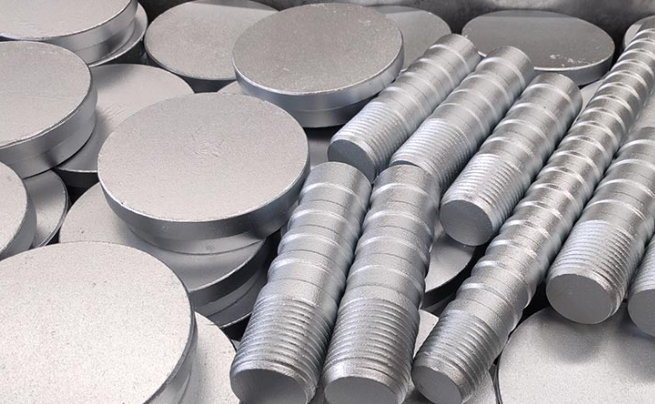
Material-Specific Anti-Corrosion Strategies
Different base materials require different anti-corrosion approaches. Proper combination of material and surface treatment can significantly extend service life.
Carbon steel and low alloy steel
Carbon steel is widely used and inherently prone to corrosion. Common strategies include:
- Metallic zinc coatings (electroplating, hot-dip galvanizing, zinc flake) with or without organic topcoats.
- Paint or powder coating systems over adequate surface preparation (blast cleaning, phosphating).
- Thermal spray metals (zinc, aluminum, or zinc-aluminum) plus sealing layers for heavy-duty exposure.
- Cathodic protection for submerged or buried structures combined with coating systems.
Hot-dip galvanizing and zinc flake coatings are often used where sacrificial protection and long-term durability are required. Paint systems with zinc-rich primers can also provide combined barrier and sacrificial effects.
Stainless steel
Stainless steels rely on a chromium oxide passive film for corrosion resistance. However, in chloride-rich or polluted environments, localized corrosion can occur.
- Ensure correct grade selection (for example higher molybdenum content for severe chloride exposure).
- Use proper fabrication practices: avoid contamination with carbon steel particles, and perform pickling and passivation after welding or machining.
- Consider additional coatings where severe conditions, crevices, or stagnant solutions exist.
- Avoid galvanic couples with more noble materials when stainless steel is in contact with other metals in conductive environments.
For decorative applications, fine finishing and passivation are often sufficient. For aggressive industrial or marine environments, coatings or design measures may be necessary despite stainless base material.
Aluminum and aluminum alloys
Aluminum forms a natural oxide layer that offers moderate corrosion resistance. However, pitting and crevice corrosion can occur, especially in chloride environments.
- Anodizing: Provides controlled oxide layer thickness, improved wear resistance, and coloring options.
- Chromate-free conversion coatings: Enhance paint adhesion and basic corrosion resistance.
- Organic coatings: Paints or powder coatings applied over chromate-free or other compatible pretreatments.
- Sealing of anodized layers: Closing pores in anodic films for improved corrosion resistance.
Direct contact between aluminum and more noble metals in the presence of moisture should be minimized or isolated to avoid galvanic corrosion.
Magnesium and magnesium alloys
Magnesium is highly reactive and requires careful corrosion protection:
- Special conversion coatings designed for magnesium alloys.
- Organic coatings with suitable primers and careful surface preparation.
- Isolating magnesium from dissimilar metals through insulating interfaces.
Magnesium parts often require integrated design, careful selection of joining methods, and strict control of surface conditions to ensure stable corrosion performance.
Copper and copper alloys
Copper and its alloys show good resistance in many environments but may discolor or corrode in specific atmospheres and solutions:
- Natural patina formation can be acceptable or even desired for decorative use.
- Transparent organic coatings or waxes can preserve original appearance in architectural applications.
- Electroplated coatings (nickel, tin, silver) may be used for contact performance or solderability.
- In water systems, control of water chemistry and flow conditions is critical to avoid erosion-corrosion.
Step-by-Step Method to Select an Anti-Corrosion Treatment
A structured selection process reduces the risk of under- or over-specifying protection. The following approach can guide engineering decisions.
1) Define environment and service conditions
Describe the exposure of the part as completely as possible:
- Indoor or outdoor, sheltered or unsheltered.
- Presence of chlorides, industrial pollutants, or chemicals.
- Immersion or splash zones, soil contact, or condensation cycles.
- Temperature ranges and UV exposure (for organic coatings).
- Mechanical wear, abrasion, or risk of impacts.
Many standards classify atmospheric severity into categories based on corrosion rates of reference metals. Mapping the environment to such categories can help define target durability.
2) Determine required durability and aesthetic level
Specify:
- Required time to first maintenance or repainting.
- Allowable appearance changes (color fading, chalking, patina formation).
- Criticality of cosmetic defects versus structural integrity.
These factors guide decisions on coating thickness, system complexity (single vs multi-layer), and whether sacrificial or barrier-dominant systems are more suitable.
3) Evaluate base material and design
Review the part in terms of:
- Metal type and grade, including sensitivity to hydrogen embrittlement or heat.
- Presence of sharp edges, threads, blind holes, and welds.
- Possible galvanic couples with other materials in the assembly.
- Drainage, venting, and water-trap features.
At this step, consider whether design modifications can reduce corrosion risk (e.g., rounding edges, eliminating crevices, improving drainage) or simplify treatment.
4) Select candidate systems based on protection principle
Choose an initial set of candidate systems that match the environment and base material:
- Sacrificial metallic systems (zinc, aluminum) for steel in outdoor or aggressive conditions.
- Barrier coating systems (epoxy, polyurethane, powder coating) for appearance-critical or moderate environments.
- Conversion coatings and anodizing where aluminum or lightweight alloys are used.
- Combined systems such as galvanized plus paint, or zinc-rich primers plus topcoats, for high durability.
At this stage, exclude systems incompatible with the part due to temperature sensitivity, geometry, or base material limitations.
5) Check dimensional, process, and compatibility constraints
For each candidate system, verify:
- Thickness compatibility with tolerances, especially for precision fits and threaded parts.
- Availability of process equipment for part size and production volume.
- Influence of coating on subsequent operations (assembly, welding, bonding).
- Compatibility with existing coatings or treatments if used in combination.
High-strength steels require particular attention when using electroplated coatings due to hydrogen embrittlement risk. Baking after electroplating may be required, and alternative coatings might be preferred for susceptible parts.
6) Validate performance by standards and testing
Match candidate systems to recognized standards and test requirements:
- Salt spray tests (neutral or modified) for comparative corrosion resistance.
- Cyclic corrosion tests that better simulate field conditions.
- Adhesion, impact, and flexibility tests for coated systems.
- Specific tests for temperature, chemical resistance, or abrasion resistance as needed.
Where possible, reference field data or proven use cases in similar environments and applications.
Common Pain Points in Anti-Corrosion Protection of Parts
Several recurring issues arise when selecting and implementing anti-corrosion treatments. Understanding these helps avoid performance shortfalls and unexpected costs.
Underestimation of environment severity
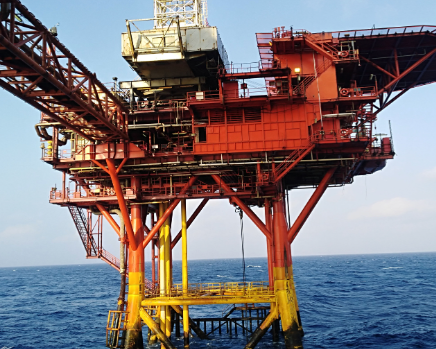
It is common to classify environments too optimistically, for example treating a splash zone or coastal outdoor location as equivalent to mild urban atmosphere. This leads to premature coating failure, rust staining, and structural degradation earlier than expected. Conservative classification and use of combined systems (such as metallic plus paint) are advisable near marine or industrial zones.
Insufficient surface preparation
Surface preparation quality strongly influences coating performance. Inadequate cleaning, improper blast profile, residual oils, or mill scale remaining on surfaces can cause poor adhesion, early blistering, and underfilm corrosion. Clear specifications for surface preparation, including cleanliness grades and surface profile ranges, are essential.
Dimensional and fit problems
Coating thickness is sometimes not accounted for in design. Threads may seize, fits become too tight, or interference arises in assemblies if tolerance chains ignore the added layer. This is particularly critical for thick coatings like galvanizing or multi-layer paint systems. Design should allocate space and define which surfaces are to be coated or masked.
Hydrogen embrittlement in high-strength steels
Electroplating processes can introduce hydrogen into steels with high tensile strength, leading to reduced ductility and delayed cracking. If baking procedures or alternative coatings are not used, this can cause unexpected failures under service loads. High-strength fasteners and springs require special consideration and specification of appropriate plating and post-treatment processes.
Incompatibility with joining and repair methods
Certain coatings impede welding, brazing, or adhesive bonding, or require special procedures. Removal and restoration of coatings in repair operations may be complex. Evaluating these aspects early avoids later rework and ensures that standard maintenance procedures remain feasible.
Design Considerations for Improved Corrosion Resistance
Anti-corrosion performance is not only a function of coating selection; design details significantly influence how parts corrode over time.
Geometry and drainage
Design features that promote water retention, dirt accumulation, or crevice formation accelerate corrosion. Good practices include:
- Providing drainage holes to avoid trapped water in hollow sections.
- Avoiding upward-facing horizontal surfaces where water and debris accumulate.
- Rounding sharp edges to improve coating coverage and reduce thinning at edges.
- Reducing the number of overlapping joints and hidden crevices wherever possible.
For hot-dip galvanizing, venting and drainage holes are necessary to allow molten zinc to flow in and out of hollow sections and to avoid trapped air pockets.
Avoidance of galvanic couples
Where dissimilar metals are used in contact in the presence of an electrolyte, galvanic corrosion may occur. Mitigation includes:
- Choosing metals with closer electrochemical potentials when possible.
- Electrically isolating dissimilar metals using insulating gaskets, coatings, or sleeves.
- Protecting the less noble metal with coatings while allowing the more noble metal to remain bare only where necessary.
Special attention is required at fastener interfaces, where small cathodic areas and large anodic areas can accelerate local corrosion.
Accessibility for coating and inspection
Complex geometries may be difficult to properly clean, coat, and inspect. Design should consider:
- Access for blast cleaning or chemical pretreatments.
- Line-of-sight for spray application of coatings.
- Ability to measure coating thickness on critical surfaces.
Design simplifications that improve accessibility often increase coating quality and reduce rework or missed areas.
Selection of Coatings for Specific Applications
While each project requires its own evaluation, some patterns can guide selection for typical applications.
Outdoor structural steel
For structural elements exposed to weather:
- Hot-dip galvanizing is commonly used for long-term protection with minimal maintenance.
- Galvanizing combined with paint (duplex systems) increases service life and offers color coding and additional barrier protection.
- Multi-layer paint systems based on zinc-rich primers, epoxy intermediate coatings, and polyurethane or acrylic topcoats are widely used for bridges, towers, and industrial structures.
Choice depends on structural size, need for on-site assembly welding, aesthetic requirements, and maintenance strategy.
Automotive and transportation components
For automotive bodies and parts:
- Galvanized or galvannealed steel with electro-deposition (e-coat) primer and finish paint layers are standard for body-in-white protection.
- Zinc flake coatings are used for high-strength fasteners and springs to mitigate hydrogen embrittlement while providing high corrosion resistance.
- Aluminum components may be anodized or painted depending on location and visibility.
The system must withstand road salts, temperature cycles, and mechanical impacts such as stone chipping.
Industrial equipment and machinery
For machinery and enclosures in industrial environments:
- Blasted steel with zinc phosphate pretreatment and powder coating or liquid paint is common.
- For chemical plants or coastal locations, additional epoxy primers or thicker systems may be used.
- Stainless steel with proper finishing and passivation may be selected when high cleanliness or chemical resistance is required.
Consider internal surfaces and condensation inside enclosures, not only the external faces.
Quality Control and Inspection of Anti-Corrosion Treatments
To ensure specified performance, systematic quality control during and after treatment is essential.
Surface preparation verification
Before applying coatings, verify:
- Cleanliness grade of blasted surfaces, free from rust, mill scale, and contaminants.
- Surface profile within specified range to ensure good mechanical adhesion.
- Absence of oil, grease, and salts, verified by appropriate testing.
Improper surface preparation is a frequent cause of premature coating failure, even if the coating itself is suitable.
Coating application and curing checks
During application:
- Monitor environmental conditions like temperature, humidity, and dew point to avoid condensation on surfaces.
- Control wet film thickness or applied mass to meet target dry film thickness after curing.
- Use recommended mixing ratios, pot life limits, and curing times for multi-component systems.
After curing:
- Measure dry film thickness using appropriate gauges.
- Perform adhesion testing where specified.
- Inspect for runs, sags, pinholes, holidays, and other defects.
Ongoing inspection and maintenance
In service, periodic inspection helps identify early coating degradation:
- Look for chalking, fading, blistering, rust spots, and underfilm corrosion.
- Assess areas subject to mechanical damage or UV exposure more frequently.
- Plan timely touch-ups, overcoating, or localized repairs before extensive damage occurs.
A well-defined inspection and maintenance plan extends the effective life of anti-corrosion systems and reduces lifecycle cost.

Table of Factors Influencing Treatment Selection
The following table summarizes major factors to consider when selecting anti-corrosion treatments for parts.
| Factor | Typical questions | Impact on choice |
|---|---|---|
| Environment | Is exposure indoor, outdoor, coastal, industrial, or immersed? | Determines required protection level and system complexity. |
| Base material | Is the part steel, stainless, aluminum, magnesium, or copper alloy? | Limits treatment options and guides preference for systems like galvanizing, anodizing, or passivation. |
| Service life | What is the target time to first maintenance? | Influences coating thickness, number of layers, and use of sacrificial systems. |
| Geometry | Are there cavities, threads, sharp edges, or hollow sections? | Affects coverage, thickness uniformity, and feasibility of certain processes. |
| Functional requirements | Are conductivity, thermal transfer, friction, or appearance critical? | Determines whether metallic, organic, or clear systems are suitable. |
| Production constraints | What are batch size, part size, and available equipment? | Limits practical processes and influences cost per part. |
| Maintenance strategy | Is field repair easy or difficult? Is replacement acceptable? | Guides selection between robust long-life systems and more easily repairable coatings. |
| Compatibility | Are there dissimilar metals, adhesives, or subsequent processes? | Affects risk of galvanic corrosion and interaction with welding or bonding. |
Conclusion: Building a Robust Anti-Corrosion Strategy for Parts
Choosing the right anti-corrosion solution for parts is a technical exercise that must consider environment, base material, geometry, functional requirements, and lifecycle expectations. A robust strategy usually combines:
- Careful material selection and design to minimize inherent corrosion risk.
- Appropriate surface preparation and, where needed, conversion treatments.
- Selection of metallic, organic, or combined coating systems matched to environmental severity and service life targets.
- Quality control, inspection, and maintenance planning.
By approaching anti-corrosion protection systematically, engineers can significantly extend the service life of parts, maintain appearance and functionality, and reduce the overall cost of ownership. Early integration of corrosion considerations into design, manufacturing, and maintenance planning leads to more reliable and durable products.
FAQ About Anti-Corrosion Solutions for Parts
What is the most important factor when choosing an anti-corrosion treatment?
The most important factor is the service environment of the part. This includes whether exposure is indoor or outdoor, the presence of moisture, chlorides, and industrial pollutants, temperature range, and mechanical wear. Correctly defining environmental severity allows you to set realistic durability targets and select suitable systems, such as galvanized coatings for outdoor steel or anodizing and paint for aluminum in marine areas. Other factors like geometry, base material, and functional requirements are also critical, but environment is usually the starting point for any selection.
When should I choose galvanizing instead of paint for steel parts?
Galvanizing is typically chosen when long-term corrosion protection with minimal maintenance is required in outdoor or aggressive environments. It provides sacrificial protection and a relatively thick metallic barrier. It is suitable for structural components, frames, and parts where appearance is less critical than durability. Paint systems can be sufficient for indoor or mild outdoor environments, or where color and surface finish are more important. In many demanding applications, combining galvanizing with paint (a duplex system) offers extended service life and improved aesthetics compared to either solution alone.
How can I avoid hydrogen embrittlement in high-strength steel parts with coatings?
To reduce hydrogen embrittlement risk in high-strength steels, you can minimize or avoid processes that introduce hydrogen, such as certain electroplating operations without proper control. Options include using zinc flake coatings or other non-electrolytic systems for fasteners and springs, specifying controlled electroplating processes with immediate post-plating baking to drive out absorbed hydrogen, and avoiding unnecessary pickling in strong acids. It is also important to specify and verify hardness or tensile strength limits above which extra precautions are required, and to follow relevant standards and guidelines for plating high-strength components.
Do stainless steel parts always need additional corrosion protection?
Stainless steel does not always require additional coatings, but protection needs depend on the grade and environment. In mild indoor conditions, a properly finished and passivated stainless steel surface is usually sufficient. However, in chloride-rich, marine, or polluted industrial atmospheres, stainless steel may suffer from pitting and crevice corrosion, especially if the grade is not well matched to the environment. In such cases, using higher alloyed grades, optimizing design to avoid stagnant zones, and sometimes adding protective coatings can be necessary to achieve the required service life.