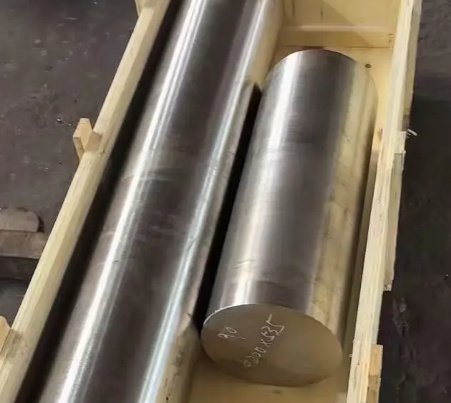
Overview of Inconel 718
Inconel 718 (UNS N07718, W. Nr. 2.4668) is a precipitation-hardenable nickel-chromium alloy designed for high strength and corrosion resistance at elevated temperatures. It is one of the most widely used nickel-based superalloys in aerospace, power generation, oil and gas and high-performance mechanical systems.
The alloy delivers a combination of high yield strength, fatigue and creep resistance, good weldability and stable mechanical properties from cryogenic temperatures up to about 650 °C, with useful corrosion resistance in oxidizing and mildly reducing environments.
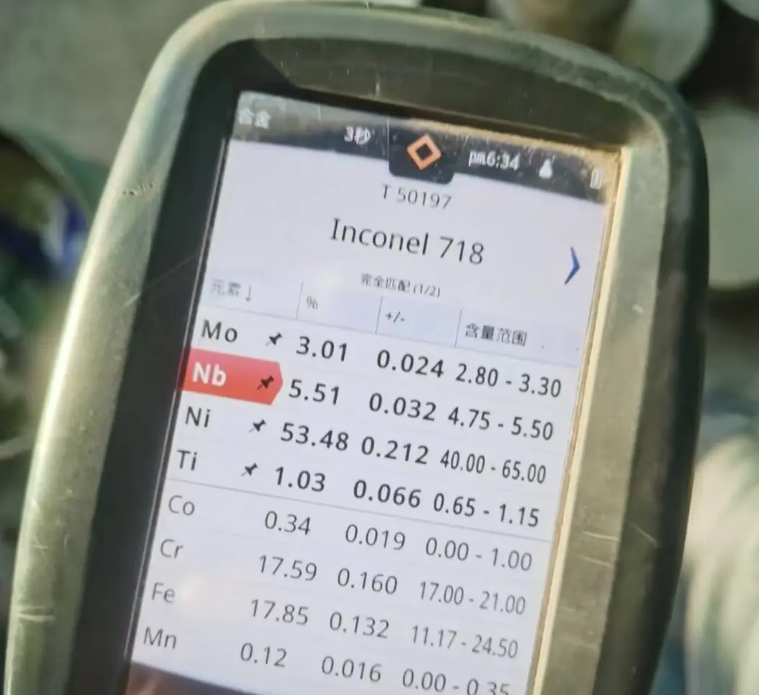
Chemical Composition and Metallurgical Characteristics
The performance of Inconel 718 is governed by its carefully balanced chemical composition and precipitation-hardening behavior. The alloy derives its strength primarily from gamma double prime (γʺ, Ni3Nb) and gamma prime (γʹ, Ni3(Al,Ti)) precipitates formed during heat treatment.
| Element | Content (approx.) |
|---|---|
| Nickel (Ni) | 50.0 – 55.0 |
| Chromium (Cr) | 17.0 – 21.0 |
| Iron (Fe) | Balance (approx. 17.0 – 21.0) |
| Niobium + Tantalum (Nb+Ta) | 4.75 – 5.50 |
| Molibdenum (Mo) | 2.80 – 3.30 |
| Titanium (Ti) | 0.65 – 1.15 |
| Aluminium (Al) | 0.20 – 0.80 |
| Cobalt (Co) | ≤ 1.0 |
| Manganese (Mn) | ≤ 0.35 |
| Silicon (Si) | ≤ 0.35 |
| Copper (Cu) | ≤ 0.30 |
| Carbon (C) | ≤ 0.08 |
| Phosphorus (P) | ≤ 0.015 |
| Sulfur (S) | ≤ 0.015 |
| Boron (B) | ≤ 0.006 |
Key metallurgical features include:
- Gamma (γ) matrix based on Ni-Fe with solid-solution strengthening from Cr, Mo and Nb.
- Precipitation strengthening by γʺ and γʹ phases after appropriate aging treatment.
- Good resistance to grain boundary precipitation and microfissuring, supporting weldability.
- Stable microstructure with controlled grain growth under standard service conditions.
Mechanical and Physical Properties
Mechanical properties are strongly affected by heat treatment condition, product form and direction (longitudinal vs transverse). The following ranges provide a general indication for commonly used wrought and precipitation-hardened material.
Mechanical properties at room temperature
| Property | Typical Value |
|---|---|
| 0.2% Yield strength | ~ 1030 – 1200 MPa |
| Tensile strength | ~ 1240 – 1400 MPa |
| Elongation (A5) | ~ 12 – 25 % |
| Reduction of area | ~ 20 – 45 % |
| Hardness (Rockwell C) | ~ 36 – 45 HRC |
For solution-annealed material (before aging), strength is lower and ductility is higher, which is relevant for certain forming and machining operations.
High-temperature strength and creep resistance
Inconel 718 maintains high strength up to around 650 °C. Typical features include:
- Good creep-rupture properties between 540 °C and 650 °C for long-term service.
- Retained yield strength at 650 °C often exceeding 600 MPa depending on heat treatment.
- Stable cyclic fatigue resistance under high-cycle and low-cycle loading.
Physical properties
Approximate physical parameters for design considerations:
Density: ~ 8.19 g/cm³
Melting range: ~ 1260 – 1336 °C
Thermal and electrical data (approximate, for wrought material):
- Thermal conductivity: ~ 11 W/m·K at 20 °C; increases moderately with temperature.
- Coefficient of thermal expansion: ~ 13 μm/m·K between 20 °C and 800 °C.
- Specific heat capacity: ~ 435 J/kg·K at room temperature.
- Electrical resistivity: ~ 1.25 μΩ·m at 20 °C.
Corrosion and Oxidation Resistance
Inconel 718 is intended primarily as a high-strength structural alloy; its corrosion resistance is good in many environments but not equivalent to fully corrosion-optimized nickel alloys.
Typical behavior includes:
- Good resistance to oxidation and scaling in air and combustion gases up to approximately 980 °C, depending on exposure time and environment.
- Good resistance to chloride-ion stress-corrosion cracking relative to many stainless steels; however, pitting and crevice corrosion may occur in highly chloride-laden or stagnant environments.
- Good resistance to many acids, including some dilute sulfuric and phosphoric acids, and to neutral salt solutions.
- Acceptable performance in many oil and gas production environments where both mechanical strength and corrosion resistance are required.
In applications dominated by severe corrosion (rather than high mechanical load or temperature), specialized corrosion-resistant alloys may be selected instead of Inconel 718.
Heat Treatment and Microstructural Control
Mechanical properties of Inconel 718 are developed through a combination of solution annealing and aging. Heat treatment schedules are selected according to product form, section thickness, required strength level and application standards.
Solution annealing
Common solution-annealing practices include:
Typical temperature: approximately 925 – 980 °C.
Holding time: often 1 – 2 h depending on section size, followed by air or oil cooling. The aim is to dissolve undesirable precipitates, homogenize the structure and refine grain size while avoiding excessive grain growth.
Precipitation hardening (aging)
A standard precipitation hardening treatment uses a two-step aging cycle:
Example of a commonly referenced cycle (indicative only):
- First age: around 720 °C for 8 h, furnace cooling at controlled rate (~50 °C/h) to ~620 °C.
- Second age: around 620 °C for 8 h, followed by air cooling to room temperature.
This produces fine and uniformly distributed γʺ and γʹ precipitates, achieving high yield strength and good toughness. Alternative proprietary or specification-driven cycles can be used to balance best strength with required fracture toughness and stress relaxation characteristics.
Forms of Supply and Specifications
Inconel 718 is available in a wide range of wrought and cast product forms, allowing selection according to manufacturing route and design requirements.
Typical product forms
Commonly supplied forms include:
- Round bar and billet for machining into shafts, fasteners, turbine disks and components.
- Plate and sheet for structural parts, casings and formed components.
- Forgings (open-die, closed-die, rings) for high-integrity rotating parts.
- Wire and rod for fasteners, springs and welding consumables.
- Seamless and welded tube and pipe for aerospace, energy and process systems.
- Castings for complex geometries where conventional machining or forging is impractical.
Relevant standards
Inconel 718 is covered by multiple international specifications, including (non-exhaustive):
- UNS: N07718
- DIN / W. Nr.: 2.4668
- ASTM: such as ASTM B637 (bar and forging), B670 (sheet, strip and plate), B637 (solution-annealed and precipitation-hardened bar and forging).
- AMS specifications used extensively in aerospace, e.g., AMS 5662, AMS 5663, AMS 5596 and others for particular product forms and heat treatments.
Specific specification selection is determined by industry, certifying authority and end-use requirements.
Applications and Functional Advantages
The combination of high strength, corrosion resistance and stability over a wide temperature range makes Inconel 718 suitable for demanding components where design criteria include high mechanical load, temperature exposure and reliability over long service periods.
Typical application areas
Representative applications include:
- Aerospace engine components: compressor discs, shafts, seals, cases, fasteners and structural hardware operating at elevated temperature.
- Land-based gas turbines: compressor and turbine components, rotor parts, bolts and hot gas path hardware.
- Oil and gas: downhole tools, completion equipment, valve components and high-strength fasteners exposed to sour and high-pressure environments.
- Power and nuclear: high-strength bolts, springs and structural elements in demanding thermal and radiation conditions.
- General engineering: high-strength fasteners, high-performance springs, molds and dies operating at elevated temperatures.
Functional advantages
Inconel 718 is selected when designs require:
- High yield and tensile strength up to ~650 °C.
- Good fatigue and creep properties under sustained and cyclic loading.
- Dimensional stability under thermal cycling.
- Retention of properties at cryogenic temperatures.
- Balanced corrosion and oxidation resistance in many industrial atmospheres.
- Weldability superior to many other high-strength nickel alloys.
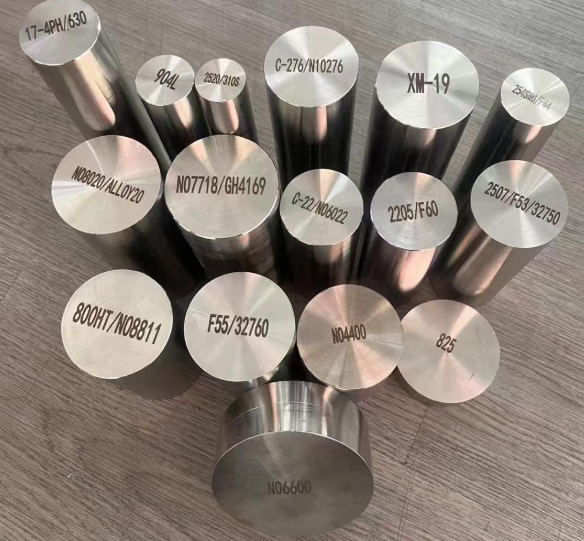
Cost Aspects of Inconel 718
The cost of Inconel 718 is influenced by alloying content, manufacturing complexity and certification requirements. Compared with standard engineering materials such as carbon steel or common stainless steels, the alloy is significantly more expensive on a per-kilogram basis.
Material price drivers
Key contributors to material cost include:
- High nickel content and presence of alloying elements such as niobium, molybdenum and titanium.
- Melting and refining routes (e.g., vacuum induction melting, vacuum arc remelting or electroslag remelting) used to achieve cleanliness and homogeneity.
- Conversion processing such as forging, rolling and heat treatment.
- Compliance with aerospace or nuclear-grade specifications, requiring extensive testing and documentation.
Lifecycle and cost-effectiveness
Although the acquisition cost of Inconel 718 is high, its selection can be cost-effective over the lifecycle of critical components where:
- High strength allows weight reduction or smaller cross-sections compared with lower-strength alloys.
- Extended service life reduces maintenance frequency and component replacement.
- Stable properties over time reduce the risk of unplanned shutdowns or failures.
Cost-related considerations for designers and buyers
When planning to use Inconel 718, it is useful to consider:
- Near-net-shape supply options (e.g., forgings, additive preforms) that reduce machining time and material removal.
- Standard stock sizes to minimize custom mill runs and lead time.
- Selection of appropriate quality level; not all applications require stringent aerospace standards.
- Batch consolidation to reduce per-part certification and testing cost.
Machining Characteristics of Inconel 718
Inconel 718 is categorized as a difficult-to-machine material due to its high strength, work hardening tendency and low thermal conductivity. Efficient machining requires adapted strategies, robust tooling and optimized process parameters.
General machinability characteristics
Important characteristics impacting machining include:
- High hot strength: cutting forces remain high even at elevated cutting temperatures, leading to higher tool stress.
- Work hardening: the surface layer hardens if rubbed or cut with dull tools or inadequate feed, reducing tool life and promoting surface damage.
- Low thermal conductivity: heat concentrates in the cutting zone and tool, accelerating wear.
- Abrasive carbides and hard precipitates: contribute to flank wear and chipping.
Machining Strategies and Process Planning
Successful machining of Inconel 718 relies on minimizing heat accumulation, avoiding work hardening, ensuring adequate chip formation and using appropriate tooling materials and geometries.
Tooling selection
Common tooling materials and their typical use:
- Carbide inserts (cemented carbides): widely used for turning and milling at moderate cutting speeds; require suitable coatings (e.g., AlTiN, TiAlN, or other high-temperature-resistant coatings).
- Cermet and ceramic tools: considered in some high-speed finishing operations where machine rigidity and process stability are excellent.
- Polycrystalline cubic boron nitride (PCBN): used selectively in finishing operations with stable cutting conditions.
- High-speed steel (HSS): mainly for drilling, tapping and operations where lower speed and high toughness are needed; cobalt-enriched HSS improves performance.
Cutting parameters (indicative)
Typical parameter ranges (actual values depend on tool manufacturer recommendation, machine capabilities, coolant and workpiece condition):
- Turning with carbide: cutting speed often in the range of ~20 – 60 m/min for roughing; somewhat higher for finishing; feed rates adjusted to maintain consistent chip thickness and avoid rubbing.
- Milling with carbide: cutting speed often ~30 – 60 m/min; radial engagement and axial depth reduced to manage heat; higher feed per tooth to avoid work hardening.
- Drilling: cutting speed typically lower than for turning/milling; feed must be sufficient to ensure continuous chip formation and positive cutting action.
Machinists usually rely on detailed tool supplier guidelines, adjusting speeds, feeds and depths to obtain a stable process and acceptable tool life.
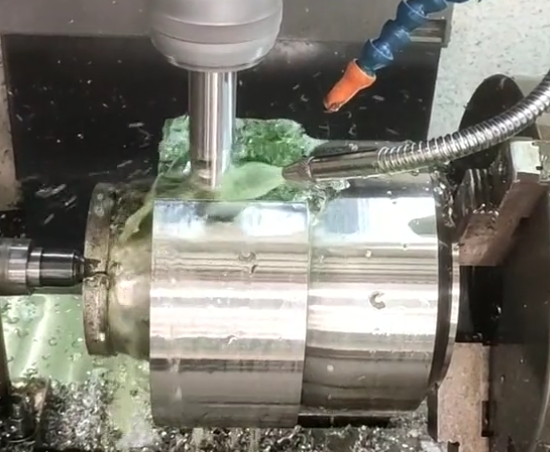
Turning, Milling and Drilling Inconel 718
Each CNC machining operation has specific considerations due to the alloy’s behavior under cutting loads and temperatures.
Turning
Key aspects when turning Inconel 718:
- Use positive rake geometry and robust edge preparation to balance sharpness with edge strength.
- Maintain continuous cutting where possible; interrupted cuts increase impact loads and risk of chipping.
- Select feed rate sufficient to remove the work-hardened layer from the previous pass; avoid very light finishing passes that only rub the surface.
- Apply high-pressure, directed coolant jets to reduce temperature and aid chip evacuation.
- Use rigid setups, short tool overhang and stable fixturing to minimize vibration.
Milling
Key milling practices:
- Prefer climb milling to reduce work hardening ahead of the cutting edge.
- Limit radial engagement and use higher axial depth of cut when possible; this helps reduce heat concentration at the tool edge.
- Use cutters with few flutes to improve chip evacuation and reduce rubbing.
- Apply consistent chip load per tooth; avoid very low feed per tooth that leads to smearing rather than cutting.
- Ensure sufficient coolant flow or, in some specific finishing operations, consider controlled dry or minimum-quantity lubrication according to tool supplier recommendations.
Drilling and hole-making
Drilling in Inconel 718 requires attention to chip evacuation and tool cooling:
- Use high-quality HSS-Co or carbide drills with point geometry optimized for difficult materials.
- Apply through-tool coolant where possible to remove chips from deep holes and cool the cutting edge.
- Avoid dwelling at the bottom of the hole; continuous feed improves chip breaking and reduces work hardening.
- For deeper holes, consider peck drilling cycles with carefully controlled step depth to avoid chip packing.
Coolant Use, Tool Wear and Surface Integrity
Effective coolant application and control of tool wear are essential to maintain dimensional accuracy and surface quality.
Coolant strategies
Coolant guidelines for Inconel 718 machining:
- Use high-pressure, high-flow coolant directed precisely at the cutting zone.
- Select coolant with good lubricity and thermal capacity; water-based emulsions with appropriate additives are common.
- Maintain coolant cleanliness and concentration, as contamination or incorrect mixing can accelerate tool wear and impact surface finish.
Tool wear mechanisms
Typical wear patterns include:
- Flank wear due to abrasion by hard phases and high cutting temperature.
- Crater wear on rake face due to high chemical and thermal load.
- Notching at depth-of-cut line, especially in interrupted cuts or when machining near surface scale.
- Edge chipping if feed is too low or if interrupted cuts and vibration occur.
Surface integrity considerations
For critical components (e.g., aerospace disks, shafts, fasteners):
- Avoid excessive surface tensile residual stresses; optimized parameters and coolant assist in controlling thermal gradients.
- Prevent surface burning and microcracking by controlling cutting speed and maintaining sharp tools.
- Inspect surface for tearing, laps or smeared material indicative of inadequate chip formation.
- Consider post-machining processes (e.g., shot peening, polishing) where specifications require controlled residual stress or improved surface finish.
Weldability, Joining and Post-Machining Operations
Inconel 718 is notable among high-strength nickel alloys for its good weldability, allowing welded structures, repair welding and integration of welded features with machined parts.
Welding characteristics
Relevant aspects of welding Inconel 718:
- Processes: gas tungsten arc welding (GTAW/TIG), gas metal arc welding (GMAW/MIG), electron beam welding and laser beam welding are used depending on component geometry and quality requirements.
- Filler materials: matching composition filler wires, commonly designated as Alloy 718 or equivalent, are used to maintain mechanical properties and corrosion resistance.
- Crack resistance: the alloy is designed to limit formation of solidification and liquation cracks relative to some other nickel alloys, provided correct procedures are followed.
- Post-weld heat treatment: solution annealing and aging cycles can restore or develop required mechanical properties in welded components, subject to design and specification constraints.
Brazing, fastening and other joining methods
Alternative joining methods include:
- High-temperature brazing with suitable filler metals for complex assemblies with narrow gaps.
- Mechanical fastening solutions (bolting, riveting) when disassembly or field replacement is required.
- Transition joints to other materials using intermediate alloys or specialized processes when joining to steels or titanium alloys.
Post-machining operations
After machining, typical operations can include:
- Deburring, edge finishing and cleaning to remove chips and residues.
- Non-destructive testing (e.g., dye penetrant, ultrasonic, radiography) for critical structural parts.
- Surface treatments such as shot peening to introduce beneficial compressive residual stresses.
- Coatings or platings where application conditions justify additional corrosion or wear protection.
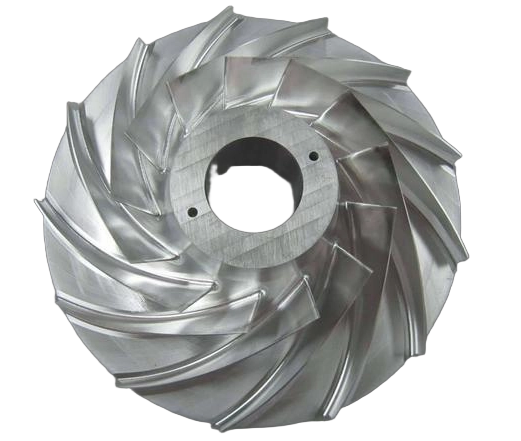
Design and Material Selection Considerations
Using Inconel 718 effectively requires aligning material capabilities with design requirements, manufacturing capability and cost constraints.
Key selection criteria
Engineers typically consider:
- Operating temperature range and mechanical load spectrum (static, fatigue, creep).
- Environmental conditions (oxidizing, corrosive, wet, dry, presence of chlorides or sulfides).
- Required service life, inspection intervals and acceptable deformation or relaxation under load.
- Availability of required product forms, dimensions and specifications.
- Compatibility with joining methods and downstream processes (welding, heat treatment, surface treatment, machining capacity).
Dimensional stability and tolerances
When setting tolerances and dimensional targets:
- Account for thermal expansion in service; at elevated temperature, dimensional changes can be significant for long components.
- Consider potential distortion during heat treatment or welding; design and fixtures may be adapted to control distortion.
- For tight-tolerance machining, use stable fixturing and allow for stress relief or intermediate heat treatments if necessary.