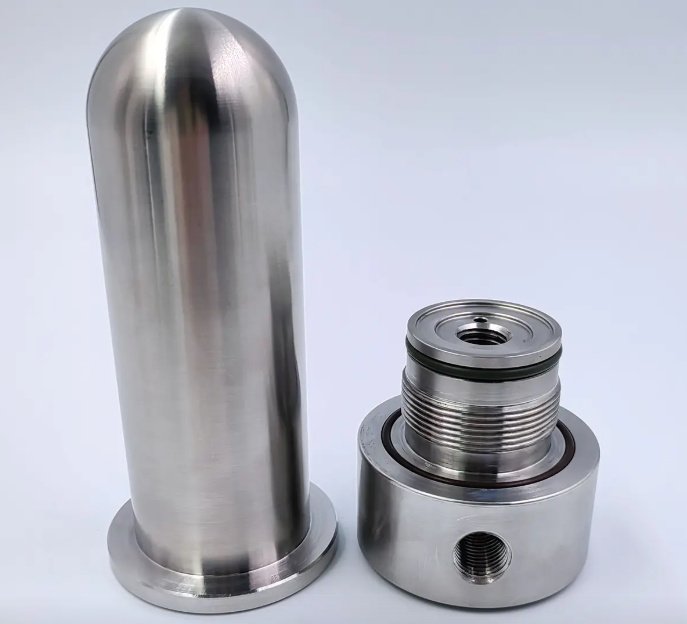
Hastelloy C‑276 and 316L stainless steel are two widely used corrosion‑resistant alloys in demanding industries such as chemical processing, oil and gas, power generation, marine, and pharmaceuticals. Both materials have a proven track record, but they differ significantly in composition, corrosion behavior, allowable operating conditions, and cost. Understanding these differences is essential for selecting the right alloy for a given environment and avoiding premature failures, leaks, or contamination.
This guide provides a detailed, structured comparison of Hastelloy C‑276 and 316L stainless steel with a focus on corrosion resistance, using engineering data, typical service conditions, and practical selection criteria.
Overview of Hastelloy C-276 and 316L Stainless Steel
Hastelloy C‑276 and 316L stainless steel represent two different alloy families and design philosophies:
- Hastelloy C‑276: a nickel‑molybdenum‑chromium superalloy designed primarily for resistance to strong corrosive media, especially in chemical processing.
- 316L stainless steel: a molybdenum‑bearing austenitic stainless steel optimized for good general corrosion resistance at a relatively low cost.
Hastelloy C‑276: Alloy Concept
Hastelloy C‑276 (UNS N10276) is a wrought, corrosion‑resistant alloy with a high nickel content and significant additions of molybdenum and chromium, plus smaller additions of iron and tungsten. Key characteristics include:
- Outstanding resistance to both oxidizing and reducing media.
- Resistance to localized attack, including pitting and crevice corrosion in chloride‑bearing solutions.
- Good resistance to stress corrosion cracking (SCC) in many chloride and sour environments.
- Ability to withstand mixed acid environments and solutions containing chlorides, halides, and oxidizing species.
316L Stainless Steel: Alloy Concept
316L stainless steel (UNS S31603) is an austenitic Cr‑Ni‑Mo stainless steel with reduced carbon content. The “L” denotes low carbon, which improves resistance to sensitization and intergranular corrosion in welded conditions. Key characteristics include:
- Good general corrosion resistance in many aqueous environments.
- Improved pitting resistance over 304 due to the addition of molybdenum.
- Low carbon content to minimize carbide precipitation during welding.
- Good formability, weldability, and availability in a wide range of product forms.
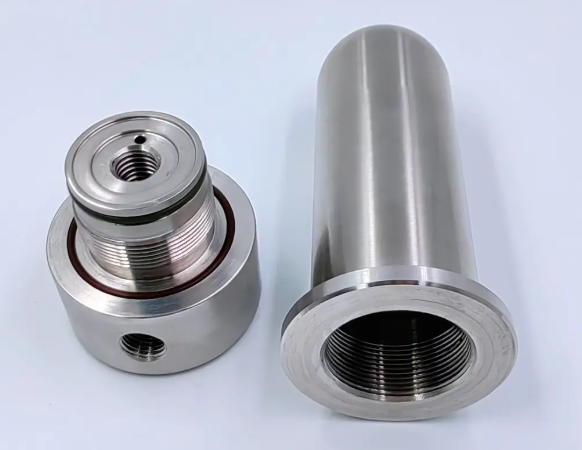
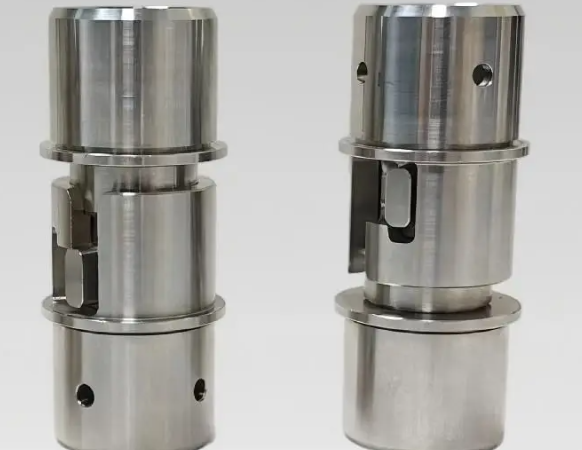
Chemical Composition and Its Role in Corrosion Behavior
Chemical composition strongly governs corrosion resistance, particularly for pitting, crevice corrosion, and SCC. The following table summarizes typical compositions (weight percent) for both alloys.
| Element | Hastelloy C‑276 | 316L Stainless Steel |
|---|---|---|
| Ni | Balance (approx. 57) | 10.0–14.0 |
| Cr | 14.5–16.5 | 16.0–18.0 |
| Mo | 15.0–17.0 | 2.0–3.0 |
| Fe | 4.0–7.0 | Balance |
| W | 3.0–4.5 | – |
| Co | ≤2.5 | – |
| C | ≤0.01 | ≤0.03 |
| Mn | ≤1.0 | ≤2.0 |
| Si | ≤0.08 | ≤0.75 |
| P, S | Very low | Limited per ASTM |
Key implications of this composition comparison:
Nickel content: High nickel in C‑276 stabilizes the austenitic structure and greatly enhances resistance to reducing acids (e.g., hydrochloric acid) and SCC in chloride or sour environments. 316L, with much lower nickel, is less resistant to severe reducing media and chloride SCC at elevated temperatures.
Molybdenum and tungsten: C‑276 includes a very high Mo content plus W, both of which significantly improve resistance to pitting and crevice corrosion in chloride‑containing solutions and increase resistance in reducing acids. 316L has moderate Mo, adequate for mild to moderate chloride exposure but not for highly aggressive or high‑temperature chloride environments.
Chromium: 316L has slightly higher chromium than C‑276, which favors passive film formation in oxidizing environments. However, the combination of Cr, Mo, W, and Ni in C‑276 leads to superior resistance in both oxidizing and reducing conditions compared with 316L.
Carbon and minor elements: Both alloys have low carbon to minimize sensitization and intergranular attack after welding. The stricter carbon control in C‑276 supports stability in severe environments, while 316L’s low carbon is designed for typical industrial corrosion conditions.
General Corrosion Resistance
General or uniform corrosion is a relatively even material loss over a surface. In many applications, general corrosion rates below about 0.1–0.2 mm/year are considered acceptable, depending on design life and corrosion allowance.
Hastelloy C‑276 in General Corrosion
Hastelloy C‑276 is engineered for extremely aggressive environments. Typical performance characteristics include:
- Excellent resistance to hydrochloric, sulfuric, phosphoric, and acetic acids over a wide concentration and temperature range.
- Good resistance to wet chlorine, hypochlorites, and other oxidizing chloride media when compared to many other alloys.
- Ability to handle multi‑component mixtures such as acid chlorides, organic acids with halides, and solutions containing dissolved oxygen and oxidizing contaminants.
In many strong acids, C‑276 exhibits very low uniform corrosion rates, often well below 0.5 mm/year where many stainless steels corrode at several mm/year or even suffer rapid localized attack.
316L Stainless Steel in General Corrosion
316L performs well in less severe environments, particularly where:
- Chloride concentrations are modest.
- Temperatures are moderate.
- The environment is primarily oxidizing or neutral.
316L is widely used in:
- Food and beverage production.
- Pharmaceutical and biotech systems with properly controlled water quality.
- Mild chemical process streams (e.g., low‑concentration organic acids, some alkaline solutions).
However, in strong reducing acids (particularly hydrochloric acid), hot concentrated sulfuric acid, or mixed acid environments with chlorides, 316L can suffer rapid general corrosion, while C‑276 often maintains acceptable rates.
Pitting and Crevice Corrosion in Chloride Environments
Pitting and crevice corrosion are localized forms of attack that can cause rapid perforation even when general corrosion rates are low. They are strongly influenced by chloride concentration, temperature, oxygen content, and the presence of crevices or deposits.
Pitting Resistance Equivalent (PREN)
A common metric for ranking resistance to localized corrosion in chloride environments is the Pitting Resistance Equivalent Number (PREN). One widely used formula is:
PREN = %Cr + 3.3 × %Mo + 16 × %N
Using typical compositions and assuming nitrogen is low for both alloys, 316L often falls in the PREN range around 23–25, whereas Hastelloy C‑276, with very high molybdenum and significant chromium, typically has a much higher effective pitting resistance. This correlates with C‑276’s ability to resist pitting at higher temperatures and chloride levels than 316L.
Pitting and Crevice Corrosion Behavior of Hastelloy C‑276
Hastelloy C‑276 provides:
- High resistance to pitting/crevice corrosion in neutral and acidic chloride solutions.
- Good performance in environments containing chlorides plus oxidizing species (e.g., ferric or cupric ions), which commonly promote localized attack on stainless steels.
- Capability to operate at elevated temperatures in chloride solutions where stainless steels are prone to rapid localized attack.
In practice, C‑276 is used for equipment where chloride concentrations can be high, temperatures can exceed 60–80 °C, and where stagnant zones or crevices cannot be fully eliminated.
Pitting and Crevice Corrosion Behavior of 316L
316L, while more resistant to pitting than 304, has limitations:
- Pitting can initiate at relatively low temperatures in moderate to high chloride concentrations, especially under oxidizing conditions.
- Crevice corrosion is more severe than pitting and may occur beneath gaskets, deposits, lap joints, or biofilms even when the bulk solution is not strongly aggressive.
- In seawater or brackish water at elevated temperatures, 316L is susceptible to localized corrosion unless carefully controlled by design, cathodic protection, or inhibitors.
For environments such as warm seawater, high‑chloride process liquids, or brines with oxidizing contaminants, C‑276 generally provides a much higher safety margin than 316L.
Stress Corrosion Cracking (SCC) and Hydrogen Effects
Stress corrosion cracking is a critical mode of failure driven by tensile stress, a susceptible microstructure, and a specific corrosive environment (often chlorides or caustics). SCC can cause sudden failure with minimal general corrosion.
SCC Resistance of Hastelloy C‑276
Hastelloy C‑276 is commonly selected for its strong resistance to SCC in many chloride‑bearing and sour service environments. Benefits include:
- High resistance to chloride SCC even at elevated temperatures and pressures compared to austenitic stainless steels.
- Good performance in environments containing hydrogen sulfide (H₂S), particularly when combined with chlorides and CO₂, under conditions where carbon steel and some stainless steels crack or blister.
- Suitability for NACE MR0175/ISO 15156 compliant sour service applications when specified and produced according to relevant limits.
This makes C‑276 a candidate for critical components in oil and gas production, chemical reactors, and high‑pressure systems where SCC could lead to hazardous releases.
SCC Resistance of 316L
316L is relatively resistant to SCC in many environments at low temperature and low chloride levels. However:
- Chloride SCC becomes a concern when temperatures exceed approximately 50–60 °C and chloride concentrations are significant.
- High tensile stresses, residual stresses from welding, or cold work increase SCC susceptibility.
- In hot chloride‑bearing environments, including hot seawater and high‑chloride process solutions, 316L can be vulnerable to transgranular SCC.
In systems where operating conditions approach SCC thresholds (e.g., hot chloride, cyclic stresses), Hastelloy C‑276 typically offers a much safer margin than 316L.
Corrosion in Specific Chemical Environments
Real systems often involve complex mixtures. Nevertheless, typical behaviors can be summarized for common chemical families.
| Environment | Hastelloy C‑276 | 316L Stainless Steel |
|---|---|---|
| Hydrochloric acid (HCl) | Good resistance across wide range of concentrations and temperatures, especially at low to moderate oxidizing conditions. | Generally poor; rapid attack even at moderate concentrations and temperatures. |
| Sulfuric acid (H₂SO₄) | Good performance in many concentrations, particularly with chlorides or reducing species present. | Acceptable in some dilute, lower temperature conditions; poor in hot concentrated acid. |
| Phosphoric acid (H₃PO₄) | Generally good resistance, including contaminated grades with chlorides and fluorides. | Reasonable in pure, low‑contaminant acid; reduced resistance with chloride/fluoride contaminants. |
| Acetic and organic acids | Excellent resistance, especially where halides or other aggressive species are present. | Often adequate in pure organic acids; performance degrades with chlorides or high temperature. |
| Seawater and brines | High resistance to localized corrosion and SCC over wide temperature and flow ranges. | Susceptible to pitting, crevice corrosion, and SCC, especially at elevated temperature or in stagnant zones. |
| Chlorine‑bearing oxidizing media | Good performance in many wet chlorine and hypochlorite conditions with proper design. | At risk of localized corrosion and SCC; not recommended for high‑strength wet chlorine service. |
These summaries do not replace detailed corrosion testing or reference to manufacturer isocorrosion curves, but they illustrate the much broader safe operating envelope of C‑276 compared to 316L in aggressive media.
Temperature and Pressure Considerations
Temperature strongly influences corrosion rates, localized corrosion susceptibility, and SCC risk. Pressure, while typically less important directly, often accompanies elevated temperature in process equipment.
Hastelloy C‑276 Temperature Limits
Hastelloy C‑276 retains corrosion resistance and mechanical strength over a wide temperature range. Key points:
- Can be used from cryogenic temperatures up to around 400–425 °C in many corrosive environments, subject to specific code limits.
- Maintains resistance in hot, concentrated chloride‑bearing acids and brines where stainless steels become unusable.
- Applicable in high‑pressure equipment where combined temperature and pressure increase corrosion severity.
For pressure‑containing components, design should comply with relevant standards such as ASME Boiler and Pressure Vessel Code, which provide allowable stress values for C‑276 up to specified temperatures.
316L Temperature Limits
316L has good mechanical properties at moderate temperatures but suffers corrosion limitations in aggressive environments when temperature climbs. Common considerations:
- In chloride‑bearing solutions, the safe operating temperature before pitting/SCC becomes likely can be relatively low (often below 60 °C for seawater, depending on conditions).
- At high temperatures and in certain media, sensitization and intergranular corrosion become more probable if cooling rates or heat treatment are inadequate.
- Pressure boundary design values are well established, but corrosion allowances may need to be increased where corrosion rates rise with temperature.
For high‑temperature, high‑chloride, or high‑pressure applications where failure risk is critical, C‑276 typically offers a broader safe operating window than 316L.
Weldability, Fabrication, and Microstructural Stability
The corrosion resistance of a component is influenced not only by base metal properties but also by welding and fabrication practices.
Weldability of Hastelloy C‑276
Hastelloy C‑276 is weldable by common methods such as GTAW (TIG), GMAW (MIG), and SMAW, usually using matching filler metals. Advantages include:
- Welds that largely retain the corrosion resistance of the base metal when correct procedures are followed.
- Low tendency to form detrimental phases under typical welding heat inputs if appropriate techniques are applied.
- Suitability for complex or heavily welded equipment in aggressive chemistry.
Nevertheless, control of heat input and interpass temperature is important to avoid excessive grain growth or phase precipitation that might reduce corrosion resistance, especially in extremely severe media.
Weldability of 316L
316L is widely recognized for its good weldability and fabrication characteristics:
- Low carbon content reduces risk of chromium carbide precipitation and intergranular corrosion in the heat affected zone.
- Compatible with many filler metals and welding processes.
- Easy to form, machine, and finish compared with many nickel‑based alloys.
In terms of corrosion, properly welded 316L performs well in its intended environment range. However, weld zones can be more prone to localized corrosion and SCC under conditions near the alloy’s resistance limits, especially where residual stresses and microstructural variations are present. In such cases C‑276 weldments generally show superior performance.
Mechanical Properties and Design Implications
Although the focus is corrosion resistance, mechanical properties influence material selection, especially where wall thickness, weight, or pressure rating are critical.
Hastelloy C‑276 Mechanical Characteristics
Hastelloy C‑276 exhibits:
- Good strength over a wide temperature range compared to many stainless steels.
- Ductility and toughness sufficient for cold forming and fabrication of complex shapes.
- Stable properties in corrosive environments where mechanical degradation can accompany corrosion, such as in sour service.
In high‑pressure, high‑temperature systems, the combination of corrosion resistance and strength often permits reduced corrosion allowance and more predictable long‑term performance when compared with 316L in borderline environments.
316L Mechanical Characteristics
316L has:
- Good ductility and toughness, particularly at low temperatures.
- A yield strength typically lower than some nickel alloys at elevated temperatures but entirely adequate for many moderate pressure applications.
- Extensive design data and code acceptance for pressure vessels, piping, and structural use.
Where environments are moderately corrosive and operating pressures are not extreme, 316L offers a well‑balanced combination of mechanical and corrosion performance at lower material cost than C‑276.
Cost, Availability, and Lifecycle Considerations
Cost and availability are central factors in alloy selection. Corrosion‑resistant nickel alloys like Hastelloy C‑276 are significantly more expensive per unit weight than austenitic stainless steels such as 316L.
Material and Fabrication Costs
Typical cost characteristics:
- Hastelloy C‑276: High material cost per kilogram due to its nickel and molybdenum content. Fabrication (machining, welding) is also usually more demanding and thus costlier than for 316L.
- 316L stainless steel: Lower material cost and generally lower fabrication cost thanks to widespread familiarity, easy machinability (relative to nickel alloys), and abundant supply options.
However, focusing on initial cost alone can be misleading if corrosion risks are high. Premature failure, unplanned shutdowns, product loss, or environmental releases can far exceed the initial savings from choosing a lower‑alloy material.
Lifecycle and Risk‑Based Considerations
In aggressive environments:
- C‑276 may enable longer service life, reduced maintenance, and lower risk of leaks or contamination. Over the lifecycle, this can offset the higher upfront cost.
- 316L may be acceptable where corrosion rates and localized attack risk are low, inspection access is good, and replacement is manageable without excessive downtime or safety implications.
Choosing between Hastelloy C‑276 and 316L is therefore not only a technical decision but also an economic and risk management decision, heavily influenced by the criticality of the equipment and process.
Typical Applications and Industry Use Cases
The practical distinction between the alloys can be seen in how they are applied across industries.
Applications of Hastelloy C‑276
Hastelloy C‑276 is commonly used in:
- Chemical processing equipment handling strong acids, mixed acid streams, chlorinated solvents, and halide‑bearing solutions.
- Scrubbers, absorbers, and reaction vessels where oxidizing and reducing conditions may alternate.
- Desulfurization systems, stack gas cleaning units, and pollution control equipment exposed to chloride and sulfur species.
- Sour oil and gas production components where H₂S, CO₂, chlorides, and high pressure/temperature coexist.
- Heat exchangers, piping, and valves in highly corrosive brines and high‑chloride process streams.
Applications of 316L Stainless Steel
316L stainless steel is widely chosen for:
- Food, beverage, and dairy processing equipment where cleaning agents and products are not highly aggressive.
- Pharmaceutical and biotech systems, including piping and vessels for purified water and clean steam, within specified chloride and temperature limits.
- Architectural, marine atmospheric, and light industrial uses where exposure is moderate and design avoids severe crevices.
- General chemical process equipment handling mildly corrosive liquids, dilute acids and alkalis, and many organic chemicals.
In these less severe environments, 316L typically provides adequate corrosion resistance at a fraction of the cost of C‑276, making it the default choice when process conditions allow.
Key Pain Points When Selecting Between C‑276 and 316L
Engineers and specifiers often face particular challenges and constraints when choosing between these alloys. Typical pain points include:
- Uncertain or variable process conditions: When chloride concentration, temperature, or contaminant levels are poorly defined or may fluctuate beyond design expectations, 316L can unexpectedly suffer localized corrosion, whereas C‑276 offers broader safety margins.
- Limited access for inspection or maintenance: In buried piping, inaccessible heat exchanger bundles, or critical reactor internals, failure of 316L may be detected late, creating high repair costs and downtime; here the enhanced resistance of C‑276 is attractive despite its higher purchase price.
- High consequence of failure: In systems containing toxic, flammable, or environmentally hazardous materials, any breach in containment can be very costly. The superior corrosion resistance of C‑276 can significantly reduce failure risk compared with 316L.
- Mixed or evolving chemistries: Where process changes might introduce harsher conditions (e.g., higher chloride or lower pH), an initially adequate 316L design may become inadequate, whereas C‑276 can accommodate a wider range of future operating scenarios.
Balancing these constraints against the cost difference is central to robust alloy selection.
Practical Guidelines for Choosing Between Hastelloy C‑276 and 316L
Selection should be based on the specific environment, operating conditions, and risk tolerance. The following guidelines summarize typical decisions.
When Hastelloy C‑276 Is Usually the Better Choice
- Media contains high levels of chlorides, halides, or mixed oxidizing and reducing species.
- Strong acids (HCl, H₂SO₄, H₃PO₄) at high concentration and elevated temperatures are present.
- Risk of pitting, crevice corrosion, or SCC of stainless steels is high due to temperature, chloride level, or presence of oxidizing contaminants.
- Process upsets may introduce significantly harsher conditions than normal operating parameters.
- Equipment is critical, difficult to replace, or failure consequences are severe.
When 316L Stainless Steel Is Typically Sufficient
- Environments are mildly to moderately corrosive with well‑controlled chloride levels and temperatures.
- General corrosion rates are low and can be compensated by reasonable corrosion allowance and inspection.
- Equipment is accessible for maintenance and replacement, and downtime costs are manageable.
- Applications involve food, pharmaceutical, water treatment, or mild chemical service within established limits for 316L.
In all cases, reference to corrosion data, field experience, and where appropriate, corrosion testing in real or simulated process fluids is strongly recommended to confirm selection.
FAQ: Hastelloy C‑276 vs 316L Stainless Steel
Is Hastelloy C‑276 always better than 316L for corrosion resistance?
Hastelloy C‑276 provides significantly superior corrosion resistance to 316L in many aggressive environments, especially those involving high chlorides, strong acids, and mixed oxidizing/reducing conditions. However, “better” also depends on cost, availability, and the actual severity of the environment. In mildly corrosive or well‑controlled conditions, 316L may deliver fully adequate performance at much lower cost. Therefore, C‑276 is not always the best choice; it is the better option when process conditions approach or exceed the limits of 316L or when failure risk must be minimized.
Can 316L replace Hastelloy C‑276 if budget is limited?
Using 316L instead of Hastelloy C‑276 solely to reduce upfront cost can be risky if the environment is aggressive. In high‑chloride, high‑temperature, or strong acid service, 316L may suffer rapid pitting, crevice corrosion, or SCC, leading to leaks or failures that ultimately cost more than the savings on material. Replacement is feasible only if corrosion data and service experience show that 316L can maintain acceptable corrosion rates and localized corrosion resistance under all expected conditions, including process upsets. If these conditions cannot be guaranteed, retaining C‑276 or considering another high‑performance alloy is usually safer.