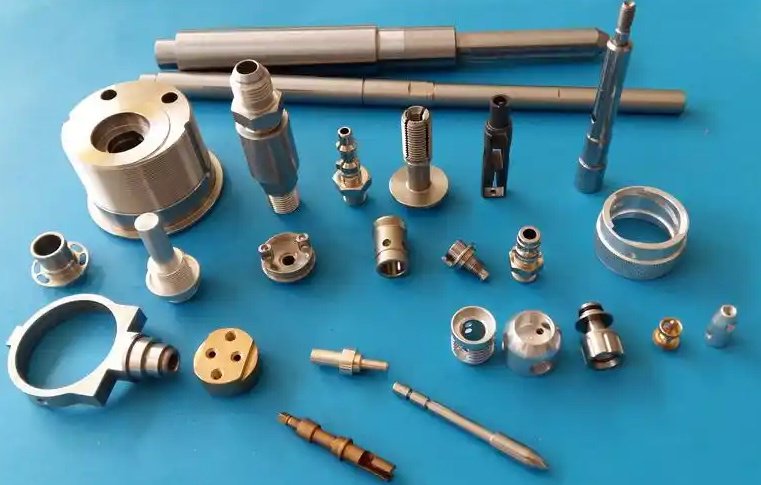
CNC turning is one of the most widely used subtractive manufacturing processes for producing rotational parts with tight tolerances and repeatable quality. Material selection is a key factor that influences machinability, dimensional accuracy, cycle time, tool life, surface finish, and cost. This guide provides a systematic overview of common metals and plastics for CNC turning, their key properties, and how to select the right material for a specific application.
Fundamentals of CNC Turning and Material Requirements
CNC turning uses a rotating workpiece and fixed or moving cutting tools to remove material and generate cylindrical geometries such as shafts, bushings, pins, and threaded features. Because the part rotates, mechanical and thermal properties of the material strongly affect process stability and achievable precision.
Key material-related requirements in CNC turning include:
- Consistent machinability for predictable cutting forces and surface finish
- Sufficient strength and stiffness to withstand service loads
- Dimensional stability under cutting temperatures and in service
- Compatibility with coolants, lubricants, and post-processing operations
- Availability in bar or tube stock suitable for lathes and turning centers
Metals generally offer better dimensional stability, higher stiffness, and good wear resistance. Engineering plastics provide lower weight, chemical resistance, and electrical insulation but may require specific process controls due to lower melting temperature and higher thermal expansion.
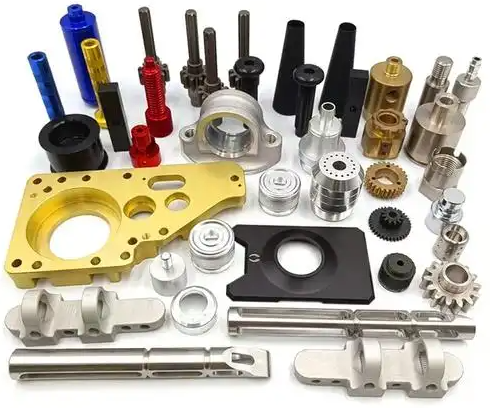
Key Properties That Affect CNC Turnability
When selecting materials for CNC turning, several intrinsic properties determine how they behave during machining and in final use.
1. Mechanical Properties
Mechanical properties define strength, stiffness, and service performance:
- Tensile strength and yield strength: ability to resist permanent deformation
- Hardness: resistance to indentation and wear; affects tool wear and cutting speed
- Modulus of elasticity: stiffness; influences deflection of slender turned parts
- Fatigue strength: relevant for rotating shafts and high-cycle components
For turning, extremely hard materials increase tool wear and may require specialized tooling (e.g., carbide, CBN, or ceramics). Very soft or gummy materials may smear, form built-up edges, and lead to poor surface finish without optimized cutting parameters.
2. Machinability
Machinability describes how easily a material can be cut while achieving the desired finish and tool life. It is influenced by:
- Microstructure and alloying elements
- Presence of sulfur, lead, or other machinability-enhancing additions
- Work hardening tendency
- Chip formation characteristics (short-breaking vs continuous chips)
Free-cutting steels and brass typically exhibit very high machinability, leading to shorter cycle times and reduced tooling costs. Austenitic stainless steels and some high-strength alloys are relatively more difficult to machine and may require lower cutting speeds and optimized coolant delivery.
3. Thermal and Chemical Properties
Thermal properties such as thermal conductivity and coefficient of thermal expansion influence heat dissipation and dimensional stability during turning. Materials with low thermal conductivity may cause high tool temperatures and require more aggressive cooling. Coefficient of thermal expansion plays a critical role in plastics and non-ferrous alloys where temperature variations can cause dimensional drift.
Chemical properties, including corrosion resistance and compatibility with coolants and process fluids, are critical for parts used in aggressive environments. Stainless steels, nickel alloys, and certain plastics are favored when corrosion resistance is required.
4. Surface Finish and Tolerance Capability
Different materials support different achievable surface finishes, measured as average roughness (Ra), under typical turning conditions. Free-machining metals can reach low Ra values with standard tooling, while soft plastics can be more prone to tearing and require sharper tools and optimized cutting geometry for fine finishes.
Tolerance capability depends on stiffness, thermal expansion, and residual stress. Metals with higher modulus and stable microstructure usually support tighter tolerances. Plastics may require wider tolerance bands or controlled environments for high-precision parts.
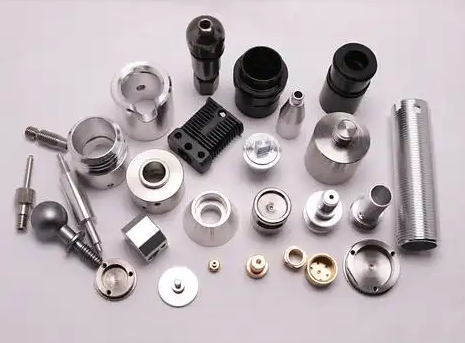
Overview of Common CNC Turning Materials
The table below summarizes several widely used materials for CNC turning and key characteristics relevant to machinability and application suitability.
| Material GroupGrade ExamplesRelative MachinabilityMain AdvantagesCommon Applications | ||||
|---|---|---|---|---|
| Aluminum alloys | 6061, 6082, 7075, 2024 | Very high | Lightweight, good strength-to-weight, excellent machinability | Aerospace fittings, housings, shafts, fixtures |
| Mild and carbon steels | 1018, 1045, C45 | Moderate to high | Good strength, cost-effective, widely available | Shafts, pins, bushings, general machinery parts |
| Tool and alloy steels | 4140, 4340, H13 | Moderate | High strength, wear and fatigue resistance | Heavy-duty shafts, molds, high-stress components |
| Stainless steels | 303, 304, 316, 17-4PH | Low to high (grade-dependent) | Corrosion resistance, high strength for precipitation-hardened grades | Medical, food processing, marine, chemical equipment |
| Copper alloys | Brass (C36000), bronze, Cu-ETP | High to very high | Excellent machinability (brass), good conductivity | Fittings, connectors, valves, electrical components |
| Titanium alloys | Ti-6Al-4V | Low | High strength-to-weight, corrosion resistance | Aerospace, medical implants, high-performance parts |
| Engineering plastics | Delrin (POM), Nylon, PEEK, PTFE | Moderate to high (grade-dependent) | Lightweight, low friction, chemical resistance, electrical insulation | Bushings, seals, insulators, fluid handling parts |
Best Metals for CNC Turning
Metals remain the most commonly used materials in CNC turning due to their strength, dimensional stability, and broad availability. Different alloys are optimized for the balance between machinability, performance, and cost.
1. Aluminum Alloys
Aluminum is one of the most popular CNC turning materials, combining low density with good mechanical properties and excellent machinability. It is suitable for prototypes and production parts across many industries.
Key aluminum alloys for turning include:
Aluminum 6061 / 6082
These are general-purpose, heat-treatable alloys with a good balance of strength, corrosion resistance, and machinability.
Typical properties (6061-T6):
- Tensile strength: ~290 MPa
- Yield strength: ~240 MPa
- Hardness: ~95 HB
- Density: ~2.70 g/cm³
Use cases: structural components, fixtures, housings, medium-strength shafts, and automotive parts.
Aluminum 7075
7075 is a high-strength alloy often used when strength is prioritized over corrosion resistance.
Typical properties (7075-T6):
- Tensile strength: ~570 MPa
- Yield strength: ~500 MPa
- Hardness: ~150 HB
Use cases: aerospace components, high-load brackets, lightweight yet strong shafts and fasteners.
Aluminum Considerations in Turning:
- High cutting speeds are possible due to excellent machinability
- Sharp tools help obtain very low surface roughness
- Built-up edge formation can occur; suitable tool coatings and cutting fluids help mitigate this
- Thermal expansion is relatively high; critical tolerances should account for temperature
2. Carbon and Mild Steels
Mild steels (low carbon) and medium carbon steels are commonly used for economical, high-strength components. They offer good machinability and can be surface-hardened where needed.
Steel 1018 (Low Carbon Steel)
A widely used mild steel with good machinability and weldability.
Typical properties:
- Tensile strength: ~440 MPa
- Yield strength: ~370 MPa
- Hardness: ~120 HB
- Density: ~7.87 g/cm³
Use cases: pins, shafts, spacers, couplings, general-purpose mechanical parts.
Steel 1045 / C45 (Medium Carbon Steel)
Offers higher strength and wear resistance than 1018, and can be flame or induction hardened.
Typical properties:
- Tensile strength (normalized): ~570–700 MPa
- Yield strength: ~300–450 MPa
- Hardness: ~170–210 HB (non-hardened)
Use cases: heavy-duty shafts, gears, bolts, machine tool components.
Carbon Steel Considerations in Turning:
- Machinability is generally good; free-machining grades can further improve performance
- Coolants help manage heat and improve surface finish at higher cutting speeds
- Can be prone to rust; surface treatments or coatings are often applied after machining
3. Alloy Steels and Tool Steels
Alloy steels incorporate chromium, molybdenum, nickel, and other elements to enhance strength, toughness, and wear resistance. They are used in highly loaded and safety-critical applications.
Alloy Steel 4140
A chromium-molybdenum alloy steel known for high strength and toughness.
Typical properties (quenched and tempered):
- Tensile strength: ~850–1000 MPa (grade-dependent)
- Yield strength: ~655–830 MPa
- Hardness: ~200–300 HB (common conditions)
Use cases: drive shafts, axles, connecting rods, downhole tools, high-strength fasteners.
Tool Steels (e.g., H13)
Tool steels are used where wear resistance and hot hardness are essential, such as molds and dies. Turning is often performed in pre-hardened state or using specialized tooling for hardened materials.
Alloy and Tool Steel Considerations:
- Machinability is lower than mild steel; appropriate tooling and cutting parameters are necessary
- Pre-hardened materials may require reduced cutting speeds
- Residual stresses from heat treatment should be controlled to maintain dimensional accuracy
4. Stainless Steels
Stainless steels combine corrosion resistance with mechanical strength. They are widely used in food processing, chemical processing, medical devices, and marine applications.
Key stainless steel families for CNC turning include:
Stainless Steel 303
303 is a free-machining austenitic stainless steel with added sulfur to improve machinability.
Typical properties:
- Tensile strength: ~620–860 MPa
- Yield strength: ~240–350 MPa
- Good corrosion resistance in mild environments
Use cases: fittings, fasteners, shafts, and general stainless components where corrosion resistance and good machinability are needed.
Stainless Steel 304
304 is a widely used austenitic grade with excellent corrosion resistance but lower machinability compared to 303.
Use cases: food processing equipment, tanks, brackets, architectural hardware.
Stainless Steel 316
316 contains molybdenum, improving corrosion resistance in chlorides and marine environments.
Use cases: marine hardware, chemical processing equipment, valves, pump components.
Stainless Steel 17-4PH
A precipitation-hardening stainless steel offering high strength and good corrosion resistance.
Typical properties (H900 condition):
- Tensile strength: ~1275 MPa
- Yield strength: ~1170 MPa
Use cases: aerospace components, turbine parts, shafts, structural fittings.
Stainless Steel Considerations in Turning:
- Austenitic grades may work harden; maintaining consistent chip load is important
- Sharp, rigid tooling and effective coolant application improve tool life
- Free-machining grades (e.g., 303) are preferred when corrosion requirements allow
5. Brass and Copper Alloys
Brass and copper alloys offer excellent machinability and are widely used for fittings, connectors, and decorative components.
Free-Cutting Brass (e.g., C36000)
C36000 brass is among the easiest metals to machine.
Typical properties:
- Tensile strength: ~345 MPa
- Yield strength: ~110 MPa
- Excellent chip formation and surface finish
Use cases: plumbing fittings, electrical connectors, fasteners, instrument parts.
Bronze Alloys
Various bronze alloys offer combinations of strength, wear resistance, and corrosion resistance.
Use cases: bushings, bearings, worm gears, marine hardware.
Copper Considerations in Turning:
- Brass: extremely high machinability; high cutting speeds and feeds possible
- Copper: softer and more ductile; can be prone to burrs and smearing without proper tooling
- Good thermal and electrical conductivity for specialized components
6. Titanium Alloys
Titanium alloys, particularly Ti-6Al-4V, are used where high strength, low density, and corrosion resistance are required. They are relatively difficult to machine due to low thermal conductivity and tendency to work harden.
Ti-6Al-4V (Grade 5)
Typical properties:
- Tensile strength: ~900 MPa
- Yield strength: ~830 MPa
- Density: ~4.43 g/cm³
Use cases: aerospace structural parts, medical implants, high-performance automotive components.
Titanium Turning Considerations:
- Requires rigid setup and sharp tools to avoid chatter and premature tool wear
- Lower cutting speeds and controlled feeds are necessary
- Efficient cooling is vital to manage heat at the cutting zone
Best Plastics for CNC Turning
Engineering plastics are widely turned for components requiring low weight, reduced friction, chemical resistance, or electrical insulation. Compared with metals, plastics have lower stiffness and higher thermal expansion, so the process must be adapted accordingly.
1. Acetal (POM, Delrin)
Acetal (polyoxymethylene) is a high-strength engineering thermoplastic known under trade names such as Delrin. It is one of the most machinable plastics for CNC turning.
Typical properties (POM homopolymer):
- Tensile strength: ~60–70 MPa
- Density: ~1.41 g/cm³
- Low friction, good wear resistance
Use cases: gears, bushings, rollers, valve components, precision mechanical parts.
Acetal Turning Considerations:
- Machines cleanly, producing short chips with proper tool geometry
- Low moisture absorption contributes to dimensional stability
- Care must be taken to manage heat to avoid local softening or deformation
2. Nylon (PA6, PA66)
Nylon is a widely used engineering plastic with good toughness, wear resistance, and impact strength.
Typical properties (PA6):
- Tensile strength: ~60–80 MPa
- Density: ~1.13–1.15 g/cm³
- Good sliding properties, moderate chemical resistance
Use cases: gears, pulleys, bushings, wear pads, structural components with moderate loads.
Nylon Turning Considerations:
- Absorbs moisture, which can affect dimensions and mechanical properties
- Sharp tools required to minimize burrs and tearing
- Coolant can be used, but prolonged exposure to water-based coolants may affect moisture content
3. PEEK (Polyether ether ketone)
PEEK is a high-performance thermoplastic with excellent chemical resistance, high temperature capability, and good mechanical properties.
Typical properties:
- Tensile strength: ~90–100 MPa
- Continuous service temperature: up to ~250°C (application-dependent)
- Excellent chemical resistance and low flammability
Use cases: aerospace components, medical devices, semiconductor equipment parts, high-temperature bushings and seals.
PEEK Turning Considerations:
- Machinability is good but requires sharp tools to obtain fine finishes
- Thermal management is critical to maintain dimensional accuracy
- Often used where metal replacement is desired with reduced weight
4. PTFE (Teflon)
PTFE offers extremely low friction, excellent chemical resistance, and high temperature capability, but it is softer and more deformable than many other plastics.
Typical properties:
- Tensile strength: ~20–30 MPa
- Density: ~2.15 g/cm³
- Extremely low coefficient of friction
Use cases: seals, gaskets, valve seats, bearing surfaces in chemically aggressive environments.
PTFE Turning Considerations:
- Soft and prone to deformation; requires careful control of clamping pressure
- Sharp tools and fine feeds help reduce tearing and achieve smoother surfaces
- High thermal expansion must be taken into account for tight tolerance parts
5. Other Engineering Plastics
Additional plastics frequently used in CNC turning include:
- Polycarbonate (PC): good impact resistance, transparent applications
- Polypropylene (PP): chemical resistance, low density, used in fluid handling
- UHMW-PE: ultra-high molecular weight polyethylene, excellent wear resistance and sliding behavior
These materials may require specialized tooling and process optimization to minimize warping and surface defects.
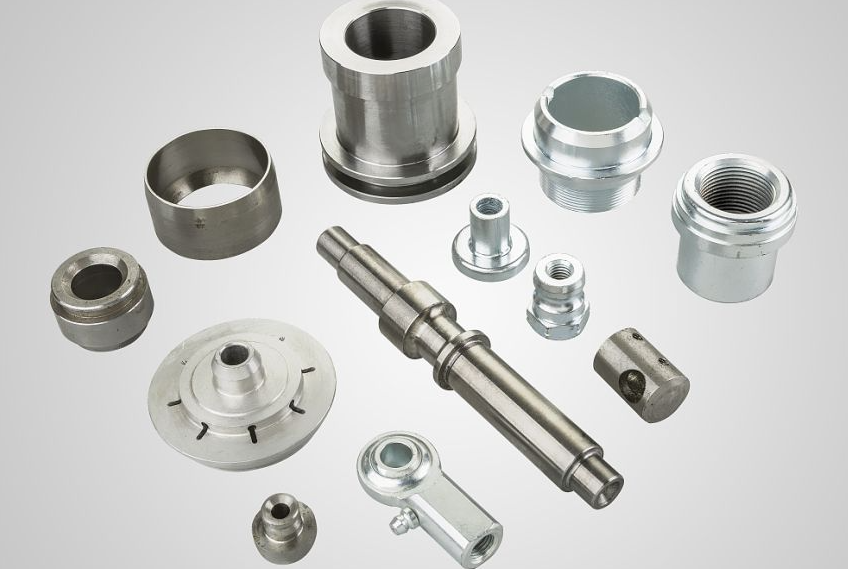
Comparing Metals vs Plastics in CNC Turning
The choice between metals and plastics in CNC turning depends on mechanical requirements, operating environment, weight constraints, and cost considerations. The table below outlines key comparative aspects.
| Aspect | Metals | Plastics |
|---|---|---|
| Density | High (typically 2.7–8.0 g/cm³) | Low (typically 0.9–2.2 g/cm³) |
| Stiffness | High modulus, low deflection | Lower modulus, higher deflection |
| Thermal expansion | Moderate | High; greater sensitivity to temperature |
| Machinability | Excellent for free-machining grades; more demanding for hardened or high-strength alloys | Generally good with appropriate tooling; sensitive to heat and clamping |
| Surface finish potential | Very fine finishes achievable, especially on free-machining metals | Fine finishes possible but may require optimized conditions to avoid tearing |
| Chemical resistance | Grade-dependent; stainless and specialty alloys provide high resistance | Many plastics show excellent resistance to chemicals and moisture |
| Electrical properties | Mostly conductive (exceptions with coatings or special alloys) | Generally insulating |
| Cost per volume | Varies by alloy; many steels and aluminums are economical | Commodity plastics are economical; high-performance plastics may be costly |
Material Selection Criteria for CNC Turned Parts
Selecting the best material for CNC turning involves balancing functional requirements, manufacturability, and budget. The following criteria provide a structured approach.
1. Mechanical and Functional Requirements
Start with the demands of the final application:
- Load-bearing capacity: choose higher-strength metals or high-performance plastics where needed
- Wear and friction: consider bronzes, tool steels, acetal, or PTFE for sliding interfaces
- Impact resistance: plastics like PC and tough metals such as certain alloy steels can be appropriate
- Temperature range: high-temperature environments may require stainless steels, titanium, or PEEK
2. Environmental Conditions
Environmental exposure strongly influences material choice:
- Corrosive environments: stainless steels (304, 316, 17-4PH) or corrosion-resistant plastics (PTFE, PEEK) are beneficial
- Exposure to moisture: consider stainless steels or low-absorption plastics like acetal
- Exposure to chemicals or solvents: high chemical resistance plastics or specific stainless or nickel alloys
3. Tolerance and Surface Finish Requirements
Parts requiring very tight tolerances and low surface roughness benefit from materials with high stiffness and stable machinability:
- Metals like free-machining steels, aluminum, and brass support tight tolerances and fine finishes with standard tooling
- Plastics can achieve good accuracy but may require wider tolerances due to thermal expansion and creep
- Finishing operations (polishing, grinding) may be applied if ultra-fine surfaces are necessary
4. Cost and Production Volume
Economic factors include raw material cost, machinability (cycle time and tool wear), and scrap rates.
- For high-volume production, free-machining metals like 303 stainless, free-cutting steels, and brass can significantly reduce cycle time
- For prototypes and low-volume parts, aluminum or acetal are often cost-effective choices
- High-performance materials such as titanium or PEEK are justified for demanding applications where their properties are essential
5. Availability and Stock Forms
Availability in standard bar sizes and lengths is critical for CNC turning. Many materials are supplied as round bar, hex bar, or tube, which can affect raw stock selection and waste.
- Common alloys (6061 aluminum, 1018 steel, 303 stainless, C360 brass) are widely available in multiple diameters
- Specialty alloys or plastics may have limited size ranges and longer lead times
Machinability and Process Considerations
Even when a material meets functional requirements, its machining behavior must be considered to ensure stable turning processes and consistent quality.
1. Cutting Tools and Tooling Materials
Choice of cutting tool is influenced by material hardness, abrasiveness, and thermal behavior.
- Carbide inserts: standard for most steels, stainless steels, and aluminum alloys
- High-speed steel (HSS): suitable for softer metals and many plastics, commonly used for drills and small tools
- Cubic boron nitride (CBN) and ceramics: used for hardened steels and abrasive materials
Tool geometry should be adapted for the material:
- Positive rake angles and sharp edges for plastics and soft metals
- Robust edge geometry and appropriate chipbreakers for steels and hard alloys
2. Cutting Parameters
Key cutting parameters include cutting speed (Vc), feed rate (f), and depth of cut (ap). These must be tuned to the material properties:
- Aluminum and brass: high cutting speeds, moderate feed rates, and larger depths of cut are generally possible
- Stainless steels and titanium: lower cutting speeds, controlled feeds, and conservative depths of cut reduce heat and tool wear
- Plastics: moderate speeds, lighter cuts, and lower feeds help minimize heat generation and deformation
3. Coolants and Lubrication
Coolant use depends on material and application:
- Steels and stainless steels: cutting fluids improve tool life and surface finish by reducing temperature and friction
- Aluminum: coolant helps prevent built-up edge and improves chip evacuation
- Plastics: in some cases, dry machining is preferred; where coolants are used, they must be compatible with the polymer
4. Workholding and Part Geometry
Workholding strategy must consider material stiffness and part geometry:
- Slender turned shafts in metals may require tailstock support or steady rests
- Soft plastics or thin-walled parts require controlled clamping forces to avoid distortion
- Selection of appropriate chuck jaws and support fixtures improves concentricity and dimensional stability
Typical Pain Points When Selecting Materials for CNC Turning
While material choices are wide, several recurring issues can complicate CNC turning projects:
- Balancing cost vs performance: high-performance materials often exceed budget if not strictly required by service conditions
- Overly tight tolerances on plastics: specifying metal-like tolerances on high-expansion plastics leads to increased scrap or complicated process control
- Inadequate attention to corrosion or chemical exposure: selecting a carbon steel instead of a stainless or suitable plastic can shorten service life
- Ignoring machinability: choosing a difficult-to-machine alloy without accounting for tool wear and longer cycle times increases overall production cost
Practical Recommendations for CNC Turning Material Selection
The following recommendations provide a practical starting point for selecting materials for turned parts:
- For general-purpose metal components requiring good strength and economical production: 1018 or 1045 steel, or 4140 for higher strength
- For lightweight parts with moderate to high strength and good machinability: 6061 or 7075 aluminum
- For corrosion-resistant metal parts with reasonable machinability: 303 stainless steel when free-machining is acceptable, 304/316 for stronger corrosion demands
- For high-precision, low-friction plastic parts: acetal (POM/Delrin)
- For parts with extreme chemical resistance and low friction: PTFE
- For highly loaded, high-temperature plastic applications: PEEK
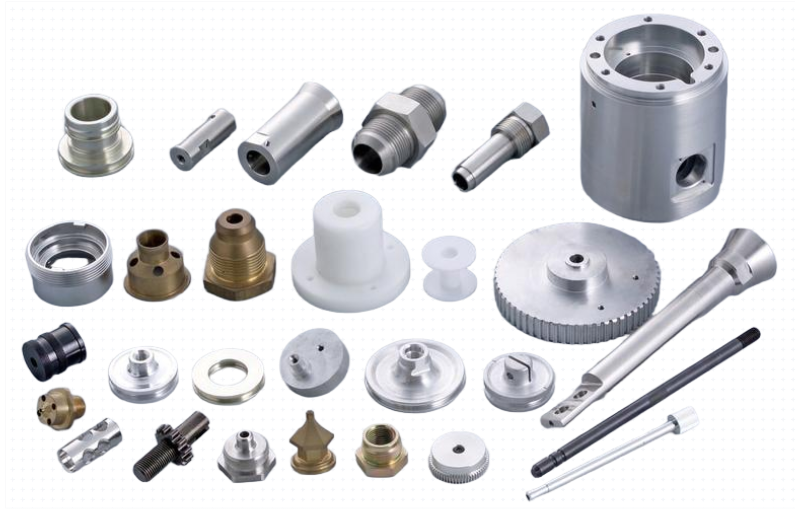
Matching these baseline suggestions with specific application constraints, dimensional requirements, and budget will enable reliable, repeatable results in CNC turning operations.