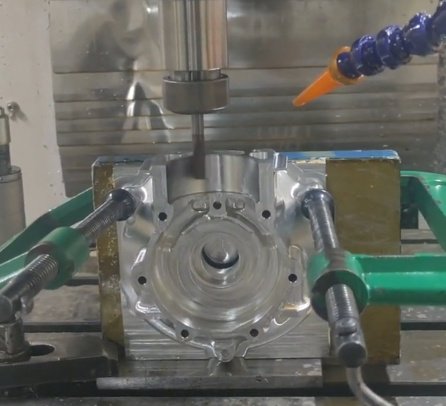
Aluminum CNC machining is widely used for prototypes, end-use parts, and small to medium production runs. Understanding how prices are formed helps engineers, buyers, and project managers specify parts correctly, compare quotes, and control budgets.
Key Factors That Determine Aluminum CNC Machining Cost
Aluminum CNC machining cost depends on a combination of material, process, equipment, and business-related factors. These elements interact and are rarely independent, so cost estimation should consider the full context of the part and order.
Calculate Your Aluminum CNC Machining Cost
Aluminum CNC Machining Cost Calculator
A simple estimator for aluminum CNC machined parts. Costs are approximate and vary by supplier, location, alloy, and exact specifications.
Notes:
• Material prices based on typical 2025–2026 stock costs with ~2.5× waste factor (larger blanks + chips; note: aluminum chips are often recyclable with credit).
• Machining time is a rough estimate – aluminum machines quickly but actual time depends on features, tool changes, etc.
• This does not include shipping, taxes, surface treatments (anodizing, plating), or profit margins.
• For accurate quotes, use professional services like Xometry, Protolabs, XCM, or local machine shops.
Material Type, Size, and Utilization
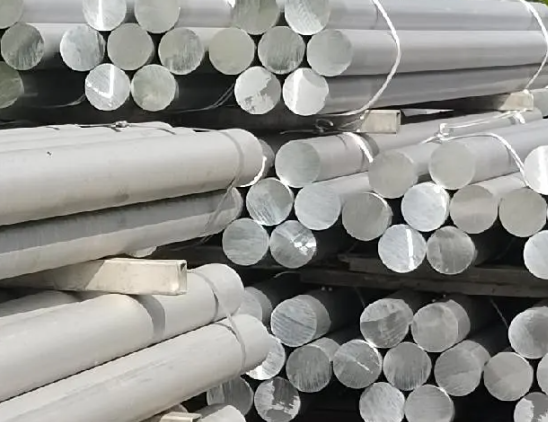
Material cost is usually not the largest component for aluminum parts, but it directly affects the base price and waste ratio.
- Common aluminum grades: 6061-T6, 6082, 7075, 2024, 5052, 6063, MIC-6, and various casting alloys.
- Form: plate, bar, block, extrusion, forged blank, or casting preform.
- Dimensions: stock size vs. finished size, stock thickness, and required oversize margin.
Material utilization ratio is the relationship between the volume of the finished part and the volume of the raw stock. Low utilization (heavy roughing/removal) increases machine time and waste disposal cost, not just material cost.
Machine Type and Capability
The choice of machine has a major impact on hourly rate and achievable accuracy:
- 3-axis vertical machining centers for most prismatic parts.
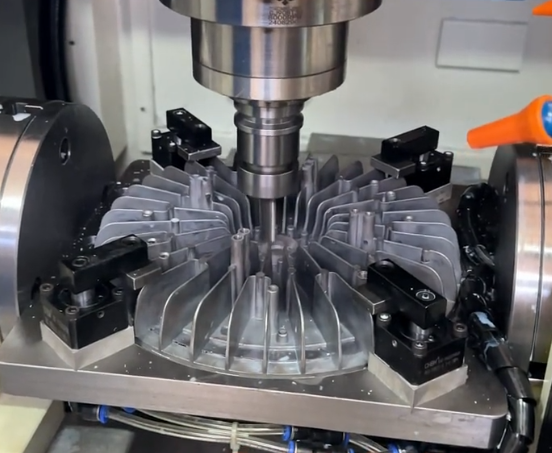
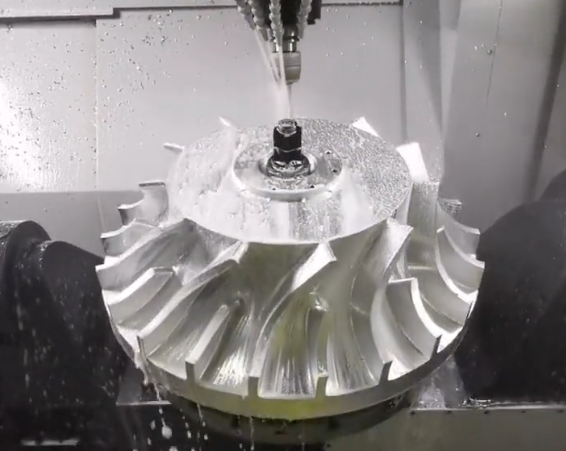
- 4-axis and 5-axis machining centers for complex geometries, undercuts, and multi-sided machining in one setup.
- CNC lathes and turning centers for rotational parts; mill-turn centers for combined operations.
High-precision or multi-axis machines typically have higher hourly rates but can reduce setups and total cycle time. The effective cost depends on whether the additional capability reduces total hours enough to offset the higher rate.
Labor, Programming, and Setup
Labor affects both recurring and non-recurring costs:
Programming and CAM: 3D surfaces, freeform shapes, and multi-operation processes require more programming hours. This cost is usually amortized over the batch size.
Setup and fixturing: Complex parts, multiple setups, custom fixtures, and precision alignment all add setup time. For small batches or prototypes, setup cost per part can exceed the actual cutting cost.
Shops may charge setup as a separate line item or incorporate it into a minimum order charge or an elevated per-part price for low quantities.
Part Geometry and Complexity
Part design significantly influences both machining time and risk. Important factors include:
- Number of features: pockets, holes, threads, slots, bosses, ribs, and chamfers.
- Accessibility: deep cavities, tall walls, narrow features, and tool reach constraints.
- Wall thickness: thin walls and ribs require lighter cuts and more passes to avoid chatter and deformation.
- Feature tolerance stack: complex interaction of dimensions that must be held at the same time.
Even small design details such as fillet size, choice of thread type, and surface break edges can change tool paths, tool life, and inspection effort.
Tolerances and Dimensional Requirements
Standard CNC processes can reliably hold moderate tolerances in aluminum. Tight tolerances increase setup, machining time, and inspection cost. The cost impact is typically not linear; pushing tolerances beyond normal machining capability may require secondary operations, special tools, or dedicated fixtures.
Surface Finish and Post-Processing
Surface finish and secondary treatments affect both per-part cost and throughput.
Typical requirements include:
- Specific Ra values (e.g., Ra 3.2 μm machined, Ra 0.8 μm fine finish).
- Bead blasting, polishing, or brushing to achieve visual uniformity.
- Anodizing (clear, black, hard anodize) or other coatings.
- Heat treatment or stress relieving when required for dimensional stability.
Each additional operation adds handling, queue time, and logistics overhead, which is reflected in the final price.
Quantity, Batch Size, and Repeatability
Batch size is one of the most visible cost factors:
For very low quantities (e.g., 1–5 parts), the setup and programming portion dominates unit cost. For higher volumes, these non-recurring costs are spread across more parts and per-piece price approaches the pure machining plus finishing cost.
Repeat orders allow reusing programs, fixtures, and process plans, reducing future quotes compared to first-time orders for the same part.
Quality Control and Documentation
Inspection requirements can range from basic dimensional checks to full production-level documentation. Cost drivers include:
- First Article Inspection (FAI) reports.
- 100% inspection vs. sampling plans.
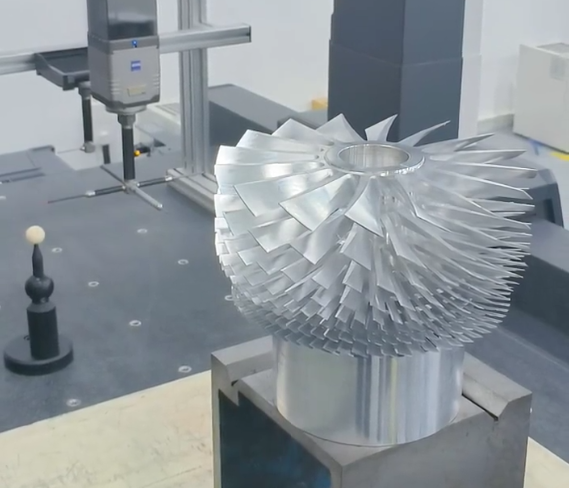
- Use of CMM, optical measurement, or custom gauges.
- Material certificates, traceability, and lot segregation.
More stringent quality requirements increase both inspection time and indirect administrative cost.
Typical Cost Components in Aluminum CNC Machining
Aluminum CNC machining prices can be broken into direct and indirect cost elements. Understanding this structure supports more accurate cost modeling and supplier discussion.
| Cost Component | Description | Typical Behavior |
|---|---|---|
| Material | Raw aluminum stock, cutting allowance, and waste | Scales with part volume, stock size, and alloy |
| Machine Time | Cutting, tool changes, rapid moves, probing | Scales with geometry, feeds, speeds, and setups |
| Setup and Programming | CAM work, fixturing, alignment, test cuts | Mostly fixed per job; amortized across batch |
| Tooling and Consumables | Cutting tools, inserts, coolant, workholding wear | Depends on material removal and tool life |
| Post-Processing | Anodizing, coating, deburring, bead blasting | Per-part or per-batch charges by process |
| Inspection and QA | Measurement, reports, sampling, documentation | Scales with QA depth and regulatory needs |
| Overhead and Margin | Facility, administration, profit | Embedded into hourly rates and markups |
Aluminum Material Grades and Their Cost Impact
Different aluminum alloys have distinct mechanical properties and machining characteristics, which influence both material price and machining cost.
Common Aluminum Alloys for CNC Machining
Widely used alloys include 6061-T6, 6082, 7075-T6, 2024-T3/T4, 5052, and 6063, while cast tooling plate (such as MIC-6 type) is common for bases and fixtures. Each has specific advantages regarding strength, corrosion resistance, and machinability.
Machinability and Tool Wear Considerations
Aluminum alloys generally have excellent machinability, but behavior differs:
- Free-machining wrought alloys (e.g., 6061, 6082) allow high cutting speeds and feed rates.
- High-strength alloys (e.g., 7075, 2024) are harder and may reduce tool life or require conservative cutting conditions.
- Casting alloys and certain wrought grades may contain more silicon or other elements, affecting chip formation and burr tendency.
Differences in tool life and allowed cutting parameters translate into subtle variations in machine time and consumable cost. For most commercial jobs, the impact is modest compared to geometry and tolerance effects, but for long running jobs the difference can be significant.
Material Cost versus Total Part Cost
For most machined aluminum parts, material cost is usually a modest portion of total price, especially for highly machined components with low material utilization. Reducing material cost by choosing a cheaper alloy or stock size brings savings only if it does not increase machining time or rejection rate.
Machine Hourly Rates and Operation Types
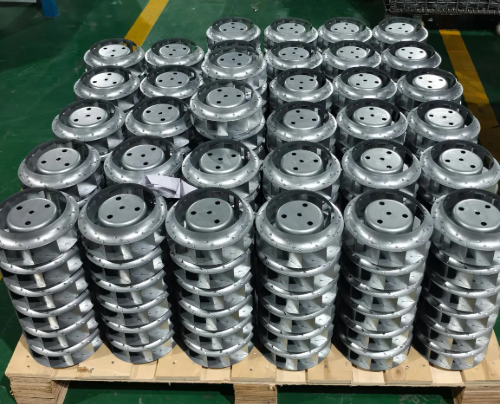
Suppliers usually base pricing on internal machine hourly rates. These rates embed both direct operating cost and overhead. Different machines and operations have different rates.
Milling, Turning, and Mill-Turn Operations
Cost is influenced by the type of operation:
- Milling: Preferred for prismatic parts with pockets, slots, and 3D surfaces.
- Turning: Efficient for cylindrical parts and features such as shafts, bushings, and flanges.
- Mill-turn: Combines turning with driven-tool milling for complex turned parts that also require flats, slots, or hole patterns.
Milling time is driven by the extent of material removal, tool diameter, step-down/step-over choices, and number of setups. Turning time depends primarily on part length, diameter change, and required surface finish.
3-Axis vs. 4/5-Axis Machining Costs
Multi-axis machines often carry higher hourly rates, but they can reduce total setup count and manual handling. Cost interactions include:
- Single-setup machining for multiple faces reduces fixture complexity and improves positional accuracy across faces.
- Fewer setups can shorten cumulative run time and reduce dimensional variation, especially for parts with features on several sides.
- In some cases, a 5-axis machine allows shorter tools and more aggressive cutting parameters because of improved tool orientation.
For simpler parts with accessible features, 3-axis machines are often more economical. Multi-axis machining becomes advantageous when geometry and datum relationships justify the higher machine rate.
How Aluminum Part Design Affects Machining Time
Design choices strongly influence machining strategies and cycle time. Understanding these relationships supports cost-conscious design.
Feature Count and Tool Changes
Each distinct feature type often requires a different tool, such as end mills, drills, taps, and reamers. More features typically mean more tool changes, additional toolpaths, and transitions between operations, all of which add to cycle time.
Deep Cavities, Thin Walls, and Aspect Ratios
Aluminum is susceptible to chatter and deflection when machining deep cavities or thin walls. To maintain dimensional accuracy and surface quality, the machinist may:
- Use smaller step-down and step-over values.
- Reduce feed and speed compared to robust features.
- Leave finishing allowances and perform multiple finishing passes.
These adjustments increase machining time significantly compared with more compact, well-supported geometries.
Fixturing, Reorientation, and Setups
Each time a part is removed and re-clamped, new setup time is required and positional accuracy between faces must be re-established. Complex parts may require multiple fixtures or modular workholding to access all surfaces.
Cost is minimized when all critical features referenced to the same datums can be machined in as few setups as possible. Design that anticipates how the part will be held can reduce both setup and cycle time.
The Role of Tolerances in Cost and Pricing
Tolerance requirements are a major cost driver in CNC machining. They influence everything from machine selection and tool choice to inspection strategy.
Standard versus Tight Tolerances
Standard machining tolerances are suitable for many mechanical applications. Tight tolerances consume more time and resources due to:
- Need for stable setups and minimized part distortion.
- Reduced cutting parameters to avoid dimensional drift.
- More frequent measurement and corrections during machining.
- Higher rejection risk if process capability is low relative to tolerance band.
Excessively tight tolerances where not functionally required can significantly increase total job cost without adding value to the final product.
Geometric Dimensioning and Tolerancing (GD&T) Impact
GD&T controls form, profile, orientation, and location. These controls can improve clarity but also increase process complexity when requirements are strict.
Cost impact is more pronounced when GD&T features demand tight positional tolerances across widely separated surfaces, or when they require special alignment during machining and inspection.
Post-Processing and Surface Treatment Costs
Post-processing adds visual quality, corrosion resistance, wear resistance, and specific functional surface characteristics. Each operation carries its own pricing logic.
Deburring, Edge Break, and Surface Preparation
Aluminum machining tends to produce burrs, especially on small features and drilled holes. Standard deburring methods include manual deburring, tumbling, and specialized deburring tools.
Specification of edge conditions (sharp, small chamfer, or radius) influences both machining and deburring strategy. Uniform requirements across the part allow a more streamlined process and lower cost.
Anodizing and Other Coatings
Anodizing is common for aluminum parts in many industries. Processes include decorative anodizing, hard anodizing, and various color options.
Cost is typically established per batch (setup) plus a per-area or per-part component. Additional requirements such as masking, plugging of holes, or tight dimensional control after anodizing increase costs.
Heat Treatment and Stress Relief
Although many wrought aluminum alloys are supplied in pre-tempered conditions, some parts may require stress relief or additional heat treatment. This contributes through furnace time, controlled cooling, and additional handling and inspection.
Order Quantity, Lead Time, and Pricing Models
How a job is structured and scheduled affects the final quote. Suppliers balance their workload, machine availability, and business constraints when setting prices.
Prototype, Small Batch, and Production Runs
Prototyping and low-volume runs carry higher per-unit costs due to fixed overheads. Production runs benefit from:
- Spread setup and programming over many units.
- Optimized tooling and fixturing developed after early runs.
- Process refinement based on previous experience.
Suppliers often use price breaks at defined quantity levels to reflect these economies of scale.
Standard Lead Time versus Expedited Service
Expedited jobs may require overtime, schedule re-prioritization, or idle machine capacity reserved for rush orders. This is reflected in an uplift over standard pricing.
When schedule is flexible, suppliers can fit work into regular capacity, often at more favorable rates.
Estimating Aluminum CNC Machining Time
Aluminum CNC Machining time is typically the dominant controllable cost component. Estimation methods range from simple approximations to detailed calculations.
Material Removal Rate and Cycle Time
The core of machining time estimation is material removal combined with effective material removal rate. In practice, actual cycle time includes cutting, rapid moves, tool changes, probing, and part handling.
High material removal volumes, especially from solid blocks, increase cycle time substantially. Roughing strategies and cutting tool selection can mitigate this, but the basic relationship remains.
Setup Time and Non-Cutting Operations
Setup time includes installing fixtures, aligning the workpiece, loading tools, and verifying programs. Longer setups are common for complex parts or when positional accuracy across faces is critical.
Non-cutting operations such as cleaning, in-process measurement, and tool offset adjustments are necessary for consistent quality and must be included in any realistic time estimate.
Comparing Quotes from Different CNC Suppliers
Quotes from different suppliers can vary considerably even for the same drawing. Structured comparison supports better purchasing decisions.
Understanding What Is Included
When comparing quotes, confirm the scope:
- Material grade and certification level.
- Machining operations and number of setups assumed.
- Surface finish and post-treatment processes.
- Inspection depth, reports, and documentation.
- Packaging, shipping, and any minimum order or setup charges.
Apparent price differences often trace back to differences in assumptions rather than pure efficiency.
Evaluating Price versus Capability
Lower price is not always equivalent to lower total cost. Consider:
- Process reliability and historical quality performance.
- Ability to meet tolerance and finish requirements consistently.
- Lead time adherence and capacity for future volume changes.
A balanced assessment of cost and capability helps avoid issues such as rework, delays, and line stoppages.
Cost Reduction Strategies for Aluminum CNC Parts
There are systematic ways to reduce the cost of aluminum CNC parts without compromising functional requirements.
Design for Manufacturability (DFM) Practices
DFM approaches aim to simplify manufacturing while meeting design intent. Practical strategies include:
- Reducing the number of setups and complex workholding conditions.
- Using accessible features that allow standard tools and orientations.
- Avoiding unnecessary thin walls, deep narrow pockets, and extremely small features.
Even small modifications, such as standardizing fillet radii or eliminating non-critical undercuts, can reduce cycle time and tool changes.
Standardizing Features and Tolerances
Standard features and tolerances allow suppliers to reuse process knowledge and tooling. Strategies include:
- Using standard thread sizes and depths where possible.
- Consolidating tolerance bands to a few levels (critical, important, non-critical).
- Calling out standard finishes rather than unique roughness values for each surface.
Limiting the number of special requirements helps streamline programming, setup, and quality control.
Optimizing Material Selection and Stock Size
Where performance allows, selecting a readily available alloy and stock size reduces both material cost and lead time. Efficient nesting and cutting plans minimize waste, especially for plate and large blocks.
Using near-net-shape preforms (extrusions, forgings, or castings) can drastically reduce material removal time for complex shapes, although tooling for these preforms must be justified by volume.
Example Cost Structure for a Machined Aluminum Part
Complexity and job context vary widely, but it is useful to consider how costs might be distributed for a typical machined aluminum part.
| Cost Category | Example Contribution to Total | Notes |
|---|---|---|
| Material | 10–25% | Highly dependent on utilization and alloy price |
| Machine Time | 35–55% | Main driver for heavily machined parts |
| Setup and Programming | 10–25% | Larger share for low-volume or prototype work |
| Tooling and Consumables | 5–10% | Higher for abrasive alloys or long runs |
| Post-Processing | 5–15% | Depends on anodizing, coating, and finishing steps |
| Inspection and QA | 5–15% | Can increase significantly with documentation requirements |
Actual percentages vary among shops and projects, but this structure illustrates why geometry, machining time, and non-recurring setup/QA costs deserve particular attention when managing price.
Practical Considerations and Common Cost-Related Issues
Several practical aspects frequently influence pricing outcomes and should be considered during design and sourcing.
Drawing Clarity and Specification Completeness
Incomplete or ambiguous drawings lead to assumptions and contingency allowances in quotes. Clear identification of critical dimensions, surface finishes, and material specifications allows suppliers to quote more confidently and avoid adding hidden safety margins to the price.
Consistency across Revisions
Design changes after initial quotation or during production introduce additional programming and setup work. This non-recurring effort may result in revised pricing or engineering change charges. Stable designs and coordinated revision control help keep costs predictable.
Coordination of Post-Processing Requirements
Some cost issues arise from late or fragmented specification of post-processing. Combining machining, anodizing, and any special marking into a single integrated requirement set allows better planning and pricing. When these processes are sourced separately or added after machining, total cost often rises.
FAQ
How can I quickly estimate the cost of an aluminum CNC part?
A quick estimate can be formed by approximating material volume, selecting a likely machine hourly rate, and estimating machining time based on geometry and complexity. Add approximate setup, post-processing, and QA percentages. For accurate pricing, detailed quotes from suppliers are required because actual costs depend heavily on specific features, tolerances, and batch size.
Why do prototypes and low-quantity orders cost so much per part?
Prototypes carry the full weight of programming, setup, and often extensive communication and engineering support, all spread over very few units. Machine time may be similar to that of production parts, but non-recurring engineering and setup costs dominate, raising the per-part price significantly compared with larger batches.
Do tighter tolerances always increase machining cost?
Not always, but they often do. Tolerances within the normal working range of the machines and processes used may have little cost impact. Once tolerances approach the limits of process capability, costs rise more sharply because of slower cutting parameters, more rigid fixturing, expanded inspection, and higher rejection risk.
Is aluminum always cheaper to machine than steel?
Aluminum is generally faster to machine than most steels due to lower cutting forces and higher allowed cutting speeds, which usually results in lower machine time for similar geometries. However, total cost still depends on part design, tolerance, post-processing, and batch size, so aluminum is not automatically cheaper in every situation.