
Precision CNC Machining
Engineered Accuracy for Complex Components
When your project requires tight tolerances, consistent repeatability, and high-performance materials, precision CNC machining provides the control and reliability modern manufacturing demands.
At XCM, we deliver advanced solutions that transform digital designs into high-accuracy metal and plastic components. From prototype development to full production runs, our process ensures structural integrity, dimensional consistency, and dependable performance.
Key capabilities
- Multi-axis CNC milling and turning
- Tight tolerance machining for complex geometries
- Production-ready custom precision parts
- Support for metals and engineering plastics
- Scalable manufacturing for low and high volumes
Get A Free Quote!
How Precision CNC Machining Delivers Accuracy and Manufacturing Reliability
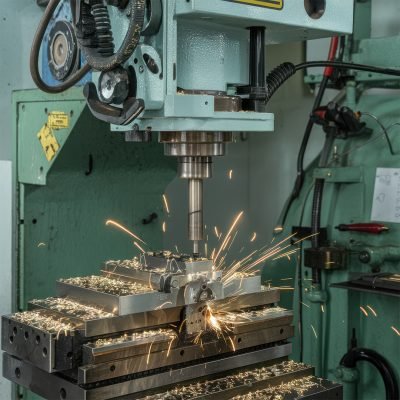
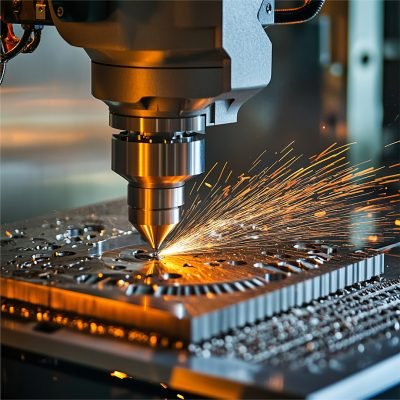
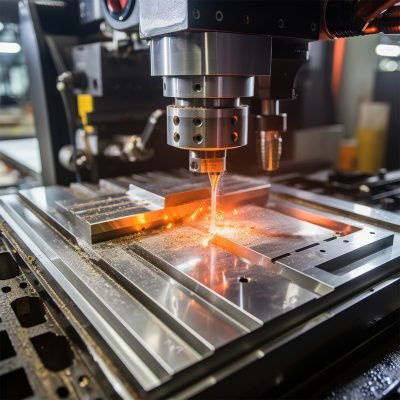
Precision CNC Machining is a subtractive manufacturing process that removes material from a solid workpiece to create parts with exact dimensions and smooth surface finishes. The process uses computer-controlled equipment guided by CAD/CAM programming and automated G-code instructions.
Unlike conventional methods, modern CNC systems allow us to machine intricate shapes with minimal variation between parts. Whether you order 10 parts or 10,000, the last part matches the first perfectly.
Modern CNC systems operate across multiple axes, allowing intricate shapes and complex geometries to be produced efficiently. This level of control makes it possible to manufacture components with extremely tight tolerances for demanding industrial environments.
Key Advantages of Precision CNC Machining
Automation in tool movement allows tighter tolerances than conventional machining methods. In most industrial applications, precision cnc machining typically operates within a tolerance range of ±0.01 to 0.05 mm, depending on material, geometry, and process control.
Achieving this level of accuracy requires specialized cutting tools, optimized machining parameters, and experienced technical oversight.
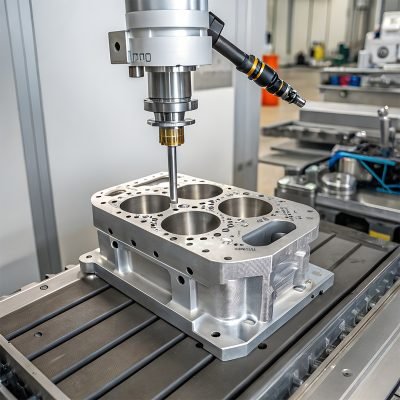
One of the core advantages of modern CNC precision manufacturing is the ability to produce identical parts with consistent quality across industries such as automotive, medical, and defense. To create precision-machined components, manufacturers commonly use equipment such as CNC milling machines, lathes, and electrical discharge machining (EDM) systems, each selected based on geometry and material requirements.
Digital design systems play a central role in the process. Computer-Aided Design (CAD) defines the component geometry, while Computer-Aided Manufacturing (CAM) translates the 3D model into machine instructions. These instructions guide the CNC system along a programmed tool path, enabling controlled material removal until the final part geometry is achieved.
Accuracy isn’t just about measurements. It directly impacts performance, safety, and assembly efficiency.
Consistent Dimensional Control
High precision machining ensures every component matches design specifications, reducing fitment issues and improving product reliability.
Superior Repeatability
Automated machining processes allow identical parts to be produced across large production volumes without performance drift.
Material Efficiency
The controlled material removal process minimizes waste while maintaining structural integrity
Our Precision CNC Machining Capabilities
XCM provides comprehensive precision cnc machining services supported by advanced equipment and experienced engineers.
CNC Milling
Multi-axis milling removes material from complex surfaces and produces detailed features with excellent surface finish quality.
CNC Turning
Rotational cutting processes create cylindrical and symmetrical components with consistent accuracy.
Precision Metal Machining
We process aluminum, stainless steel, brass, and other industrial alloys, including titanium CNC machining for high-strength and high-performance applications.
Precision Plastic Machining
Engineering plastics such as ABS, nylon, and Delrin are machined for lightweight, corrosion-resistant components.
Our facility supports rapid prototyping machining as well as high-volume precision production.
Materials Suitable for CNC Precision Machining
CNC systems can machine a wide range of materials, including metals, plastics, and certain composites. In practice, precision machining most often focuses on metals and engineering plastics because they provide the structural stability and dimensional consistency required for high-accuracy components.
Each material behaves differently during machining. Cutting tools, speeds, feeds, and cooling strategies must be adjusted based on hardness, thermal behavior, and machinability. That’s why material selection is never just about availability; it must align with part function, load requirements, and operating environment.
Choosing the right material directly affects dimensional accuracy, surface finish quality, durability, and overall production efficiency.
Material selection drives performance.
| Material Category | Common Alloys/Grades | Best Application |
|---|---|---|
| Aluminum | 6061, 7075, 2024, 5052 | Light frames, aerospace parts, heat sinks. |
| Stainless Steel | 304, 316, 17-4 PH, 416 | Medical devices, marine hardware, and shafts. |
| Carbon Steel | 1018, 1045, 4140, A2, D2 | Tooling, gears, heavy-duty machinery. |
| Superalloys | Titanium (Ti-6Al-4V), Inconel 718 | High-heat aerospace and defense components. |
| Copper/Brass | C101, C110, C360 Brass | Electrical contacts, fittings, bushings. |
| Rigid Plastics | Delrin (Acetal), Nylon 6/6, PEEK | Bushings, insulators, and low-friction gears. |
These materials are commonly selected for components requiring lightweight strength, chemical resistance, or electrical insulation.
Industries That Rely on Precision Machining
The demand for high precision spans multiple technical sectors.
Aerospace
Lightweight structural components require exceptional dimensional accuracy and fatigue resistance.
Medical Devices
Surgical tools and equipment demand reliable precision and smooth surface finishes.
Automotive
Engine components and mechanical assemblies rely on tight-tolerance machining for performance consistency.
Industrial Equipment
Automation systems and machinery require durable custom precision components for long-term operation.
Technical Advantages of Precision Machining
Choosing machining provides measurable engineering benefits.
- High-dimensional accuracy and repeatability
- Ability to produce complex geometries
- Consistent surface finish quality
- Reduced manual intervention
- Reliable performance across production volumes
As a precision parts manufacturer, we focus on accuracy, efficiency, and process stability from design to delivery.
Why Choose XCM as Your Precision Machining Partner
Manufacturing success depends on consistency and technical expertise. As an experienced supplier, XCM combines advanced machining technology with strict quality control.
- Integrated CNC milling and turning services
- Production of custom precision components
- Reliable precision machining services for diverse industries
- Scalable solutions from prototype to mass production
- Dedicated engineering and inspection support
Our goal is simple: deliver precision parts that meet real-world performance demands.
Start Your Precision Machining Project
If your application requires complex geometry, tight tolerances, and repeatable production quality, precision machining provides a dependable manufacturing solution.
From design interpretation to final inspection, XCM supports every stage of precision component production.