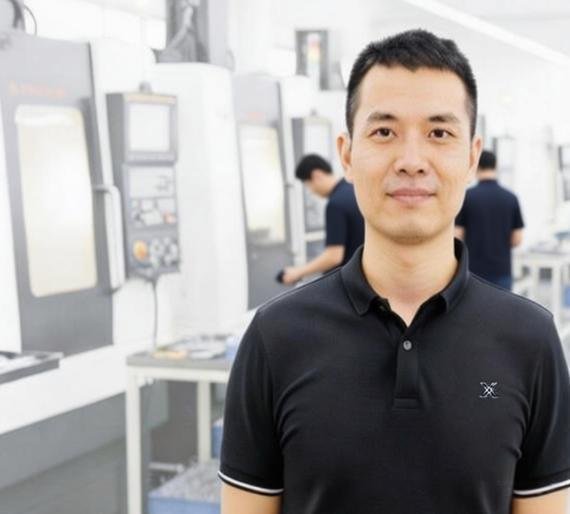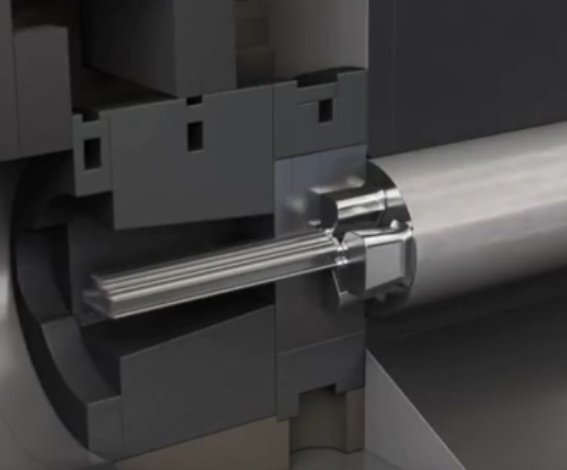
In the environment of contemporary production, there simply is no margin of error anymore. As industries continue to strain physics and engineering fields, the parts they are based on cannot be merely functional; they need to be flawless. The CNC (Computer Numerical Control) machining has developed as a primitive technique of fabrication, becoming a technologically advanced field where digital accuracy is combined with metallurgical skills.
For manufacturers in aerospace, medical, and heavy industry, the choice of a machining partner is a high-stakes decision. This guide explores how CNC machining services with advanced technology are leveraged to deliver the reliability and accuracy required for today’s industrial challenges.
The Foundation of Industrial Performance: Precision
Precision is the heartbeat of performance. In high-speed assemblies, a deviation of even a few microns can lead to catastrophic failure, excessive vibration, or premature wear. High-accuracy machining is not just about meeting a drawing’s specifications; it is about ensuring the safety and longevity of the final product.
When industrial parts meet exact measurements, they ensure:
- Interchangeability: Parts can be replaced in the field without custom fitting.
- Energy Efficiency: Reduced friction in moving parts leads to lower energy consumption.
- Structural Integrity: Tight tolerances (often reaching $\pm0.005$ mm) ensure load-bearing components distribute stress as engineered.
Comprehensive CNC Machining Services
To meet the diverse needs of the global market, XCM offers a suite of services designed to handle everything from the initial spark of an idea to full-scale industrial deployment.
1. Multi-Axis Milling
Standard 3-axis machines are often insufficient for the complex geometries required in modern aerospace or automotive designs. Utilizing 4-axis and 5-axis milling centers allows for the machining of complex shapes in a single setup. This drastically reduces stack-up errors that occur when a part is moved between different machines, ensuring superior geometric dimensioning and tolerancing (GD&T).
2. Precision Turning
For cylindrical components like shafts, bushings, and valves, precision turning is essential. By utilizing live tooling lathes, engineers can perform both turning and milling operations on the same machine, ensuring that holes and flats are perfectly concentric or aligned with the turned diameters.
3. Prototype Machining and Bridge Production
Before committing to a massive production run, engineers need functional prototypes. Professional CNC machining services provide parts using the actual end-use material, allowing for real-world testing of thermal properties, stress resistance, and fitment. This bridge production phase is critical for validating designs before capital-intensive mass manufacturing.
Material Expertise: Engineering for Durability
A machine is only as good as the material it cuts. Different industries demand different physical properties; some need the lightness of aluminum, while others require the extreme heat resistance of titanium. Maintaining a robust supply chain and technical knowledge base is vital for a variety of industrial materials:
- Aluminum (6061, 7075): Ideal for aerospace and automotive parts where weight-to-strength ratios are critical.
- Stainless Steel (304, 316, 17-4 PH): Essential for medical and marine environments where corrosion resistance is paramount.
- Titanium: Used for high-stress, high-temperature applications like turbine blades.
- Engineering Plastics (PEEK, Delrin, PTFE): High-performance polymers used when electrical insulation or chemical resistance is needed.
The ability to maintain tight tolerances across these varying materials, each with its own hardness and thermal expansion rate, is a hallmark of technical proficiency in the machining sector.
The Precision Workflow: From Digital Design to Physical Part
Efficiency in CNC machining services is the result of a disciplined workflow. The process is streamlined to eliminate waste and ensure that every second of machine time contributes to the quality of the final part.
Phase 1: DFM Analysis
The process begins with Design for Manufacturing (DFM) feedback. Technical experts review the client’s CAD files to identify potential manufacturing hurdles. By suggesting minor adjustments to internal corner radii or wall thicknesses, shops can often reduce costs without compromising part integrity.
Phase 2: Programming and Simulation
Using advanced CAD/CAM software, the toolpaths are generated. Before a single chip of metal is cut, the entire process is simulated digitally. This prevents tool crashes and ensures that the most efficient cutting strategies are employed, protecting both the workpiece and the equipment.
Phase 3: Calibrated Machining
During the actual machining phase, high-speed spindles and carbide-tipped tools carve the part. Facilities monitor tool wear in real-time to ensure that every part in a batch, whether it's the 1st or the 1,000th, is identical.
Quality Control: The Zero-Defect Mandate
High-accuracy machining is meaningless without verification. Quality control must be integrated into every step of the manufacturing cycle, not just added as an afterthought.
- CMM Inspection: Coordinate Measuring Machines (CMM) use sensitive probes to measure the dimensions of a part against the original 3D model with sub-micron accuracy.
- Surface Profile Measurement: For parts where friction is a factor, surface finish testers ensure the Roughness Average ($R_a$) meets the design requirement.
- Material Certification: Every batch of material should come with mill test reports to ensure it meets the chemical and physical standards required for the project.
By maintaining these rigorous standards, XCM protects its clients from the downstream costs of defective components and assembly line shutdowns.
Industries That Rely on Precision
The demand for precision transcends sectors. However, certain industries have critical-to-life or critical-to-mission requirements that make high-end machining indispensable.
- Aerospace: Components for turbine engines and landing gear must withstand extreme G-forces and temperature fluctuations.
- Medical Technology: Surgical instruments and implantable devices require biocompatible materials and flawless surface finishes.
- Energy and Oil/Gas: Parts used in subsea drilling or power generation must survive high-pressure environments and corrosive chemicals.
- Robotics: High-precision gears and joints are necessary for the smooth, repeatable movement of industrial robots.
The Advantages of Choosing a Strategic Partner
In a globalized economy, manufacturers have many choices. However, a top-tier provider distinguishes itself by offering more than just parts per hour. They offer a strategic partnership focused on:
- Reduced Lead Times: By optimizing workflows and using multi-axis machines, they get products to market faster.
- Cost Efficiency: High-accuracy machining reduces the need for secondary finishing processes, lowering the total cost of ownership.
- Scalability: Whether you need a single prototype or a mid-volume production run, the processes are designed to scale without a dip in quality.
As manufacturing moves toward Industry 4.0, the integration of digital twin technology and automated CNC machining services becomes vital. XCM stays at the forefront of this evolution, investing in the hardware and the human expertise necessary to navigate the future of industrial production.
Conclusion
Success in the industrial sector is built on the foundation of reliable hardware. When the components of a machine work in perfect harmony, the entire operation thrives. High-accuracy CNC machining makes this harmony possible. From the initial DFM review to the final CMM inspection, every step is geared toward one goal: delivering parts that perform under pressure.
Ready to bring your designs to life? Contact XCM today for a precision CNC machining service and DFM analysis.