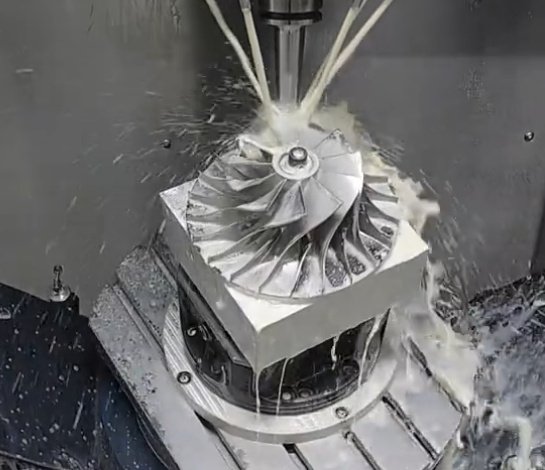
Titanium CNC machining is widely used for aerospace, medical, energy, and high-performance components, but it is significantly more expensive than machining aluminum or many steels. Understanding the cost drivers allows engineers, buyers, and manufacturing planners to design and source parts more economically without sacrificing performance.
Material-Related Factors in Titanium CNC Machining Cost
Material has a direct and often dominant impact on the final price of machined titanium parts. Costs arise not only from the raw stock itself but also from the difficulty of cutting titanium alloys efficiently and reliably.
Calculate Your Titanium CNC Machining Cost
Titanium CNC Machining Cost Calculator (Rough Estimate)This calculator is for reference only and uses simplified formulas (material + machining time). Actual costs can vary significantly due to part design, scrap rate, surface treatments, supplier location, tolerances, and other factors. All costs in USD.
Titanium Grade and Alloy Selection
Different titanium grades show large differences in raw material price, machinability, and typical application requirements. These differences flow directly into CNC machining cost.
| Grade / Alloy | Typical Form | Relative Raw Material Cost | Relative Machinability | Typical Applications |
|---|---|---|---|---|
| Grade 2 (CP titanium) | Plate, bar, sheet | Medium | Better (soft, gummy) | Chemical equipment, general industrial |
| Grade 5 (Ti-6Al-4V) | Bar, plate, billet, forged | High | Poor–medium (work hardening) | Aerospace, medical implants, motorsport |
| Grade 23 (Ti-6Al-4V ELI) | Bar, forged, medical stock | Very high | Similar to Grade 5 | Medical implants, critical aerospace |
| Beta alloys (e.g., Ti-10V-2Fe-3Al) | Forged, bar | Very high | Poor (very hard, springy) | Landing gear, high-strength structures |
Factors affecting cost by alloy choice include:
- Raw material price per kilogram (or pound)
- Availability of standard stock sizes versus custom forgings
- Machinability, which impacts tool wear and machining time
- Mechanical properties and associated tolerance / inspection requirements
High-performance alloys often require more restrictive process controls, more expensive stock forms, and more advanced tooling solutions, all of which add cost.
Raw Stock Size, Form, and Buy-to-Fly Ratio
For CNC machining, titanium is usually sourced as round bar, plate, block, or near-net forgings. Cost is strongly affected by:
- Stock form (bar, plate, forged preform, casting)
- Stock size relative to the finished part envelope
- Buy-to-fly ratio (mass of purchased stock versus mass of finished part)
A high buy-to-fly ratio means most of the purchased titanium ends up as chips. Due to the high price of titanium, this waste substantially increases part cost even if scrap is recycled. Near-net forgings or shaped preforms can reduce machining time and material waste but have higher upfront die or tooling costs and minimum order quantities.
Material Condition and Hardness
The heat-treated condition of the titanium stock (annealed, solution treated and aged, stress relieved) affects hardness and strength. Harder material:
Increases cutting forces and spindle power requirements, reduces allowable cutting speeds and feeds, accelerates tool wear, and can require high-performance carbide or PCD tooling. All these elements translate into higher machining cost and more machine downtime for tool changes.
Part Geometry and Design Impact on Titanium Machining Price
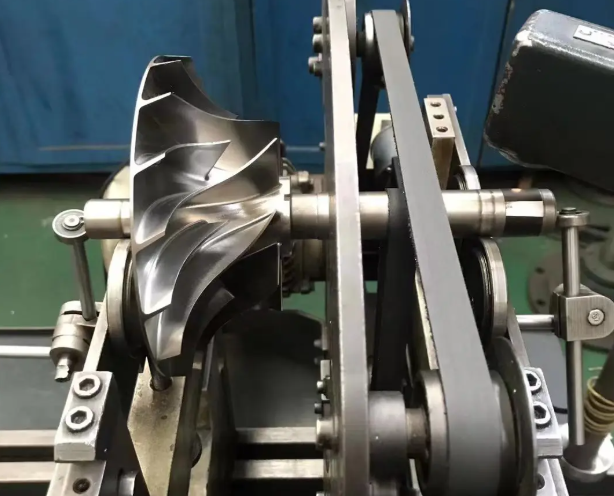
Part design strongly influences the time, risk, and resources needed to machine titanium components. Many cost drivers are embedded in geometry, even before considering process details.
Overall Size and Envelope
Larger parts require larger stock, larger machines, and longer cycle times. Constraints include machine travel, workholding capacity, and rigidity. Oversized titanium parts can require specialized large-format machining centers with higher hourly rates. Additionally, large parts may require multiple setups or machines to complete all features, raising labor and programming costs.
Wall Thickness and Thin-Walled Features
Thin-walled titanium structures are common in aerospace and high-performance applications due to the need for weight reduction, but they significantly increase machining complexity and cost.
Thin walls tend to deflect under cutting forces. In titanium, this is aggravated because the material has low thermal conductivity and retains heat in the cutting zone, raising local temperatures and softening the part surface while work hardening deeper layers. To keep dimensional accuracy and avoid chatter or distortion, machinists must use:
- Lower radial and axial depths of cut
- Reduced feed rates
- Careful toolpath strategies (e.g., trochoidal milling, step-down finishing)
All these adjustments lengthen cycle time. Additional fixturing or support structures (soft jaws, vacuum fixtures, sacrificial ribs) may be required and add to programming, setup, and tooling costs.
Deep Cavities, Pockets, and Slots
Deep internal geometries increase tool overhang, which reduces stiffness and usually forces smaller stepdowns and lighter cuts to prevent tool deflection. Titanium’s tendency to ablate tool edges under high heat means conservative parameters are especially necessary. Deep cavities also make chip evacuation and coolant access more challenging, and inadequate chip evacuation leads to premature tool failure or surface damage.
For deep pockets and slots, machinists may need specialized long-reach tools with smaller diameters, which are more expensive and less rigid. Multiple roughing and semi-finishing passes are often required, further extending machine time.
Complex 3D Surfaces and Contours
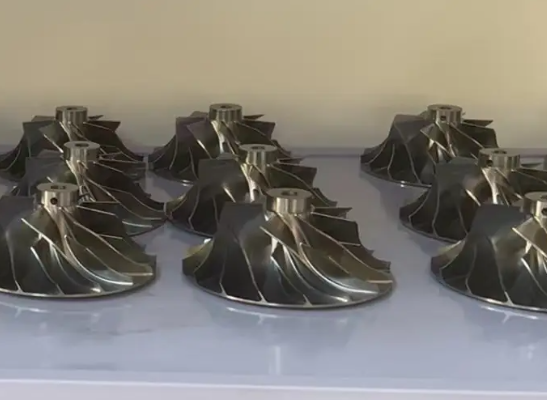
Freeform surfaces, compound curves, and sculpted features are common in aerospace, medical implants, and performance components. These typically require 3-axis with many indexed setups or full 5-axis machining. Cost impacts include:
- More complex CAM programming and simulation time
- Longer finishing toolpaths with small stepovers
- Specialized inspection routines for verification (CMM, probing)
In titanium, finishing passes on 3D surfaces often use small-diameter ball end mills with conservative parameters to maintain surface finish and dimensional accuracy, extending real cutting time per part.
Undercuts, Internal Features, and Difficult Access
Internal grooves, undercuts, and features behind obstructions increase complexity because they may require:
- Specialty tools (T-slot cutters, lollipop cutters, custom form tools)
- Additional setups, fixtures, or multi-axis positioning
- Reduced cutting parameters due to tool fragility and poor chip evacuation
Each of these factors extends setup time and cycle time and typically raises tooling costs. Difficult-to-access features may also be more prone to dimensional variation, requiring additional inspection and possible rework.
Machine Tool and Process Selection
The type of CNC machine, its capabilities, and the chosen process strategy directly influence machining cost for titanium. High-performance equipment may have higher hourly rates but can reduce total cost due to shorter cycle times and greater reliability.
3-Axis vs Multi-Axis Machining Centers
Titanium parts with simple planar features and limited side detail can be produced on 3-axis vertical or horizontal machining centers. As geometry becomes more complex, 4-axis or 5-axis machines are often required. Cost trade-offs include:
- 3-axis machines: lower hourly rates, more setups, potential for accumulated positioning error
- 4-axis machines: better access to side features, fewer setups, moderate machine cost
- 5-axis machines: highest machine hourly rate, minimal setups, better rigidity and shorter tools, often lower total cost for complex parts
5-axis machining is particularly advantageous for titanium because it allows optimal tool orientation, shorter tool lengths, and improved access for coolant, reducing tool wear and cycle time. The higher capital and hourly cost of 5-axis equipment can be offset by these gains for medium to high complexity parts.
Machine Power, Rigidity, and Spindle Speed
Titanium cutting demands high torque at lower spindle speeds, robust machine rigidity, and effective damping. Machines with inadequate rigidity or power cannot leverage aggressive toolpaths and will require more conservative parameters. Critical aspects include:
- Spindle power and torque curve at low to medium RPM
- Machine structural rigidity and vibration damping
- Axis acceleration and deceleration performance
- Coolant delivery capacity and pressure
High-performance machines capable of exploiting advanced titanium-cutting strategies (e.g., high-efficiency milling with constant chip load) can dramatically reduce cycle time and tool wear, but have higher hourly rates. For large or complex titanium parts, these machines often reduce total cost despite the premium rate.
Horizontal vs Vertical Machining Centers
Horizontal machining centers (HMCs) can offer advantages for titanium machining due to improved chip evacuation and multiple pallet systems. Vertical machining centers (VMCs) may be adequate and more economical for smaller batches or simpler parts. Economically, HMCs may be preferred for:
- High-volume production where pallet changers keep spindle utilization high
- Parts where chip evacuation is critical and gravitational removal is beneficial
- Complex fixtures where multiple faces of a part are machined in a single setup
However, VMCs often have lower hourly rates and may be more readily available, making them competitive for prototypes and small-batch runs when cycle time is not the dominant cost driver.
Tooling, Cutting Data, and Tool Life
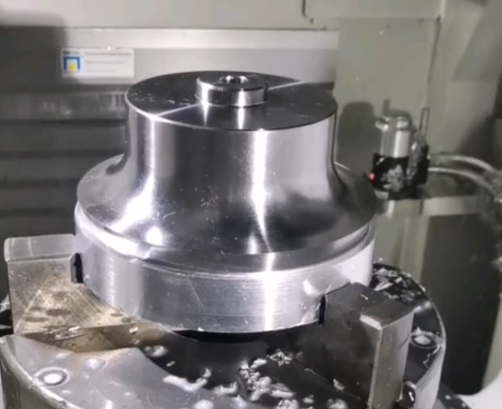
Titanium is abrasively hard on cutting tools due to its strength, chemical reactivity at high temperature, and low thermal conductivity. Tooling strategy strongly influences both direct tooling cost and total cycle time.
Tool Material and Coatings
Common tool materials for titanium include micrograin carbide and high-performance coated carbide. High-speed steel is rarely used except for specific drilling operations or low-volume work. Key parameters that affect cost are:
- Tool purchase cost per insert or end mill
- Tool life at given cutting parameters and material
- Toolpath strategy (axial depth, radial engagement, chip load)
Coatings such as TiAlN or AlTiN are frequently used for titanium because they maintain hardness at high temperature and help reduce friction. Advanced geometries with optimized rake and relief angles, chip breakers, and through-tool coolant channels can be more expensive but significantly extend tool life and allow higher cutting speeds.
In practice, tooling cost per part is a combination of:
- Tool cost divided by the number of parts produced per tool
- Machine downtime for tool changes and offsets
- Potential scrap due to tool failure or sudden wear
Optimizing tool life and cutting parameters specifically for titanium alloys is critical for controlling both direct and indirect tooling costs.
Cutting Speeds, Feeds, and Chip Load
Titanium requires lower cutting speeds and moderate chip loads to maintain manageable temperatures in the cutting zone. Typical cutting speeds for Ti-6Al-4V are significantly lower than for aluminum or mild steel. To maintain productivity, high axial depths of cut with low radial engagement (high-efficiency milling) may be used, but this requires suitable tools, CAM strategies, and machine rigidity.
When more conservative cutting data is chosen for safety, cycle time increases. Conversely, aggressive parameters can reduce cycle time but may raise tooling costs and risk unplanned tool failure. Optimal cost typically results from balancing these factors for the production volume, part complexity, and required reliability.
Toolpath Strategy and CAM Programming
Advanced CAM strategies such as constant engagement toolpaths, rest machining, and adaptive clearing can extract more efficiency from titanium machining operations. However, these strategies require more programmer time, more simulation, and careful consideration of machine kinematics.
For complex parts, the CAM programming and validation effort can be a significant portion of the total non-recurring engineering cost. Spreading this cost over larger production volumes reduces its impact per part; for prototypes and small batches, accurate cost estimation of programming time is necessary to avoid underpricing.
Workholding, Fixturing, and Setup Complexity
Reliable workholding is essential for titanium parts because cutting forces and residual stresses can distort the workpiece or cause movement during machining. Principled fixturing design and careful setup planning strongly influence total cost.
Standard vs Custom Fixtures
Simple parts may be clamped directly in standard vises, chucks, or modular fixtures. Complex titanium components, especially those with thin walls or contoured surfaces, often require custom fixtures. Cost components include:
- Design and engineering time for custom fixtures
- Manufacturing cost of fixture parts
- Setup and alignment time on the machine
Custom fixtures can significantly reduce cycle time and scrap rate for medium to high production volumes. For single prototypes or very low volumes, modular fixturing approaches are often more cost-effective, even if cycle time per part is higher.
Number of Setups and Part Orientation
Each additional setup introduces extra operator time, possible re-indication, and potential loss of positional accuracy. Titanium parts that require many setups because of inaccessible features or orientation constraints will generally have higher labor costs and longer lead times.
Multi-axis machines and multi-station fixtures help reduce the number of setups by allowing more faces or features to be machined in a single clamping. However, these solutions may require more sophisticated fixturing and more detailed process planning.
Clamping Forces and Distortion Control
Titanium’s elastic modulus is lower than many steels, so under high clamping forces thin features can deform during machining and then spring back when unclamped. To keep consistent dimensions across a batch, fixturing must minimize distortion by using:
- Distributed clamping forces over larger areas
- Support surfaces close to the cutting area
- Controlled clamping torque
Developing and validating these fixturing strategies may add engineering hours but prevent part failure, rework, or scrap in production.
Tolerances, Dimensional Accuracy, and Quality Requirements
Specified tolerances and quality requirements significantly influence titanium CNC machining cost. Tighter specifications often require more precise processes, extended cycle time, and comprehensive inspection.
Tolerance Levels and Machining Strategy
Moderate tolerances may be achievable with standard roughing and finishing passes. When tolerances become tighter, the machining process may require:
- Additional semi-finishing passes to leave consistent stock for finishing
- Reduced feed rates and depths of cut during finishing
- Stabilization of part temperature before finishing cuts
- More frequent tool offset adjustments and in-process measurement
The interaction between titanium’s thermal characteristics and cutting forces can cause localized heating and residual stresses, which affect final dimensions as the part cools. This is particularly relevant for thin-walled and complex geometry parts.
Geometric Dimensioning and Tolerancing (GD&T) Requirements
Critical GD&T requirements such as position, perpendicularity, parallelism, concentricity, and runout tied to small tolerance values increase process complexity and inspection effort. The cost impacts are:
- More advanced process planning to sequence operations optimally
- Increased reliance on precision workholding and referencing
- Extended inspection time, often on CMMs with skilled operators
For titanium parts used in aerospace or medical devices, such geometric tolerances are common, and the associated cost must be accounted for in both quoting and design decisions.
Surface Finish Specifications
Surface finish requirements (e.g., Ra values) play a direct role in cycle time and tooling choice. Achieving fine finishes in titanium often requires:
- Dedicated finishing passes with small stepovers
- Sharp tools with optimized geometry
- Carefully controlled cutting data to avoid built-up edge
Very fine finishes may require grinding, polishing, or other secondary processes that increase cost further. Designers should specify surface finish requirements only where functional or aesthetic needs justify the added expense.
Surface Treatments and Secondary Operations
Titanium components often require additional finishing and post-processing operations. These secondary operations add to the overall cost and may introduce further lead time.
Deburring and Edge Finishing
Machined titanium edges can form burrs that must be removed for safety, assembly, and functional reasons. Simple deburring may be performed manually using tools or abrasives. More complex parts or high volumes may require specialized deburring methods such as thermal deburring or abrasive flow.
Deburring cost is influenced by:
- Number and complexity of edges and intersections
- Accessibility of burr-prone areas
- Surface finish and edge break requirements
For intricate titanium components with many intersecting channels, deburring can become a noticeable portion of total labor time and cost.
Heat Treatment and Stress Relief
Some titanium parts require heat treatment or stress relief either before or after machining. These processes can improve dimensional stability, mechanical properties, and fatigue performance. Cost factors include:
- Furnace time and capacity utilization
- Controlled atmosphere requirements
- Handling, fixturing, and transport between processes
Heat treatment may also change hardness and machinability, affecting subsequent cutting operations. Process planning should consider the sequence of machining and heat treatment to minimize both cost and distortion.
Surface Coatings, Passivation, and Anodizing
Titanium is naturally corrosion-resistant but may still receive additional surface treatments for color-coding, wear resistance, or improved biocompatibility. Common operations include:
- Mechanical polishing or micro-finishing
- Anodizing for color or oxide layer modification
- Passivation and cleaning for medical components
- Specialized coatings for wear, friction, or bioactivity
Each added process involves equipment, materials, labor, and often additional quality assurance. For components that require cleanroom packaging or controlled environments, cleanliness protocols and inspection further increase cost.
Production Volume, Batch Size, and Lead Time
Production volume and scheduling constraints have a major effect on the per-part cost of titanium CNC machining.
Prototype, Small Batch, and High-Volume Production
Non-recurring costs such as programming, fixturing, and process development have to be spread across the batch quantity. For a single prototype, these costs may form a large portion of the price. For larger batches, the per-part effect diminishes.
Typical differences by volume include:
- Prototype: higher unit cost, minimal tooling, more manual operations
- Small batch: balance between custom fixturing and modular setups
- High volume: investment in purpose-built fixtures and optimized toolpaths
High-volume titanium machining can justify specialized tools, fixtures, and process optimization, often leading to lower per-part cost despite higher initial investment.
Lead Time and Scheduling Constraints
Short lead times can increase titanium machining cost due to overtime, expedited material procurement, or scheduling disruptions. When resources are constrained, allocating machine and operator time to urgent titanium jobs may carry an opportunity cost. If premium lead-time service is requested, it should be expected to carry a cost premium.
Setups, Changeovers, and Process Standardization
Batching similar titanium jobs together reduces setup and changeover time. When parts share common setups, tools, or fixtures, a machine shop can gain efficiencies. Conversely, many unique jobs with frequent changeovers raise overhead. Process standardization practices—such as reusing proven tool libraries and machining strategies for recurring titanium alloys—help keep preparation time and risk under control.
Inspection, Metrology, and Certification Requirements
Titanium parts frequently serve in critical applications where failure is unacceptable. Consequently, inspection and documentation requirements can be extensive and must be considered in cost estimation.
Inspection Methods and Equipment
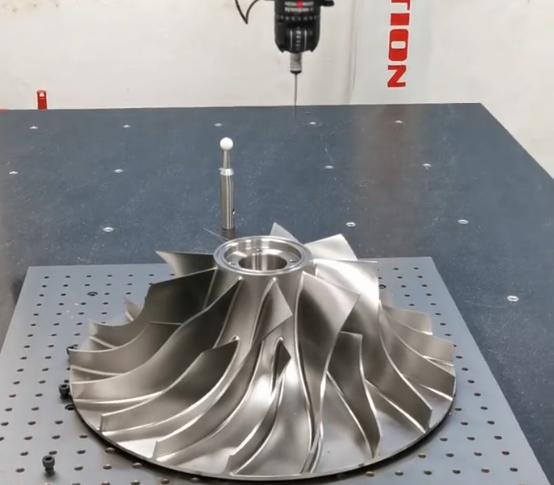
Dimensional inspection for titanium components may range from basic caliper checks to full CMM programs and specialized gauges. Cost factors include:
- Inspection time per part
- Programming and proving out CMM routines
- Calibration and maintenance of measurement equipment
High-precision and complex geometries often require specialized fixturing for inspection, which adds cost similar to machining fixtures. In-process probing on the machine can reduce final inspection time but adds machine program complexity and cycle time.
Documentation, Traceability, and Certifications
Industries such as aerospace and medical devices often require full traceability of material, processes, and inspection results. This can include:
- Material certificates and heat lot traceability
- Process documents and route cards
- Inspection reports and statistical data
- Quality system compliance to standards
Maintaining and producing this documentation takes engineering and quality assurance time. Certification audits and process qualifications add overhead that is reflected in pricing, particularly for small batches of highly regulated titanium parts.
Nondestructive Testing (NDT)
Certain titanium components may require nondestructive testing such as dye penetrant inspection, ultrasonic testing, or radiography to detect surface or subsurface flaws. These tests introduce additional cost elements:
- Specialized equipment or outsourced NDT services
- Trained and certified personnel
- Handling, fixturing, and interpretation of results
For critical load-bearing components, NDT requirements may be mandatory and should be clearly understood at the quotation stage.
Cost Comparison and Optimization Considerations
Although each titanium CNC machining project is unique, considering the combined effect of design, process, and quality decisions helps identify meaningful cost-saving opportunities without compromising part performance.
| Cost Driver | Typical Effect on Cost | Potential Optimization Approach |
|---|---|---|
| Alloy grade and stock form | Higher raw material and tougher machining conditions increase price | Select adequate but not over-specified grade; use near-net stock where justified |
| Thin walls and deep cavities | Longer cycle time, slower feeds, more tool wear | Relax wall thickness where possible; simplify internal geometries |
| Complex multi-axis geometry | Higher programming, fixturing, and machine time | Combine features, reduce undercuts; align design with accessible toolpaths |
| Tight tolerances and fine finishes | Additional passes, slower cuts, extended inspection | Apply tight tolerances only to critical features |
| Low production volume | Non-recurring costs heavily affect unit price | Standardize designs, reuse processes, and combine similar orders |
| Extensive certification and NDT | More quality assurance time and specialized testing | Clarify regulatory needs early and avoid unnecessary requirements |
Designers and buyers can work with machinists early in the product development cycle to identify and adjust the most influential cost drivers. Modest changes to geometry, tolerances, or surface finish often create a disproportionate reduction in cost when machining titanium.
FAQ
What makes titanium CNC machining more expensive than other metals?
Titanium is harder to cut, has low thermal conductivity, and causes faster tool wear, all of which increase machining time and tooling costs.
How does titanium grade affect CNC machining cost?
Different titanium grades vary in strength and machinability. For example, Grade 5 (Ti-6Al-4V) is stronger but more difficult to machine than Grade 2, leading to higher costs.
Why does machining time matter so much for titanium parts?
Titanium requires lower cutting speeds and careful heat control, which significantly extends machining time and increases labor and machine-hour costs.
How can titanium CNC machining costs be reduced?
Costs can be reduced through design optimization, selecting easier-to-machine grades, increasing batch size, and working with experienced titanium machining suppliers.