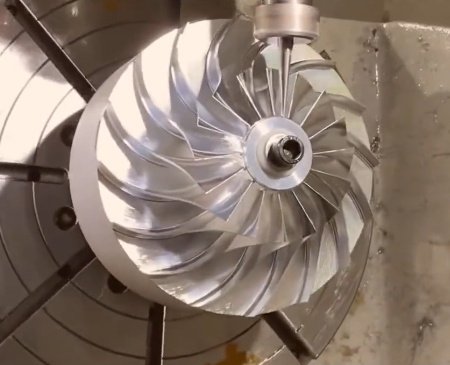
Aluminum is one of the most widely used materials in CNC machining due to its excellent balance of weight, strength, machinability, and corrosion resistance. Different aluminum grades (alloys) provide distinct combinations of mechanical properties and manufacturing characteristics, which makes the correct grade selection critical for part performance, cost, and reliability.
This guide provides a systematic overview of the common aluminum grades for CNC machining, explains their key properties, typical applications, and selection criteria, and offers practical guidance on matching alloy choice to design and production requirements.
Overview of Aluminum Alloys in CNC Machining
Aluminum alloys used in CNC machining are typically wrought alloys designated by a four-digit number (e.g., 6061, 7075). Each series groups alloys with similar composition and properties. For CNC machining applications, the most commonly used series are 2xxx, 5xxx, 6xxx, and 7xxx.
- 2xxx series: Aluminum–copper, high strength, structural and aerospace use
- 5xxx series: Aluminum–magnesium, good corrosion resistance and weldability
- 6xxx series: Aluminum–magnesium–silicon, balanced properties, very common for CNC
- 7xxx series: Aluminum–zinc, very high strength, used in demanding load-bearing parts
For CNC machining, the most frequently specified wrought alloys include 6061, 6082, 7075, 2024, 5052, and 6063. Cast aluminum alloys (e.g., 356) are more common in casting processes but may also be used for certain machined components.
| Alloy | Series | Typical Temper | Ultimate Tensile Strength (MPa) | Yield Strength (MPa) | Density (g/cm³) | Machinability (Relative) | Corrosion Resistance |
|---|---|---|---|---|---|---|---|
| 5052 | 5xxx | H32 | 210–260 | 130–200 | 2.68 | Medium | Very good |
| 6061 | 6xxx | T6 | 260–310 | 240–280 | 2.70 | Good | Good |
| 6082 | 6xxx | T6 | 290–340 | 240–310 | 2.70 | Good | Good |
| 6063 | 6xxx | T5/T6 | 190–240 | 150–215 | 2.70 | Good | Good |
| 2024 | 2xxx | T3/T4 | 400–480 | 230–320 | 2.78 | Good | Moderate |
| 7075 | 7xxx | T6/T651 | 510–600 | 430–510 | 2.81 | Fair to good | Moderate |
| Cast 356 | 3xx.x (cast) | T6 | 230–280 | 170–230 | 2.68 | Medium | Good |
Values above are typical ranges and may vary by product form, temper, and supplier. For critical designs, always consult the specific material datasheets and applicable standards.
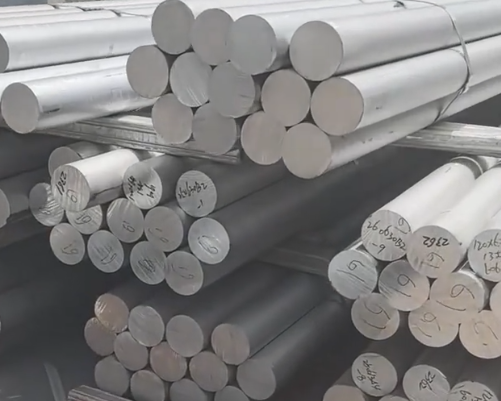
Key Properties Relevant to CNC Machining
When selecting an aluminum grade for CNC machining, several material properties strongly influence machinability, dimensional stability, surface finish, and in-service performance.
Mechanical Strength and Stiffness
Mechanical strength dictates load-carrying capability and resistance to deformation. For CNC machined aluminum parts, the main parameters are tensile strength, yield strength, and elastic modulus.
- Yield strength controls the onset of permanent deformation under load.
- Ultimate tensile strength provides an upper bound for static loading.
- Elastic modulus is similar across most aluminum alloys (~69–72 GPa), so stiffness differences between grades are less pronounced than strength differences.
General tendencies:
High-strength alloys such as 7075-T6 and 2024-T3 are used in demanding structural components. Medium-strength grades like 6061-T6 and 6082-T6 are common in general mechanical parts, fixtures, and frames. Non-heat-treatable alloys such as 5052-H32 offer lower strength but may be preferred for formed parts and high corrosion resistance.
Machinability and Chip Formation
Machinability affects achievable cycle time, tool life, and surface quality. Aluminum’s inherent softness can lead to built-up edge, gumminess, and chip evacuation challenges if the alloy and cutting parameters are not well matched.
For most CNC shops, 6061-T6 is a reference alloy for good machinability: it cuts cleanly, forms manageable chips, supports aggressive feeds and speeds, and responds well to standard carbide tooling. 6082 and 6063 also machine well, though extrusion-related variations may affect consistency. High-strength alloys like 7075 and 2024 machine well but may require more attention to tool wear and heat management.
Factors that influence machinability include alloy composition (especially copper and silicon content), temper (harder tempers often give better chip formation), and the presence of residual stresses in the stock. For tight tolerance parts, stress-relieved tempers such as T651 (for plate) often improve dimensional stability during machining.
Corrosion Resistance
Corrosion resistance is crucial for components exposed to moisture, salts, or industrial atmospheres. Alloy composition plays a major role:
Magnesium-bearing alloys (5xxx series) typically provide very good corrosion resistance, especially in marine or chloride-containing environments. The 6xxx series offers good general-purpose corrosion resistance and is often used with anodizing for additional surface protection. Copper-bearing high-strength alloys (2xxx and 7xxx series) provide superior mechanical strength at the cost of reduced corrosion resistance, which often necessitates protective coatings or careful design.
Heat Treatability and Temper Designations
Heat-treatable alloys (2xxx, 6xxx, 7xxx, some 3xx.x cast alloys) can achieve significantly higher strength through solution heat treatment and aging, creating various tempers (T4, T6, T651, etc.). Non-heat-treatable alloys (5xxx series) rely on strain hardening (H tempers such as H32, H34) to increase strength.
In CNC machining, heat treatment influences:
- Final strength and hardness
- Machinability and chip formation
- Dimensional stability (particularly after roughing or heavy material removal)
For example, 6061-T6 provides a good combination of strength and machinability. Plate in the T651 temper is stress-relieved to minimize warping during machining, which is beneficial for large or thin-walled components.
Surface Finish, Anodizing, and Coatings
Surface finish and anodizing response are critical for visible parts, wear surfaces, and components requiring additional corrosion resistance. Most common wrought alloys can be anodized, but the appearance and hardness of the anodic layer vary among alloys.
Alloys like 6061 and 6082 accept clear and colored anodizing well, providing good decorative and functional finishes. High-silicon alloys or certain cast grades may show a grayish or non-uniform appearance after anodizing. High-strength alloys such as 7075 can be anodized, but the resulting film may differ in color and uniformity compared with 6xxx series.
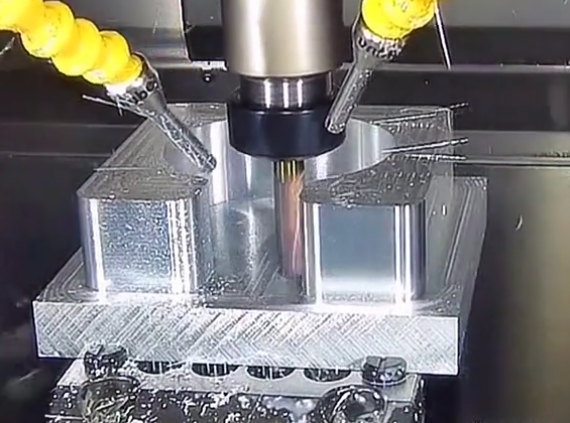
Aluminum 6061: The General-Purpose CNC Alloy
Aluminum 6061 is one of the most widely used alloys in CNC machining due to its balanced mechanical properties, good machinability, and favorable cost-performance ratio.
Composition and Temper Options
6061 is an aluminum–magnesium–silicon alloy. Typical alloying elements include Mg (~0.8–1.2%), Si (~0.4–0.8%), and small additions of Cu and Cr. The most common tempers for CNC machining are:
- 6061-T6: solution heat-treated and artificially aged
- 6061-T651: T6 with stress relief by stretching, commonly used for plate
These tempers provide a good balance of strength, machinability, and dimensional stability, especially for machined plate components.
Mechanical and Physical Properties
Typical properties of 6061-T6:
- Ultimate tensile strength: ~260–310 MPa
- Yield strength: ~240–280 MPa
- Brinell hardness: ~95 HB
- Elastic modulus: ~69 GPa
- Density: ~2.70 g/cm³
These values enable 6061 to handle moderate structural loading, making it suitable for a wide range of mechanical and structural components.
Machinability and Cutting Behavior
6061 is generally considered easy to machine. It supports high cutting speeds, provides relatively predictable tool wear, and yields good surface finishes. Aluminum-specific carbide tools and proper cutting fluid improve chip evacuation and reduce built-up edge.
For large volume removal, roughing at high feed rates is practical. Finishing passes can achieve tight tolerances and good surface quality, especially when using sharp tools and appropriate cutting parameters.
Corrosion Resistance and Surface Treatments
6061 exhibits good corrosion resistance in many environments, especially when anodized. Clear or colored anodizing, hard anodizing, and other coatings are commonly applied to 6061 parts used in outdoor, automotive, and industrial settings. The alloy responds well to decorative anodizing, providing a relatively uniform appearance.
Typical Applications in CNC Machining
6061 is a default choice for many CNC components, including:
- Machine frames and structural brackets
- Fixtures and jigs
- Enclosures, panels, and housings
- Automotive and general mechanical parts
In many projects, 6061 is selected when no extreme performance requirement (very high strength, special corrosion environment, or specific forming requirements) dictates a different alloy.
Aluminum 7075: High-Strength Alloy for Demanding Parts
Aluminum 7075 is a high-strength aluminum–zinc–magnesium–copper alloy widely used in aerospace and high-performance components where maximum strength-to-weight ratio is required.
Composition and Strength Characteristics
7075 contains significant amounts of zinc (typically ~5.6–6.1%), magnesium (~2.1–2.5%), and copper (~1.2–1.6%). This combination, when properly heat-treated, yields very high strength.
Common tempers used in CNC machining include:
- 7075-T6: solution heat-treated and artificially aged
- 7075-T651: T6 with stress relief, often used for plate stock
Typical mechanical properties for 7075-T6/T651:
- Ultimate tensile strength: ~510–600 MPa
- Yield strength: ~430–510 MPa
- Brinell hardness: ~150 HB
- Density: ~2.81 g/cm³
These values are significantly higher than those of 6061, making 7075 suitable for load-bearing structures and high-stress components.
Machinability and Dimensional Stability
Despite its high strength, 7075 machines reasonably well. It can be machined with similar tooling to 6061, though tool wear is generally higher due to the increased hardness and strength. Dry or mist lubrication machining strategies are commonly used, depending on the setup and required surface finish.
T651 plate is stress-relieved and often preferred for thick sections and large parts that require significant material removal. This helps reduce distortion and maintains tighter tolerances during machining.
Corrosion Resistance and Surface Protection
Compared with 6xxx and 5xxx alloys, 7075 has lower general corrosion resistance, especially in marine or highly corrosive environments. For many applications, protective measures are used, such as:
- Anodizing (including hard anodizing) for surface hardness and corrosion protection
- Conversion coatings (e.g., chromate) for improved paint adhesion and corrosion resistance
- Paint or other barrier coatings
For parts exposed to moisture or salt, design considerations (drainage, avoidance of crevices) and coatings are important to maintain long-term performance.
Typical Applications in CNC Machining
7075 is commonly used in:
- Aerospace structural components (fittings, spars, ribs)
- High-performance automotive and motorsport parts
- Sports equipment (high-end bicycle components, climbing hardware)
- Defense and high-stress mechanical parts
It is selected when strength is a primary requirement and weight must be minimized, provided that corrosion protection can be adequately managed.
Aluminum 2024: Structural Alloy for Fatigue Resistance
Aluminum 2024 is a high-strength aluminum–copper–magnesium alloy known for good fatigue resistance and high static strength. It is widely used in aerospace and structural applications where cyclic loading is significant.
Composition and Temper Conditions
2024 typically contains copper (~3.8–4.9%), magnesium (~1.2–1.8%), and manganese (~0.3–0.9%). The alloy is heat-treatable and is commonly supplied in:
- 2024-T3: solution heat-treated, cold worked, and naturally aged
- 2024-T4: solution heat-treated and naturally aged
T3 is widely used in sheet and plate for aircraft structures and certain machined components.
Mechanical Properties and Fatigue Behavior
Typical properties for 2024-T3/T4:
- Ultimate tensile strength: ~400–480 MPa
- Yield strength: ~230–320 MPa
- Brinell hardness: ~120–130 HB
- Density: ~2.78 g/cm³
2024 provides excellent fatigue resistance compared with many other aluminum alloys, which explains its widespread use in aircraft skins and structural members subject to repeated loading.
Machinability and Surface Finish
2024 machines well and can deliver good surface finishes with appropriate tooling and parameters. Its higher copper content and relative hardness compared with 6061 can improve chip breaking but also lead to increased tool wear.
For precision parts, careful selection of stock (e.g., plate vs. bar, stress-relieved conditions where available) and balanced machining strategies are important to control distortion.
Corrosion Resistance and Protection
2024 has only moderate corrosion resistance and can be susceptible to intergranular and exfoliation corrosion in severe environments. In practice, it is often used with additional protection, including:
- Cladding (alclad sheet) for aircraft skins
- Conversion coatings
- Paint or anodizing where compatible with the application
In CNC machined parts, unprotected 2024 is generally avoided for prolonged marine exposure or chemically aggressive conditions.
Common CNC Applications
2024 is widely used for:
- Aerospace structural components where fatigue is critical
- Highly loaded mechanical components with cyclic stresses
- Precision parts where high strength and good machinability are required
In many structural designs, 2024 is chosen instead of 6061 or 5052 when fatigue performance and high static strength outweigh corrosion resistance considerations.
Aluminum 6082: High-Strength 6xxx Alloy for Structural Parts
Aluminum 6082 is a medium- to high-strength aluminum–magnesium–silicon alloy used in structural applications, particularly in Europe where it is more common than 6061 for certain forms. It offers strength higher than 6061 with similar corrosion resistance and good machinability.
Composition and Temperatures
6082 contains magnesium (~0.6–1.2%), silicon (~0.7–1.3%), and manganese (~0.4–1.0%), in addition to other minor elements. Typical tempers include:
- 6082-T6: solution heat-treated and artificially aged
- 6082-T651: T6 with stress relief (often for plate stock)
These tempers are frequently used for machined components and structural members.
Mechanical Properties
Typical properties for 6082-T6/T651:
- Ultimate tensile strength: ~290–340 MPa
- Yield strength: ~240–310 MPa
- Brinell hardness: ~95–110 HB
- Density: ~2.70 g/cm³
6082 provides higher yield strength compared with 6061 in many product forms, which is advantageous for structural parts under higher loads.
Machining and Forming Considerations
Machinability of 6082 is good and comparable to 6061, though certain extrusions may show variations due to microstructural differences. With appropriate cutting parameters and tooling, it is suitable for both roughing and finishing operations.
6082 has lower formability than some 5xxx series alloys; for parts that require extensive bending or deep drawing, other grades might be preferred.
Corrosion Resistance and Surface Treatment
6082 offers good general corrosion resistance similar to other 6xxx series alloys. It is frequently anodized for enhanced surface protection and aesthetic purposes. It responds well to clear and colored anodizing and can be used in outdoor structures, marine fittings (with proper design), and industrial equipment.
Typical CNC Machined Applications
6082 is commonly used in:
- Structural components and frames
- Transportation equipment and platforms
- Mechanical parts requiring higher strength than 6061
- Machined components for construction and industrial machinery
For many applications, 6082 is chosen as a higher-strength alternative to 6061 while preserving good machinability and corrosion resistance.
Aluminum 5052: Non-Heat-Treatable Alloy with Excellent Corrosion Resistance
Aluminum 5052 is a non-heat-treatable aluminum–magnesium alloy known for excellent corrosion resistance, especially in marine environments, and good forming characteristics. While it is more commonly associated with sheet metal work, it is also used in CNC machining for certain components.
Composition and Temper Conditions
5052 contains magnesium (~2.2–2.8%) and small additions of chromium (~0.15–0.35%), among other minor elements. It is strengthened through strain hardening, not heat treatment. Typical tempers include:
- 5052-H32: strain-hardened and partially annealed
- 5052-H34 and other H tempers for higher strength
Mechanical Properties
Typical properties for 5052-H32:
- Ultimate tensile strength: ~210–260 MPa
- Yield strength: ~130–200 MPa
- Brinell hardness: ~60–75 HB
- Density: ~2.68 g/cm³
Strength is lower than that of 6061 and 6082, but sufficient for many enclosures, panels, and lightly loaded components, especially where forming and corrosion resistance are priorities.
Machinability and Chip Control
5052’s machinability is generally considered medium. Compared with 6061, it tends to be more “gummy” when machined, which can lead to:
- Increased built-up edge on cutting tools
- Potential for poorer surface finish if feeds, speeds, and tools are not optimized
- Challenges with chip control in certain operations
Using sharp tools, adequate lubrication, and appropriate feeds and speeds is important to maintain good machining performance. This alloy is not the first choice for precision-machined parts requiring extremely fine finishes when other alloys can meet the design requirements.
Corrosion Resistance and Anodizing
5052 offers excellent corrosion resistance, particularly in marine and industrial environments with chlorides. It can be anodized, but the aesthetic appearance may be different from 6061. For functional corrosion protection and improved appearance, anodizing and coatings are commonly applied.
Typical CNC Machined Applications
5052 is used for:
- Marine components and hardware
- Enclosures, cabinets, and housings that must resist corrosion
- Sheet metal parts requiring bending and forming plus limited machining
- Industrial equipment panels and covers
It is often selected where corrosion resistance and formability are more important than maximum strength or machining speed.
Aluminum 6063: Alloy for Profiles and Extrusions
Aluminum 6063 is a 6xxx series alloy optimized for extrudability. It is commonly used in complex extruded profiles requiring good surface finish, such as architectural components and frames. CNC machining is often applied to 6063 extrusions to create holes, slots, and precision features.
Composition and Tempers
6063 contains magnesium (~0.45–0.9%) and silicon (~0.2–0.6%), similar to 6061 but with a composition tailored for extrusion quality. Typical tempers include:
- 6063-T5: cooled from extrusion and artificially aged
- 6063-T6: solution heat-treated and artificially aged for higher strength
Mechanical and Surface Properties
Typical properties for 6063-T5/T6:
- Ultimate tensile strength: ~190–240 MPa
- Yield strength: ~150–215 MPa
- Brinell hardness: ~60–80 HB
- Density: ~2.70 g/cm³
6063 provides lower strength than 6061 and 6082, but excels in producing smooth extruded surfaces and complex profiles with fine geometry.
Machinability and Use in CNC Operations
6063 machines well, though its lower strength and hardness compared with 6061 may slightly affect chip formation and tool life. For many applications, machined features are added to extruded profiles rather than machining 6063 from solid plate or bar.
Its good surface finish after extrusion and compatibility with anodizing make it suitable for visible, decorative, and structural components where appearance is important.
Applications of CNC Machined 6063
Common uses include:
- Architectural profiles and frames
- Heat sinks and electronic enclosures
- Window and door frames
- Structural profiles for modular assemblies
6063 is typically selected when extrusion quality, surface finish, and aesthetics are the dominant requirements, with machining used to add precision features.
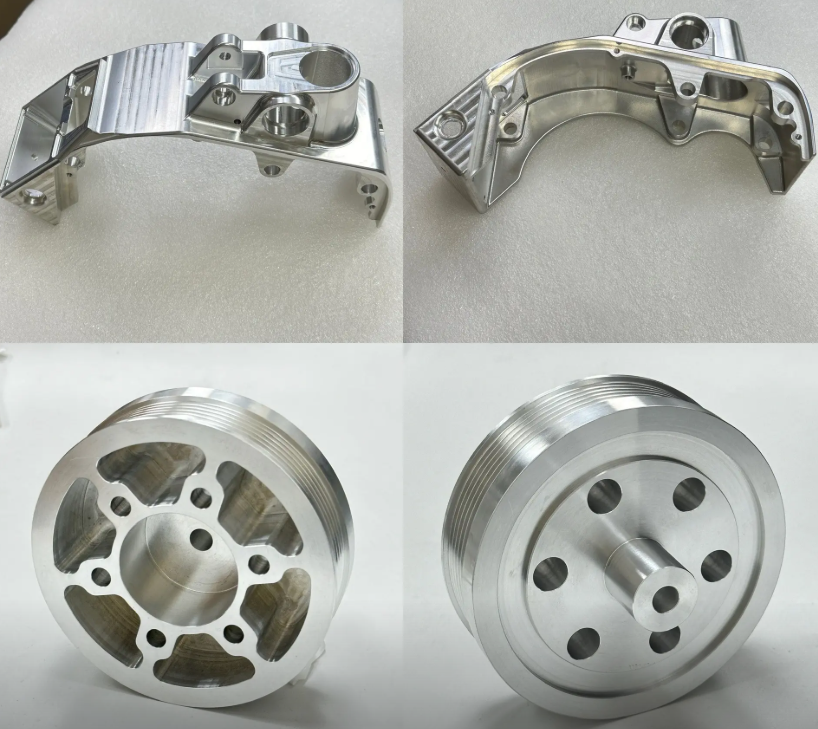
Cast Aluminum Alloys (e.g., 356) in CNC Machining
While wrought alloys dominate CNC machining applications, cast aluminum alloys such as 356 can also be machined when castings are used as near-net-shape blanks. 356 is an aluminum–silicon–magnesium casting alloy often heat-treated to T6 for improved mechanical properties.
Typical Properties of 356-T6
356-T6 provides:
- Ultimate tensile strength: ~230–280 MPa
- Yield strength: ~170–230 MPa
- Brinell hardness: ~80–100 HB
- Density: ~2.68 g/cm³
Mechanical properties can vary depending on casting quality, heat treatment, and section thickness.
Machining Characteristics of Cast Alloys
Cast alloys often contain silicon to improve fluidity and castability; this can affect machinability:
- Silicon improves wear resistance but can increase tool wear.
- Microstructural variations and porosity may influence surface finish.
- Machining strategies must account for localized hard spots or inclusions.
For precision machining of cast parts, adequate material allowance should be considered to remove surface defects and reach consistent properties.
Comparative Selection of Aluminum Grades for CNC Machining
Selecting the most appropriate aluminum grade for CNC machining involves balancing strength, machinability, corrosion resistance, cost, and post-processing requirements.
| Alloy | Relative Strength | Machinability | Corrosion Resistance | Formability | Typical Use Case |
|---|---|---|---|---|---|
| 5052 | Low–medium | Medium | Very good | High | Marine parts, enclosures, formed components |
| 6061 | Medium | Good | Good | Medium | General-purpose CNC parts, frames, fixtures |
| 6082 | Medium–high | Good | Good | Medium | Structural components, industrial machinery |
| 6063 | Low–medium | Good | Good | Medium | Extruded profiles, architectural components |
| 2024 | High | Good | Moderate | Low–medium | Aerospace structures, fatigue-critical parts |
| 7075 | Very high | Fair–good | Moderate | Low | High-stress components, aerospace, performance parts |
| Cast 356-T6 | Medium | Medium | Good | N/A (casting) | Machined castings, housings, complex shapes |
Material Selection Considerations
Key factors in selecting an aluminum grade for CNC machining include:
- Required strength and stiffness: Use 7075 or 2024 for very high strength; 6082 or 6061 for medium strength; 5052 or 6063 when strength demands are lower.
- Corrosion environment: Favor 5052 or 6xxx series for marine and outdoor environments; apply coatings for 2xxx and 7xxx series when needed.
- Machining productivity: 6061 and 6082 generally offer the best combination of machinability and strength; high-strength alloys may require more frequent tool changes.
- Forming and bending: 5052 is suitable for parts that need extensive forming; 6061 and 6082 are more limited in formability.
- Surface finish and anodizing: 6061, 6082, and 6063 are typically preferred for decorative or uniform anodizing; cast alloys and some others may show more variability in appearance.
For many projects, 6061 is a robust default choice, with 7075 or 2024 used when higher strength is essential, 6082 when structurally advantageous, 5052 for corrosion-resistant formed parts, and 6063 for extruded profiles requiring post-machining.
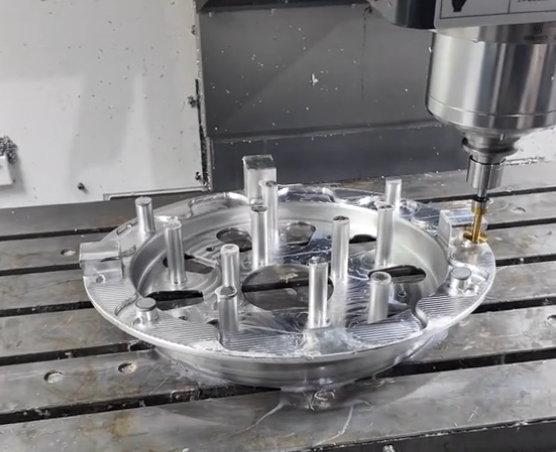
Considerations for CNC Machining Aluminum Alloys
Beyond alloy selection, successful CNC machining of aluminum requires attention to machining strategy, tool selection, and stock condition.
Tooling and Cutting Parameters
For most aluminum alloys, carbide tools specifically designed for aluminum provide the best performance. These tools typically have:
- High positive rake angles
- Polished flutes for improved chip evacuation
- Optimized helix angles to minimize chatter
High spindle speeds, moderate to high feed rates, and appropriate coolant use (flood or mist) help minimize built-up edge and maintain consistent surface finish. Adjustments are necessary when machining high-strength alloys like 7075 to control heat and tool wear.
Stock Quality and Residual Stresses
Dimensional stability during machining is influenced by residual stresses in the material. Plate stock in stress-relieved tempers (e.g., 6061-T651, 7075-T651) is often preferred for precision parts. For large or thin-walled components, balanced machining (removing material from opposite sides in stages) can further reduce distortion.
Surface Requirements and Post-Processing
Surface roughness, flatness, and visual appearance requirements may dictate both alloy choice and machining strategy. For parts that will be anodized, surface preparation (e.g., finishing passes with fine step-overs, deburring) is important. Alloy-specific behavior, particularly with high-silicon cast alloys, must be considered when defining post-processing steps.
FAQ
What aluminum grades are most commonly used in CNC machining?
The most commonly used aluminum grades for CNC machining include 6061, 6063, 7075, 2024, and 5052. These alloys offer a good balance of machinability, strength, corrosion resistance, and cost.
Why is aluminum 6061 so popular for CNC machining?
Aluminum 6061 is popular because it has excellent machinability, good mechanical strength, and strong corrosion resistance, making it suitable for a wide range of CNC machined parts.
Which aluminum alloy offers the best corrosion resistance?
5052 and 6063 aluminum provide excellent corrosion resistance, especially in marine or humid environments, making them suitable for CNC machined enclosures and panels.
How does aluminum grade affect CNC machining cost?
Aluminum grade affects cost through material price, tool wear, machining speed, and scrap rate. For example, 6061 is cost-effective, while 7075 is more expensive but stronger.
How do I choose the right aluminum grade for my CNC project?
Choosing the right aluminum grade depends on strength requirements, corrosion resistance, surface finish needs, cost, and end-use application. 6061 is usually the best starting point for most CNC projects.