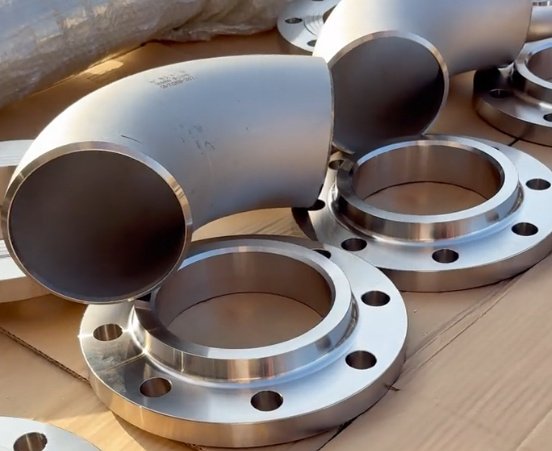
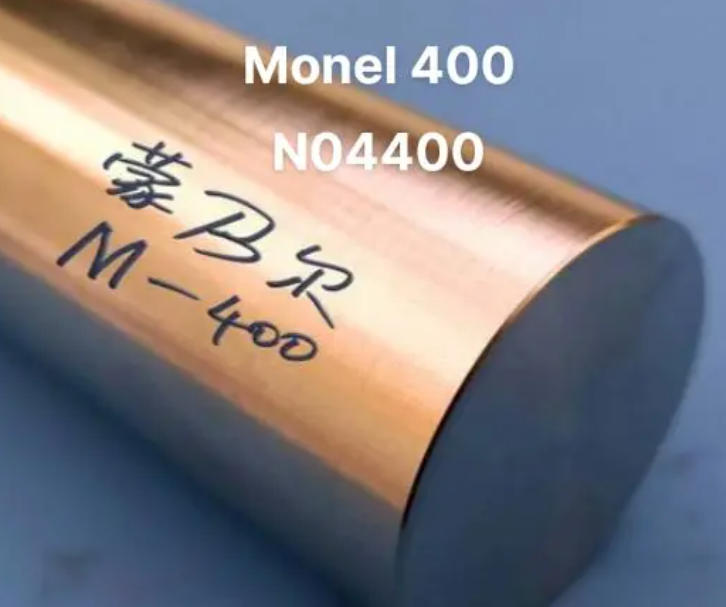
Monel 400, also known as Alloy 400 or UNS N04400, is a solid-solution nickel-copper alloy characterized by excellent resistance to many corrosive environments, particularly seawater and hydrofluoric acid. It combines high strength over a wide temperature range with good toughness and workability, making it a widely used material in marine, chemical, oil and gas, and power generation industries.
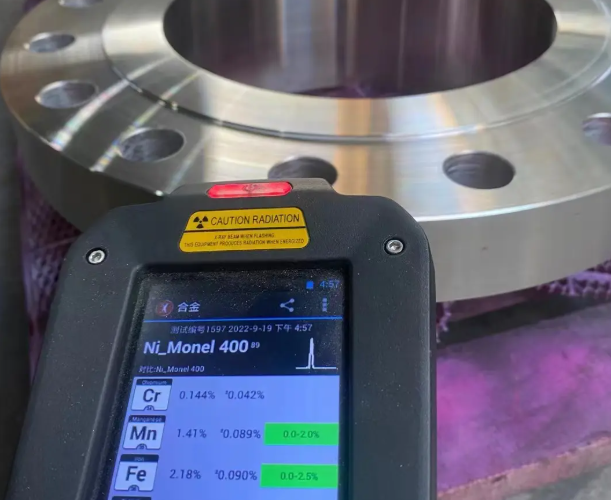
Chemical Composition of Monel 400
Monel 400 is essentially a binary nickel-copper alloy with small but critical additions of iron and other elements. The alloy is supplied in wrought product forms and is typically melted to closely controlled composition limits to achieve consistent properties.
| Element | Content (wt%) |
|---|---|
| Nickel (Ni) + Cobalt (Co) | ≥ 63.0 |
| Copper (Cu) | 28.0 – 34.0 |
| Iron (Fe) | ≤ 2.5 |
| Manganese (Mn) | ≤ 2.0 |
| Silicon (Si) | ≤ 0.5 |
| Carbon (C) | ≤ 0.30 |
| Sulfur (S) | ≤ 0.024 |
The high nickel content drives corrosion resistance in reducing media and retains mechanical properties across a wide temperature range, while copper strengthens the alloy in chloride-containing environments such as seawater. Low carbon and silicon contents help control sensitization and maintain weldability.
Physical Properties
The physical properties of Monel 400 are relatively stable over a broad temperature range, which is beneficial for both cryogenic and elevated-temperature service. Engineers commonly use these values for design calculations, heat transfer estimates, and thermal stress evaluations.
| Property | Value | Conditions / Notes |
|---|---|---|
| Density | 8.80 g/cm³ (0.318 lb/in³) | Room temperature |
| Melting range | 1300 – 1350 °C (2370 – 2460 °F) | Solidus–liquidus |
| Electrical resistivity | ~0.59 μΩ·m | At 20 °C |
| Thermal conductivity | ~21 W/m·K | At 20 °C |
| Coefficient of thermal expansion | ~13.9 × 10⁻⁶ /K | 20–100 °C range |
| Specific heat | ~427 J/kg·K | At 20 °C |
| Magnetic behavior | Essentially non-magnetic | At room temperature; may become slightly magnetic after cold work |
The combination of good thermal conductivity and relatively low coefficient of expansion compared with some stainless steels can be advantageous in heat exchangers, condensers, and rotating equipment.
Mechanical Properties
Monel 400 is a solid-solution strengthened alloy and is not heat-treatable in the traditional precipitation-hardening sense. Strength and hardness are mainly controlled by cold working. Mechanical properties vary with product form, thickness, and temper; values below are typical for room-temperature conditions.
Mechanical properties in annealed condition
- Typical yield strength (0.2% offset): about 170–240 MPa (25–35 ksi)
- Typical tensile strength: about 480–620 MPa (70–90 ksi)
- Elongation: typically 30–40% in 50 mm (2 in)
- Hardness: approximately 65–80 HRB
These ductile properties allow cold forming, deep drawing, and extensive fabrication without cracking, and provide good notch toughness even at sub-zero temperatures.
Mechanical properties in cold-worked condition
Cold working can significantly increase strength:
- Yield strength: can exceed 550 MPa (80 ksi) depending on reduction
- Tensile strength: up to about 760–830 MPa (110–120 ksi)
- Elongation: decreases as cold work increases, typically down to about 10–20%
Cold-drawn bar, wire, and tube are often supplied in various tempers to meet design strength requirements, particularly for fasteners, springs, and high-pressure tubing.
Corrosion Resistance
Corrosion resistance is the primary reason for selecting Monel 400. Its behavior in many aggressive media is superior to that of common stainless steels and many other nickel alloys under similar conditions.
Performance in seawater and marine atmospheres
Monel 400 is widely used in marine service for prolonged exposure to seawater. It exhibits very low corrosion rates in flowing seawater and remains resistant to stress corrosion cracking in most marine conditions. In stagnant or very low-velocity seawater, the alloy can be susceptible to surface attack and localized pitting, especially in the presence of microorganisms and deposits. Appropriate design to maintain adequate flow, periodic cleaning, and attention to biofouling help maintain performance in condenser tubes and seawater piping.
Resistance to acids and alkalis
The alloy has particularly strong resistance to hydrofluoric and fluorosilicic acids, in both reducing and oxidizing conditions, across a broad concentration range. It also offers good resistance in dilute sulfuric and hydrochloric acids at controlled temperatures and concentrations. In strongly oxidizing mineral acids, however, performance can be limited when compared to specialized corrosion-resistant alloys, so medium evaluation is required.
In caustic alkalis such as sodium hydroxide and potassium hydroxide, Monel 400 retains good corrosion resistance and is frequently used for equipment handling caustic solutions, including evaporators, reactors, and piping for chlor-alkali production. Resistance to stress corrosion cracking in alkaline environments is generally good when compared with many stainless steels.
Behavior in neutral and reducing environments
In neutral solutions, saline waters, and non-oxidizing environments containing chlorides and sulfides, Monel 400 generally shows low uniform corrosion rates. It is stable in many brines, non-aerated acids, and reducing salt solutions. The alloy’s strong performance in reducing media is tied closely to its high nickel content, which maintains a passive or stable surface film under many conditions.
Considerations in oxidizing environments
In highly oxidizing conditions, such as hot, concentrated nitric acid or strong oxidizing salts, Monel 400 may not be suitable. Nickel-copper alloys are not designed for such environments and may experience rapid attack. In mixed-chemical systems where oxidizing species are present, compatibility assessment and testing are recommended. This behavior often leads engineers to compare Monel 400 with other high-alloy materials in mixed-acid or oxidizing chloride systems.
Temperature Resistance and Service Range
Monel 400 maintains useful strength and ductility from sub-zero temperatures up to about 480–540 °C (900–1000 °F), depending on the specific service and code requirements. It does not exhibit a ductile-to-brittle transition at very low temperatures and therefore is suitable for certain cryogenic applications, such as pump shafts and fasteners in liquefied gas service.
At elevated temperatures, prolonged exposure above about 480–550 °C can lead to microstructural changes that may influence mechanical properties. Design at high temperature should follow applicable codes and consider sustained load, creep, and environmental effects. For oxidation resistance in air, the alloy forms a stable oxide layer but is not optimized for very high-temperature oxidation compared with certain nickel-chromium alloys.
Heat Treatment and Microstructure
Monel 400 is a single-phase solid-solution alloy throughout its normal composition range, with nickel and copper completely miscible. Its microstructure is typically homogeneous and does not rely on precipitate strengthening mechanisms.
Annealing
Softening and stress relief are achieved by annealing, usually in the range of about 650–900 °C (1200–1650 °F), followed by air cooling or water quenching, depending on section thickness and desired properties. Lower-temperature stress-relief treatments can be used to reduce residual stresses after cold work without severely lowering strength. Control of furnace atmosphere during annealing helps maintain surface quality and reduce oxidation or scaling.
Age hardening
Monel 400 is not age hardenable in the same way as precipitation-hardened nickel-copper alloys (such as Monel K-500). Any increase in strength must come from cold work rather than thermal aging. This simplifies heat treatment practices but also means that strain-relief operations must be carefully balanced against the need to retain cold-worked strength.
Fabrication and Forming
Monel 400 can be fabricated by the same general methods used for austenitic stainless steels and other nickel alloys, with adjustments for its strength and work-hardening characteristics. The alloy work hardens rapidly, and careful control of deformation and intermediate annealing is often necessary for complex shapes.
Cold forming
Operations such as bending, deep drawing, spinning, and pressing are feasible. Due to work hardening, higher forming forces are required than for low-carbon steels. Lubrication, proper tooling, and stepwise forming help avoid surface defects and tearing. Extensive cold reduction can significantly increase strength; components that depend on cold-worked properties should be processed in controlled sequences to ensure consistent mechanical performance.
Hot working
Hot working is usually carried out in the range of about 800–1150 °C (1470–2100 °F). Parts should be uniformly heated and deformed within this range, with finishing operations typically performed at the lower end to refine grain structure. Rapid cooling after hot working helps maintain mechanical properties and surface condition. Overheating should be avoided to limit grain growth and oxidation.
Machinability
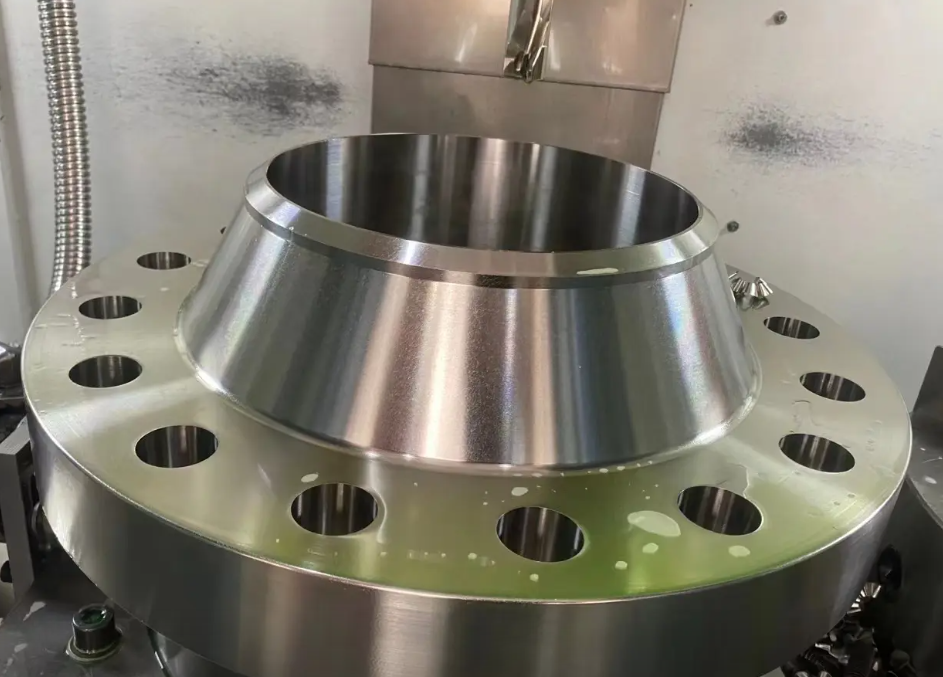
Machining Monel 400 is generally more demanding than machining carbon steels because of higher strength and work-hardening behavior. Tools should have rigid support, and cutting speeds are usually lower than those used for steels. Positive rake carbide or high-speed steel tooling, adequate coolant supply, and relatively heavy feeds can help maintain tool life and surface quality. Workpiece rigidity and avoidance of rubbing or low feed rates reduce surface work hardening that can complicate subsequent machining passes.
These fabrication features are often considered when selecting Monel 400 for intricate components. In some cases, the difficulty of machining and forming can be regarded as a practical constraint in high-volume or cost-sensitive manufacturing.
Welding and Joining
Monel 400 is readily weldable by most common processes, including gas tungsten arc welding (GTAW/TIG), gas metal arc welding (GMAW/MIG), shielded metal arc welding (SMAW), and resistance welding. Correct filler selection and weld parameter control are important to retain corrosion resistance and mechanical properties.
Weldability considerations
Matching-composition filler metals, typically classified as Monel 60xx or equivalent nickel-copper weld wires and electrodes, are commonly used. Cleanliness of joint surfaces is critical, as contaminants can initiate porosity or hot cracking. The alloy is generally not prone to severe weld cracking under normal procedures, but restraint, joint design, and heat input must be managed to control distortion and residual stresses.
For thick sections, preheat is usually not required under normal shop conditions. Interpass temperature control helps maintain consistent microstructure and limit grain growth. Postweld heat treatment is seldom needed for corrosion resistance, though in some high-stress applications, stress relief may be specified by design codes or end users.
Brazing and other joining methods
Monel 400 can also be joined by brazing with suitable filler alloys, such as nickel-based or silver-based brazing alloys, provided service temperature and environment are compatible with the filler. Mechanical joining methods (flanging, rolling, threaded connections) are widely used in piping and tubing systems, where the combination of mechanical integrity and corrosion resistance is required.
Forms, Standards and Specifications
Monel 400 is available in a broad range of product forms, enabling its use in many types of equipment and components. Standardized specifications from international organizations define chemistry, mechanical properties, testing, and dimensional tolerances.
Product forms
- Plate, sheet, and strip for vessel cladding, heat exchangers, and structural components
- Seamless and welded pipe and tube for process piping, condensers, and heat exchangers
- Round bar, hex bar, and forgings for shafts, fasteners, and valve components
- Wire and welding consumables
Common designations and standards
Typical designation systems for Monel 400 include:
UNS designation: N04400
DIN / W.Nr. designation: 2.4360 / 2.4361 (depending on product form and specification)
Common specification references include, for example, ASTM, ASME, and related material standards for plate, sheet, strip, bar, rod, forgings, pipe, tube, and fittings. Pressure vessel and piping codes often list Monel 400 as an approved material with allowable stresses specified as a function of temperature. When selecting material for code-stamped equipment, designers refer to the relevant sections to ensure compliance with allowable stresses, design rules, and inspection requirements.
Typical Industrial Applications
Monel 400 is selected when a combination of corrosion resistance, strength, and toughness cannot be satisfactorily provided by lower-cost materials. Its performance in seawater, hydrofluoric acid, and alkalis provides a strong basis for its widespread use.
Marine and offshore service
In the marine sector, the alloy is used for seawater-cooled heat exchanger tubing, ballast water systems, desalination units, and pump and valve components. Its resistance to seawater corrosion and biofouling contributes to extended service life, although good design practice is still necessary to avoid low-flow zones and deposit buildup.
Chemical and petrochemical industry
Monel 400 is widely used in hydrofluoric acid alkylation units, fluorine-containing service, and process streams where both chloride and fluoride ions are present. Equipment includes reactors, piping, pump shafts, agitators, and instrumentation components. The alloy’s ability to withstand caustic solutions is also exploited in chlor-alkali production, where brine, chlorine, and caustic streams impose aggressive corrosion conditions on materials of construction.
Oil and gas production and processing
In upstream oil and gas operations, Monel 400 is used for downhole tools, pump components, and wellhead hardware when sour gas (H₂S) and chloride conditions demand higher corrosion resistance than typical steels. In midstream and downstream facilities, the alloy appears in heat exchangers, condensers, and other process equipment exposed to saline water or corrosive hydrocarbons. Specific application limits are often governed by sour service standards and qualification tests.
Power generation and desalination
Power plants, particularly those using seawater for cooling, utilize Monel 400 for condenser tubes and related seawater-handling equipment. In desalination units, the combination of seawater, brine, and varying temperatures makes corrosion resistance critical. Monel 400 can provide a durable solution when stainless steels suffer localized attack in chloride-rich environments.
Other uses
The alloy also appears in fasteners, springs, and precision components where high strength, corrosion resistance, and non-magnetic behavior are required. In certain instrument housings, measurement devices, and electronic hardware used in corrosive atmospheres, Monel 400’s stability and non-sparking characteristics can be beneficial.
Design and Selection Considerations
When selecting Monel 400, engineers compare its performance with alternative materials in terms of corrosion resistance, mechanical properties, cost, and fabrication characteristics. The alloy is often chosen when stainless steels, copper alloys, or carbon steels experience unacceptably high corrosion rates or localized damage.
Key considerations include:
- Service environment: composition, temperature, flow conditions, presence of oxidizing agents, and contaminants
- Mechanical loading: pressure, cyclic loads, impact, and thermal stresses
- Fabrication route: forming, machining, welding, and inspection requirements
- Regulatory and code requirements: approvals for pressure equipment, sour service, marine classifications
In some systems, the relatively high material and fabrication cost of Monel 400 is offset by longer service life, reduced maintenance, and lower risk of unplanned shutdowns associated with corrosion-related failures. Conversely, when environments are less aggressive, more economical alloys may be adequate.
Handling, Surface Condition, and Maintenance
Handling practices for Monel 400 are similar to those for other high-alloy materials. Cleanliness is important in manufacturing and maintenance, especially in environments where contamination may influence corrosion behavior.
Surface finish can affect corrosion resistance, particularly in seawater and process fluids that promote crevice attack or deposit accumulation. Smooth, properly cleaned surfaces are generally preferred for heat exchanger tubing and high-purity process systems. Periodic inspection and cleaning to remove deposits, biofouling, and scales can help sustain the intrinsic corrosion resistance of the alloy.
In piping and equipment exposed to seawater and process brines, cathodic protection or galvanic coupling with other alloys should be evaluated to avoid unintended galvanic corrosion effects. Electrical isolation at dissimilar-metal joints and appropriate design of sacrificial anodes can contribute to system reliability.
Summary
Monel 400 is a widely established nickel-copper alloy offering a combination of corrosion resistance, strength, and toughness that is particularly valuable in seawater, hydrofluoric acid, and alkaline environments. Its performance across a broad temperature range, non-magnetic behavior, and good fabricability have led to extensive use in marine, chemical, oil and gas, and power generation applications. While material and fabrication costs are higher than for common steels and copper alloys, carefully designed systems can benefit from extended equipment life and reduced corrosion-related downtime when Monel 400 is properly specified and applied.
FAQ about Monel 400 Alloy Material
What is Monel 400 alloy material?
Monel 400 is a nickel–copper alloy (UNS N04400) known for its excellent corrosion resistance, high strength, and good performance across a wide temperature range.
Is Monel 400 resistant to corrosion?
Yes. Monel 400 exhibits exceptional resistance to corrosion in marine environments, neutral and alkaline solutions, and many acids.
How does Monel 400 compare to stainless steel?
Compared to stainless steel, Monel 400 provides superior resistance to seawater corrosion and stress corrosion cracking but is generally more expensive.
What standards cover Monel 400 alloy material?
Monel 400 is covered by standards such as ASTM B127, ASTM B164, ASTM B165, and is designated as UNS N04400.
Is Monel 400 suitable for seawater service in all conditions?
Monel 400 performs very well in flowing seawater and marine atmospheres, with low general corrosion rates. In stagnant or low-velocity seawater, deposits, biofouling, and crevices can lead to localized attack. Proper system design, flow control, and maintenance are necessary to achieve optimal long-term performance in seawater systems.