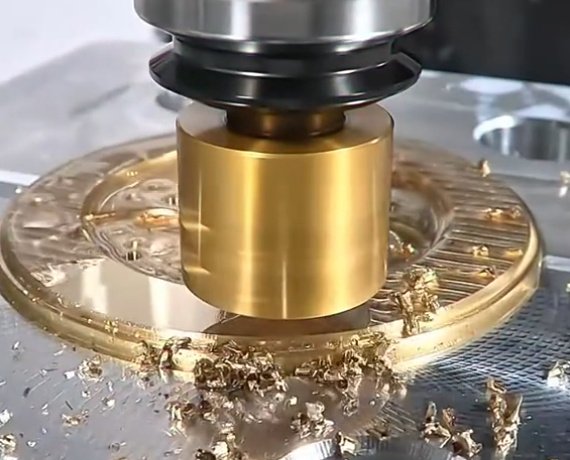
Precision custom CNC machining solutions provide repeatable, high-accuracy manufacturing for complex metal and plastic components across a wide range of industries. By combining computer-controlled equipment, stable processes, and robust quality systems, CNC machining delivers consistent, specification-compliant parts for prototypes, tooling, and production volumes.
About Custom CNC Machining
Custom CNC machining is the process of removing material from a workpiece using computer numerically controlled equipment based on digital design data. It is well suited for complex geometries, tight tolerances, and applications where dimensional accuracy and surface quality are critical.
The workflow connects CAD models, CAM programming, toolpath generation, and machine control into a closed loop. This allows repeated production of identical parts within defined tolerance ranges, with controlled cycle times and predictable costs.
Core CNC Machining Processes
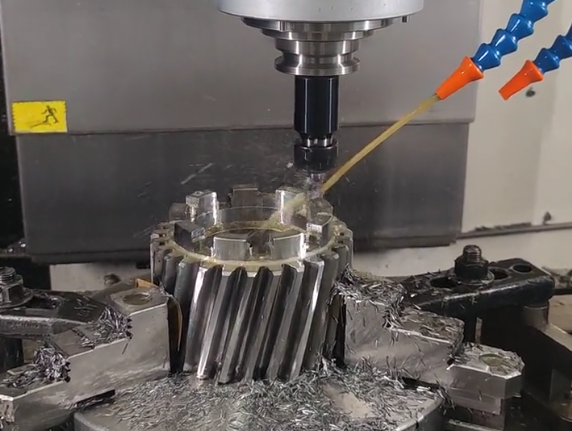
- CNC milling: rotary cutting tools remove material from stationary or moving workpieces along multiple axes.
- CNC turning: the workpiece rotates while stationary cutting tools generate cylindrical features.
- Drilling and tapping: creation of through holes, blind holes, and threaded features with precise position and depth.
- Multi-axis machining: 4-axis and 5-axis equipment enables machining of complex 3D geometries in fewer setups.
These processes can be combined in a single workflow to produce complete components with minimal secondary operations.
Key Capabilities and Tolerances
Precision CNC machining is defined by its dimensional capability, repeatability, and surface finish control. Typical values depend on part geometry, material, machine class, and fixturing.
| Parameter | Typical Production Range | Notes |
|---|---|---|
| Dimensional tolerance (linear) | ±0.010 mm to ±0.050 mm | Tighter tolerances possible on critical features with process optimization |
| Dimensional tolerance (bores) | IT7–IT9 range | With appropriate tooling and gauging for precision fits |
| Positional accuracy | ±0.02 mm to ±0.10 mm | Dependent on feature location, part size, and datum strategy |
| Surface roughness Ra (milled) | 0.8–3.2 μm | Finishing passes and tooling selection can achieve lower Ra where required |
| Surface roughness Ra (turned) | 0.4–1.6 μm | Fine turning and wiper inserts improve surface quality |
| Maximum workpiece size (milling) | Up to approx. 1600 × 800 × 800 mm | Varies widely by machine; larger parts possible on dedicated equipment |
| Maximum workpiece diameter (turning) | Up to approx. 500 mm | Extended diameters achievable with large-format lathes |
| Batch sizes | Single-piece to several thousand | Suitable for prototypes, pilot runs, and low-to-medium production |
For critical components, geometric dimensioning and tolerancing (GD&T) is used to define form, orientation, and position controls, ensuring functional interchangeability in assemblies.
Materials for Precision CNC Machining
Material selection influences machinability, achievable tolerance, surface finish, and cost. Custom CNC machining supports a broad range of metals and engineering plastics.
Metals
Metals are chosen for strength, stiffness, temperature resistance, and durability. Commonly machined metals include:
- Aluminum alloys (e.g., 6061, 6082, 7075)
- Carbon steels (e.g., 1018, 1045)
- Alloy steels (e.g., 4140, 4340)
- Stainless steels (e.g., 304, 316, 17-4PH)
- Copper and copper alloys (brass, bronze)
- Nickel-based alloys (Inconel, Monel) with appropriate tooling and parameters
Heat treatment, stress relieving, and surface hardening may be applied before or after machining, depending on the mechanical and wear requirements.
Plastics and Composites
Engineering plastics offer weight reduction, chemical resistance, electrical insulation, and design flexibility. CNC machining is suitable for precise plastic components where molding is not economical or where tight tolerances are needed.
| Material | Key Characteristics | Typical Applications |
|---|---|---|
| ABS | Good toughness, easy to machine, stable dimensions | Housings, fixtures, low-load functional prototypes |
| POM (Delrin, acetal) | Low friction, good wear resistance, high stiffness | Gears, bushings, precision mechanical components |
| PC (polycarbonate) | High impact strength, good transparency | Protective covers, optical and structural components |
| PA (nylon) | High toughness, good sliding properties | Bearings, wear parts, mechanical elements |
| PEEK | High temperature resistance, chemical stability | Aerospace, medical, high-performance industrial parts |
| PTFE | Very low friction, excellent chemical resistance | Seals, gaskets, chemical handling components |
Thermal expansion, moisture absorption, and internal stress must be considered when specifying tolerances and inspection methods for plastic parts.
Custom CNC Machining Services and Process Types
Precision CNC machining solutions typically combine several service types. Selecting the right combination ensures technical requirements, lead times, and cost targets are met.
CNC Milling
CNC milling uses rotating multi-point tools to remove material from the workpiece. It is suited for prismatic parts, complex 3D contours, pockets, slots, and surfaces with varying elevations.
Key characteristics include:
- 3-axis milling for flat surfaces, pockets, and simple contours.
- 4-axis milling for operations requiring rotation around a single axis, useful for features on multiple faces.
- 5-axis milling for complex geometry, undercuts, and continuous surface machining.
Tool selection, spindle speed, feed rate, and coolant strategy are adapted to the material and required surface quality.
CNC Turning
CNC turning is used primarily for rotationally symmetric parts such as shafts, bushings, and flanges. It allows efficient generation of diameters, tapers, grooves, and threads.
Key aspects include:
Control of runout, concentricity, and cylindricity is essential for components that interface with bearings, seals, and mating parts. Combined mill-turn centers can add milled features, flats, and holes without additional setups.
Multi-Axis and Complex Geometry Machining
Multi-axis machining (4-axis and 5-axis) allows simultaneous motion along linear and rotary axes. This enables efficient processing of complex components with fewer fixtures and improved alignment of features.
Typical applications include:
- Impellers, blisks, and turbine components.
- Medical implants and contoured surgical instruments.
- Precision housings with multiple angled faces and ports.
Fully utilizing multi-axis capabilities requires appropriate CAM programming, collision checking, and verification to maintain process safety and accuracy.
Design Considerations for CNC Machined Parts
Design for manufacturability (DFM) directly influences machining time, tooling requirements, quality, and cost. When developing components for precision CNC machining, the following considerations are important.
Geometry and Feature Design
Important geometric aspects include:
Internal corners: machining tools are circular, so sharp internal corners are not feasible. Designers should specify corner radii compatible with available cutter diameters to avoid additional operations.
Wall thickness: very thin walls can lead to deflection, vibration, and dimensional instability. Maintaining reasonable wall thickness relative to height improves stability and surface quality.
Deep pockets: deep cavities increase tool length and reduce stiffness. Designs should consider step-down strategies or alternative approaches when depth-to-diameter ratios are high.
Tolerancing and Surface Requirements
Specifying only necessary critical tolerances helps control manufacturing cost. Overly tight tolerances on non-functional surfaces can increase cycle time and inspection effort.
Considerations include:
Using GD&T to define functional datum references and tolerances that correspond to actual assembly and performance requirements.
Matching surface roughness requirements to function, sealing, sliding, or aesthetic needs rather than applying uniform tight values to all surfaces.
Parts must be fixtured securely with accessible tool paths. Design elements that improve manufacturability include:
Flat reference surfaces for clamping and datum alignment; avoidance of obstructed features that require specialized fixturing; and minimization of setups by aligning critical features in common orientations where possible.
Workflow: From Design to Finished Part
Precision CNC machining solutions follow a structured workflow to ensure traceability and repeatability from initial design to finished, inspected parts.
1) Engineering Review and Quotation
The process begins with the submission of 2D drawings and 3D CAD files, along with material specifications, quantity, and required standards. Engineering teams review manufacturability, identify potential issues, and propose any necessary design adjustments. A quotation is then prepared, covering tooling, machining, finishing, inspection, and logistics.
2) CAM Programming and Process Planning
Once approved, CAM software is used to generate toolpaths based on the CAD model. Process planning covers:
Tool selection, cutting parameters, fixturing strategy, setup sequence, and selection of machines appropriate for the specified tolerances and surface finishes. Simulation and verification are used to detect collisions and optimize cycle time.
3) Machining and In-Process Control
Machining is executed according to the approved program. In-process control can include:
First-article inspection, tool wear monitoring, machine probing for critical dimensions, and adjustments to offsets to maintain tolerance throughout the batch.
4) Finishing, Cleaning, and Assembly
After machining, secondary operations such as deburring, edge breaking, polishing, or surface treatments are applied where required. Components are cleaned to remove chips, oils, and particulates. If assemblies are specified, components are assembled with fasteners, inserts, or seals according to documented procedures.
5) Final Inspection, Packaging, and Delivery
Final inspection verifies that dimensions, material properties, and surface requirements conform to specifications. Inspection reports can be provided based on customer requirements. Parts are then packaged to prevent mechanical damage, corrosion, or contamination during transport.
Quality Assurance and Inspection
Robust quality systems are central to precision custom CNC machining. Systems are typically aligned with recognized standards and include documented procedures, calibrated equipment, and traceable records.
Measurement and Inspection Techniques
Common inspection tools and methods include:
- Calipers, micrometers, and height gauges for basic dimensional checks.
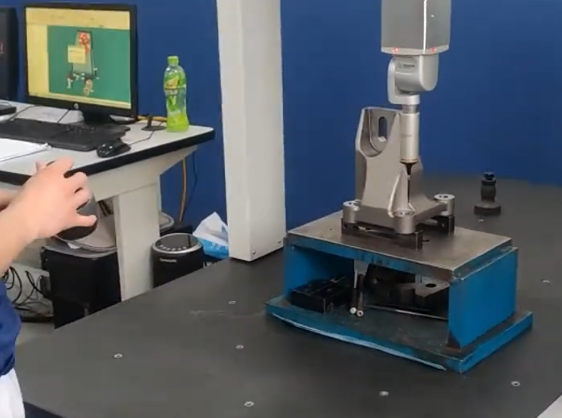
- Coordinate measuring machines (CMM) for complex geometry and GD&T verification.
- Profile projectors and optical measurement for small or intricate features.
- Surface roughness testers to quantify Ra and other roughness parameters.
For critical applications, statistical process control (SPC) may be applied to monitor variation and ensure process stability over time.
Documentation and Traceability
Quality documentation can include certificates of conformity, material certificates, heat treatment records, and detailed inspection reports. Traceability from raw material batch to finished part and shipment reference is maintained through lot numbers and digital records.
Pain Points Addressed by Precision CNC Machining
Many engineering and procurement teams face recurring difficulties when sourcing machined components. Precision custom CNC machining solutions are designed to address several typical issues.
Dimensional instability and inconsistent quality: inadequate fixtures, uncontrolled processes, and limited inspection can result in variable dimensions and assembly problems. Modern CNC machining with controlled workflows and CMM verification provides consistent output across batches.
Limited flexibility for design changes: some manufacturing methods have long lead times for tooling or complex setup changes. CNC machining uses digital programs and modular tooling, allowing faster implementation of design updates without major retooling.
Unclear communication of requirements: incomplete drawings, missing tolerances, or ambiguous specifications lead to delays and non-conformities. Mature CNC service providers support engineering clarification, drawing interpretation, and practical feedback to align documentation and manufacturability.
Applications of Custom CNC Machined Components
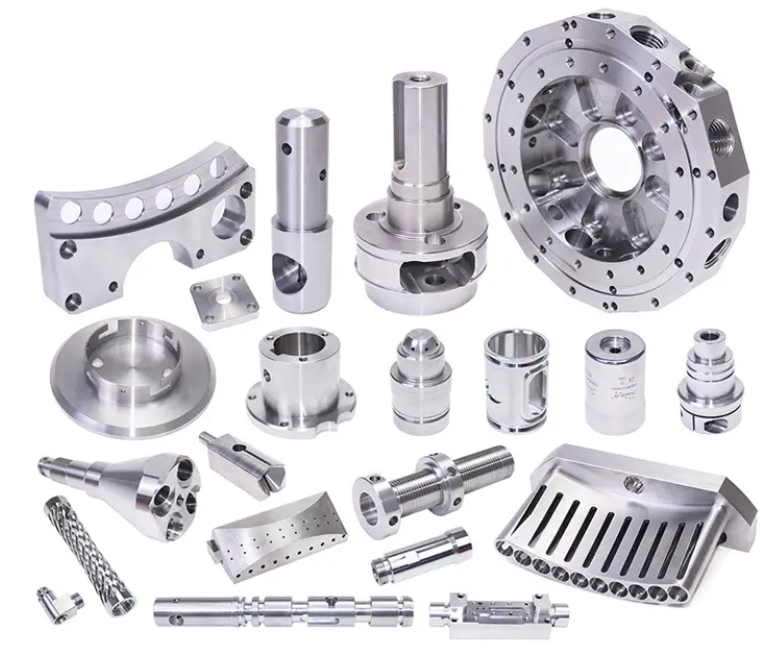
Precision custom CNC machining solutions are used across a wide spectrum of industries where reliable, high-accuracy parts are essential.
Aerospace: structural components, brackets, actuators, housings, and precision fittings manufactured in aluminum, titanium, and high-strength steels.
Automotive: prototypes, low-volume performance components, fixtures, jigs, and precision engine and transmission parts.
Medical and dental: surgical instruments, implant components, housings for diagnostic devices, and precision positioning elements subject to strict quality and documentation requirements.
Industrial machinery: shafts, couplings, gear housings, manifolds, and custom mounting hardware tailored to application-specific loads and environments.
Electronics and instrumentation: heat sinks, enclosures, sensor housings, and connectors requiring accurate hole patterns and controlled surface finishes for sealing and shielding.
Selecting a Precision CNC Machining Partner
Choosing a suitable machining partner is critical to achieving consistent results. Evaluation should include technical, organizational, and communication aspects.
Technical Capabilities
Key factors include:
Range of CNC equipment (3-axis, 4-axis, 5-axis, mill-turn), maximum part size, supported materials, and experience with the specific tolerances and standards required for the project. Availability of in-house programming, fixturing, and tool management influences responsiveness and process stability.
Quality Management
Verification of quality systems, calibration practices, and inspection capacity is essential. The presence of CMMs, defined inspection plans, and documented procedures supports reliable production of tight-tolerance parts. Capability to provide inspection reports and material certificates should align with customer expectations.
Lead Time and Supply Reliability
Lead times depend on complexity, quantity, and required secondary operations. A supplier’s scheduling system, capacity management, and logistics processes determine their ability to deliver on agreed dates. Reliable communication on progress and potential changes is important for planning.
Engineering Support and Communication
Effective collaboration requires clear, technical communication. Engineering support during quotation, design adjustment, and process optimization helps avoid misinterpretations and reduces the risk of non-conformities. The ability to work with various CAD formats and to interpret GD&T correctly is important.
Cost Factors in CNC Machining
The cost of custom CNC machined parts is influenced by several technical and logistical parameters. Understanding these factors allows informed design choices and realistic budgeting.
Main cost drivers include:
Material: material type, grade, and stock dimensions affect both raw material cost and machining time. Higher-strength alloys may require reduced cutting speeds and specialized tools.
Complexity: the number of setups, tool changes, and operations directly influences cycle time. Features such as deep pockets, tight internal radii, and multiple orientations require careful planning.
Tolerances and inspection: tighter tolerances increase machining time and inspection effort, requiring more precise setups and potentially slower cutting parameters.
Batch size: small batch sizes distribute programming, setup, and fixturing effort over fewer parts. Larger batches can reduce per-piece cost but require stable design and demand forecasts.
Integration with Other Manufacturing Processes
Precision CNC machining is often integrated with other processes to deliver complete, ready-to-use components and assemblies.
Surface treatments: anodizing, plating, painting, passivation, and coating provide corrosion resistance, wear resistance, or specific appearance requirements. Machining allowances and masking considerations must be defined.
Heat treatment: hardening, tempering, and stress relief treatments are applied either before or after machining, depending on dimensional sensitivity and final hardness needs.
Assembly and testing: CNC machined parts can be combined with sourced components such as bearings, seals, fasteners, and electronics. Functional or leak tests verify assembly performance according to defined procedures.
When to Choose Custom CNC Machining
Custom CNC machining is appropriate under the following conditions:
Requirements include tight tolerances, high dimensional stability, and reliable repeatability across batches.
Part volumes are low to medium, or designs may change before high-volume production methods become economical.
Multiple materials or configurations must be produced without extensive dedicated tooling investment.
Functional verification, installation trials, and pre-series testing require components that exactly match final design intent.