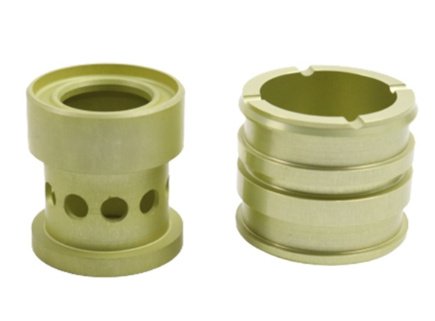
Hard anodizing (hardcoat anodizing) is widely used to increase wear resistance, hardness, and corrosion protection of aluminum parts. When engineers or buyers request quotations, the recurring challenge is understanding why prices per part can vary so much from one supplier to another or even between different parts in the same project. This guide is structured as a practical, technical reference to help you estimate and rationalize hard anodizing costs before sending RFQs or committing to a process route.
Instead of providing a single number that rarely applies to every situation, this guide breaks down all major cost drivers and typical parameter ranges so you can build an internal “hard anodizing cost calculator” logic that fits your products and volumes.
Calculate Your Hard Anodizing Cost
Hard Anodizing Cost Calculator
This calculator estimates the cost of hard anodizing (Type III) aluminum parts based on surface area and coating thickness.
Results
Total surface area per part:0 square inches
Total surface area for all parts:0 square inches
Base price per square foot:$12.00
Estimated total cost:$0.00
Note: This is an estimate only. Actual costs may vary based on part complexity, racking, vendor location, and current material prices.
Overview of Hard Anodizing and Cost Structure
Hard anodizing is an electrochemical process that converts the surface of aluminum into a thick aluminum oxide layer. Compared with conventional Type II decorative anodizing, hard anodizing (often referred to as Type III) uses lower temperatures and higher current densities to produce harder, thicker coatings.
From a cost perspective, hard anodizing typically includes the following elements:
- One-time or infrequent costs: tooling, racking design, process development, sample runs
- Per-batch costs: bath setup, line scheduling, tank occupancy time, quality control
- Per-part costs: surface area treated, masking, special handling, inspection, packaging
Most suppliers convert these into a unit price per part, often with price breaks by quantity. Understanding how each factor contributes allows you to compare quotes more accurately, negotiate realistically, and design parts that are economical to anodize.
Key Technical Parameters That Drive Hard Anodizing Cost
Technical requirements are usually the primary cost drivers. Some specifications directly increase process time, power consumption, chemical consumption, or scrap risk. The most influential parameters are listed below.
Required Coating Thickness
Thickness is one of the most visible levers in a hard anodizing cost calculator. Typical hardcoat anodizing thickness ranges:
- Standard hardcoat: 25–50 µm (0.001–0.002 in)
- Heavy hardcoat: 50–100 µm (0.002–0.004 in)
- Special cases: above 100 µm on suitable alloys
Why thickness affects cost:
- Thicker coatings require longer anodizing time, occupying tank capacity.
- Higher thickness increases power consumption (ampere-hours per square foot or m²).
- Very thick coatings increase risk of cracking, burning, and dimensional deviations, raising scrap and rework costs.
In many shops, cost per part is calculated based on coating thickness combined with surface area and alloy type. As a rule of thumb, going from 25 µm to 50 µm can significantly increase cost due to additional time and energy, even though the visual difference is small.
Aluminum Alloy and Temper
Different aluminum alloys respond differently to hard anodizing. Silicon, copper, and other alloying elements change how the oxide layer forms, its hardness, and the process settings needed. This influences cost in several ways:
- 2000 and 7000 series alloys may require tighter control and different bath parameters to avoid burning and pitting.
- High silicon cast alloys can form darker, more porous layers that may need additional process optimization.
- Some alloys may have lower achievable thickness before quality issues appear, which affects acceptance and scrap.
Suppliers often apply surcharges or reject certain alloys for hardcoat. When using a cost calculator, it is good practice to categorize alloys into cost groups, for example:
- “Easy” alloys: 5xxx and 6xxx wrought series (often baseline pricing)
- “Moderate” alloys: some 2xxx, 7xxx, and specific cast grades (moderate surcharge)
- “Difficult” alloys: high copper, high silicon, or previously heat-treated parts requiring special handling (higher surcharge or limited capability)
Dimensional Tolerance and Allowance
Hardcoat anodizing grows both inward and outward from the original surface. Typically, about half the coating thickness is growth above the original surface and half is penetration. For example, a 50 µm coating may add approximately 25 µm to the dimension.
Tight dimensional tolerances impact cost because:
- Machining must allow for growth, which may require closer tolerances before anodizing.
- Critical bores or fits may need masking or post-anodize honing/reaming.
- Extra metrology steps may be necessary to validate final dimensions.
From a pricing perspective, parts with many tight fits or critical diameters often carry a higher cost per piece due to additional process controls and potential rework.
Surface Finish Before Anodizing
Incoming surface condition directly influences final appearance and functional performance. Hardcoat is not a substitute for surface preparation and will not hide machining marks or defects.
Common pre-anodize finishes include:
- As-machined surfaces (standard cost baseline)
- Blasted surfaces (improves uniformity, adds cost if done by anodizer)
- Polished or super-finished surfaces (higher labor cost and careful handling)
If the anodizer must perform extensive pre-cleaning, etching, or mechanical finishing, the process time and complexity rise, impacting per-part cost. In a structured cost calculator, pre-treatment level is often treated as a separate cost line or multiplier.
Color Requirements and Dyes
Many hardcoat applications remain natural (gray to dark gray), but some require black or other colors. Hard anodizing pores are smaller and less receptive to dyes than Type II coatings, so achieving deep, uniform colors can be more challenging.
Cost-related aspects include:
- Additional dyeing tanks and chemicals, plus extra process steps between anodizing and sealing.
- Longer process time for color development.
- Higher reject risk if uniform color is critical, especially on complex geometries or challenging alloys.
Natural hardcoat is typically the least expensive option. Black hardcoat often carries a surcharge per part or per batch. Other colors may be limited or priced at a premium due to lower process robustness.
Sealing Method and Specifications
Sealing closes the pores in the anodic layer, improving corrosion resistance and dye fastness. For hard anodizing, several sealed and unsealed options exist, for example:
- Unsealed hardcoat for maximum hardness and wear resistance.
- Hot water or nickel acetate seals.
- PTFE or other impregnations for low friction.
Each method has different material and labor costs, plus different cycle times. PTFE-impregnated or duplex treatments generally increase per-part cost, both for materials and for extra process steps.
Part Geometry, Size, and Surface Area
Physical characteristics of the part strongly influence how a hard anodizing cost model should be built. These characteristics affect line utilization, handling complexity, and variability.
Overall Size and Tank Capacity
Hard anodizing is limited by tank dimensions. Very large parts may require dedicated fixtures or use of a larger tank line, which often has higher operating costs. From a cost calculator standpoint:
- Small parts (e.g., under 150 mm in major dimension) can be densely racked, spreading setup costs over many pieces.
- Medium-sized parts require more space and may reduce the number of parts per rack.
- Large parts may consume substantial tank volume and limit batch throughput, pushing per-part cost upward.
Some shops use a minimum charge per rack or per load to account for tank occupancy, which then divides across the number of parts in the load.
Surface Area Calculation
Since current density and anodizing time are based on surface area, many calculators estimate cost using surface area × thickness × a process coefficient. Accurate surface area estimates are therefore important.
Approaches include:
- CAD-based surface area calculation for complex 3D parts.
- Analytical formulas for simple shapes (plates, rods, tubes).
- Standard reference charts for frequently used profiles and extrusions.
Underestimating surface area leads to underpriced quotes and margins problems for the supplier, while overestimating may make the project appear more expensive than necessary. Where possible, provide accurate CAD data so suppliers can approximate surface area correctly.
Complexity, Recesses, and Blind Features
Features like deep pockets, small holes, and blind threads affect both process uniformity and handling. Cost implications include:
- Increased risk of trapped air or solution, requiring more careful orientation and agitation.
- Localized burning in sharp corners, requiring more conservative process parameters and possible rework.
- Difficulty in rinsing and sealing, which may affect corrosion performance and inspection time.
Parts with many recessed features often require more detailed fixturing and additional quality checks, increasing labor time per part.
Weight and Handling Requirements
Heavier parts or assemblies may require lifting equipment, special racks, or multiple operators. This adds indirect labor and sometimes increases risk of damage, especially to critical surfaces that must remain free from contact marks.
Some calculators incorporate a weight factor, especially when anodizer personnel must perform manual loading or when parts approach the line’s mechanical handling limits.
Racking, Fixturing, and electrical Contact
Racking is a significant but often underappreciated component in hard anodizing costs. Racks must support the part mechanically and provide reliable electrical contact while minimizing marks in functional or cosmetic areas.
Rack Design and Tooling Cost
For recurring production, custom racks are often designed to optimize:
- Number of parts per load (density and orientation).
- Electrical contact area and current distribution.
- Protection of critical surfaces.
Tooling costs can be handled in different ways:
- One-time tooling charge separate from per-part pricing.
- Amortized tooling cost incorporated into unit price over an agreed quantity.
- Use of standard racks when part geometry permits, which reduces or eliminates tooling charges.
Complex, low-volume parts may have relatively high rack design and fabrication costs per piece. Incorporating rack amortization into your cost model is important when estimating multi-year project economics.
Contact Placement and Mark Management
Every anodized part requires at least one electrical contact point. Cost implications include:
- Engineering time to select non-critical areas for contacts.
- Potential rework if contact marks must be removed after anodizing.
- Use of multiple contact points on large or complex parts to ensure uniform current distribution.
Where contact marks are unacceptable, alternative solutions such as threaded contact points, sacrificial tabs, or post-machined surfaces may be needed, each with its own cost trade-offs.
Masking and Selective Hard Anodizing
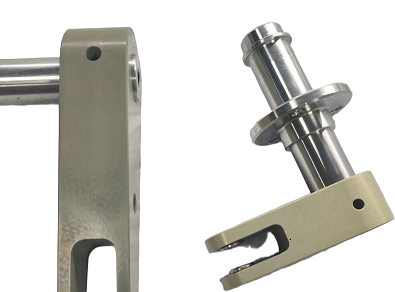
Masking is a major factor in hard anodizing cost when only specific surfaces must be treated or when some areas must remain uncoated (e.g., tight fits, sealing surfaces, electrical grounding surfaces).
Types of Masking and Their Cost Impact
Common masking methods include:
- Tapes and plugs (standard or custom shapes).
- Molded rubber or silicone masks for repeated use.
- Lacquer or paint-on resists for complex shapes.
Custom or complex masking often includes:
- Design and fabrication of dedicated masks.
- Manual masking labor per part.
- Additional inspection to confirm mask performance and line edge definition.
From a costing perspective, simple plugging of threaded holes adds modest time, while intricate selective anodizing with precise boundaries can significantly increase per-part labor content. Masking is often one of the largest non-material cost items in hardcoat processes.
Dimensional and Functional Requirements on Masked Areas
Masking may also be driven by dimensional or functional constraints, such as:
- Bearing surfaces that cannot tolerate growth or surface roughening.
- Electrical contact areas that must remain conductive.
- Sealing grooves where surface chemistry must remain compatible with elastomers.
When such surfaces are numerous or tightly specified, inspection and rework demands rise, feeding back into per-part pricing. In some cases, design modifications (such as adding relief areas or sacrificial surfaces) can reduce masking complexity and cost.
Production Volume, Batch Size, and Scheduling
Production planning is a critical part of any hard anodizing cost calculator. Even with identical technical requirements, the cost per part for a short prototype run is very different from that of a long production campaign.
Batch Size and Line Utilization
Hard anodizing lines are capital-intensive. To maintain efficiency, shops aim to fill racks and tanks as fully as possible. Batch size influences cost because:
- Small batches spread setup, testing, and bath qualification over fewer parts.
- Partial loads consume the same process time as full loads but yield fewer sellable units.
- Large batches close to rack capacity reduce per-part overhead by maximizing line utilization.
Many price lists include quantity breaks where unit cost decreases as order quantity increases. A logical cost calculator model can represent this with stepwise or gradual reductions in overhead allocation as batch quantity rises.
Repetition and Learning Curve Effects
As a part runs repeatedly, operators become more familiar with fixturing, masking, and inspection requirements. Over time, this can reduce handling time and scrap rates. While not always explicitly reflected in quotes, it may be possible to negotiate lower prices once the process is stable and volume is consistent.
Lead Time and Scheduling Constraints
Standard lead times allow the anodizer to group similar jobs and optimize line usage. When expedited turnaround is required, the supplier may need to:
- Interrupt existing schedules.
- Run smaller or dedicated loads.
- Perform overtime work for masking, inspection, or packaging.
These actions increase effective cost, so many suppliers apply rush fees. In a calculator, this can be captured as a percentage surcharge or as a separate line item.
Quality Requirements, Testing, and Certification
Quality requirements significantly shape the total cost of hard anodizing, especially in regulated industries and high-reliability applications. Beyond simple visual checks, additional tests and documentation may be required.
Specifications and Standards
Hard anodizing may be ordered to a variety of standards and customer specifications, such as:
- Military or aerospace specifications.
- ISO or national standards defining thickness, hardness, and corrosion performance.
- Proprietary OEM standards for automotive, hydraulic, or medical components.
Compliance with such standards may require process qualification, periodic audits, and additional record keeping. Suppliers may charge extra for processing to specific certifications, especially where third-party audits or approvals are needed.
Inspection and Test Methods
Typical verification activities for hard anodizing include:
- Coating thickness measurement (eddy current, microsection).
- Hardness testing (microhardness on test coupons).
- Corrosion resistance testing (salt spray, cyclic tests, or immersion tests).
- Adhesion or abrasion testing for particular applications.
Each test adds labor, consumables, and sometimes destructive sampling. For high-volume production, these costs are distributed over many parts. For low-volume or prototype work, the per-part impact is higher.
Documentation, Traceability, and Certificates
Technical buyers often require specific documentation, such as:
- Certificates of conformity (CoC).
- Full traceability to batch, rack, or operator.
- Material certificates for chemicals or for base metal (if supplied by the anodizer).
While the direct cost of documentation is modest, for many small orders the administrative overhead becomes visible in the quoted price. Larger, ongoing contracts can amortize these administrative efforts across many shipments.
Environmental, Energy, and Chemical Considerations
Hard anodizing involves electricity, cooling, and chemicals such as acids and sealing agents. While these are typically embedded in the anodizer’s overhead, understanding them helps explain cost differences between suppliers and regions.
Power Consumption and Cooling
Hardcoat anodizing uses relatively high current densities and low bath temperatures. The result is significant energy consumption for:
- Rectifiers that supply DC power to the tank.
- Cooling systems to maintain low electrolyte temperature.
Higher local energy costs or less efficient equipment increase the underlying cost, which may appear as higher baseline rates per square area or per part.
Chemicals, Waste Treatment, and Compliance
Suppliers must maintain chemical baths within tight limits, regularly replacing or refreshing solutions. They must also treat waste streams to meet environmental regulations. These factors influence the underlying cost of doing business and are reflected in anodizing rates, especially in regions with strict environmental compliance obligations.
Packaging, Handling, and Logistics
After hard anodizing, appropriate handling and packaging are essential to protect the coating, especially thick or high-hardness layers that can be brittle under impact.
Post-Process Handling
Key cost elements include:
- Careful unloading from racks to avoid damage to edges and corners.
- Drying and cooling time prior to packing.
- Visual inspection during handling to screen out defects early.
For fragile or high-value parts, more conservative handling procedures and buffer zones may be needed, increasing labor time per unit.
Packaging Requirements
Packaging specifications can significantly affect labor and material costs. Examples:
- Individual wrapping or bagging of parts.
- Use of specific interleaving materials or corrosion inhibitors.
- Use of returnable dunnage or custom trays to avoid surface contact.
Some projects require detailed labeling, barcoding, or segregation by serial number or batch, which adds administrative and handling work. It is often helpful to distinguish base anodizing cost from special packaging cost in quotations.
Representative Cost Elements in Hard Anodizing
Although actual numbers depend on region, supplier, and scale, it is useful to categorize typical cost elements that your internal calculator should consider. The following table shows a representative breakdown of cost categories that influence the per-part price.
| Cost Category | Included Items | Impact on Per-Part Cost |
|---|---|---|
| Direct processing | Anodizing time, electricity, cooling, chemicals | Scales with surface area, thickness, and alloy difficulty |
| Pre-treatment | Cleaning, etching, desmutting, optional mechanical prep | Higher for demanding surfaces or heavy contamination |
| Masking and racking | Design, assembly, plugs, tapes, custom masks | Major driver for selective anodizing or complex parts |
| Quality and testing | Thickness checks, hardness tests, corrosion tests | Increases with stringent standards and sampling plans |
| Administration | Documentation, traceability, customer-specific reporting | More visible in low-volume or prototype work |
| Packaging and logistics | Special packaging, labeling, internal transport | Depends on fragility and customer packaging specs |
Building an Internal Hard Anodizing Cost Calculator
While every supplier has proprietary models, engineering and procurement teams can develop an internal calculator to approximate cost ranges and compare process options. The goal is not to replicate a supplier’s exact quotation, but to support sound design and sourcing decisions.
Defining Input Parameters
Key input fields for a practical hard anodizing cost tool often include:
- Aluminum alloy and temper.
- Part dimensions and estimated surface area.
- Required coating thickness and tolerance.
- Color (natural, black, other) and sealing type.
- Masking requirements (none, simple, complex selective).
- Production volume and batch size.
- Quality level and special testing needs.
- Packaging and handling requirements.
For each input, a range of costs or multipliers can be defined based on historical data from past quotations and production runs.
Structuring the Calculation Logic
A typical internal calculator may follow a staged approach, for example:
- Base cost per unit surface area and thickness, reflecting energy and bath usage.
- Add or subtract factors for alloy category and part complexity.
- Apply increments for masking, color, sealing, and special tests.
- Distribute setup, racking, and documentation overhead across batch size.
This results in an estimated cost per part that can be used to evaluate design alternatives, such as changing alloy, reducing masking by redesign, or adjusting required thickness while still meeting performance targets.
Using Historical Data to Refine Estimates
As more jobs are quoted and completed, actual prices and internal cost records can be used to refine calculator coefficients. Differences between predicted and actual costs highlight which factors are most sensitive and where more detailed inputs may be required, such as separating simple holes from complex blind cavities or splitting masking into several levels of complexity.
Common Pain Points in Hard Anodizing Costing
Several recurring issues tend to complicate hard anodizing cost estimation:
- Underdefinition of technical requirements: RFQs that omit thickness tolerance, color, or sealing method lead to incomplete or inconsistent quotes.
- Inaccurate surface area estimates: Missing or simplified geometry can result in underestimated process effort and subsequent price changes.
- Late design changes: Modifications affecting masking, rackability, or thickness requirements after quoting can alter cost structure and lead times.
- Misalignment between performance and specification: In some cases, specifying unnecessarily high thickness or tight tolerances increases cost without meaningful benefit, which can be mitigated by early consultation with the anodizer.
Addressing these pain points early improves quotation accuracy and reduces surprises during production ramp-up.
Example Parameter Matrix for Estimating Relative Cost
While exact figures are project-specific, the following conceptual matrix illustrates how different choices may move cost upward or downward in a relative sense. It is intended as a guide when building or calibrating an internal calculator.
| Parameter | Lower-Cost Option | Higher-Cost Option |
|---|---|---|
| Thickness | 25–30 µm | 50–75 µm or higher |
| Alloy family | 5xxx, 6xxx wrought alloys | Difficult 2xxx, 7xxx, cast alloys |
| Masking | No masking or simple plugging | Complex selective masking |
| Color | Natural hardcoat | Black or specialty colors |
| Quality/testing | Basic visual and thickness checks | Full certification, corrosion tests, traceability |
| Volume | Small prototype lots | High-volume production batches |
Practical Tips for Controlling Hard Anodizing Cost
To make best use of any hard anodizing cost calculator and to keep actual costs predictable, consider the following practical guidelines:
- Clearly define technical requirements in drawings and RFQs, including thickness range, alloy, color, and sealing.
- Consult the anodizer early when designing parts with critical tolerances or selective-treatment surfaces.
- Minimize unnecessary masking by designing non-critical areas for contact and avoiding tight tolerances where not needed.
- Group parts into larger batches when possible to benefit from economies of scale.
- Request separate line items for masking, testing, and special packaging to understand their individual impacts.
These steps help align design intent, cost expectations, and manufacturing capabilities, leading to fewer surprises and more consistent per-part pricing.
FAQ: Hard Anodizing Cost and Pricing
How can I quickly estimate hard anodizing cost per part?
A practical quick estimate starts with the part’s surface area and required coating thickness. Multiply surface area by a baseline rate per unit area and thickness for the alloy category, then add factors for masking, color, and testing if required. For example, start with a base cost per square meter for natural hardcoat on a standard alloy and apply multipliers: one for increased thickness, one for complex masking, and one for special certification. Finally, divide any setup or minimum batch charge by the number of parts in the batch to approximate a per-part value. Actual quotations should still be confirmed with your anodizing supplier using detailed drawings and specifications.
Why do quotes from different hard anodizing suppliers vary so much?
Differences in hard anodizing quotes usually come from variations in process capability, overhead structure, and assumptions about your requirements. One supplier may assume a narrower thickness tolerance, more extensive masking, or additional quality checks, while another may base the quote on minimum compliance. Regional differences in energy, labor, and environmental costs also affect baseline pricing. To reduce variation, provide detailed and consistent specifications to all suppliers, including alloy, thickness range, masking details, color, sealing method, testing, and packaging requirements. This allows you to compare quotations on a more equal technical basis.